
Last updated November 16, 2026
 Sweep & inspection
 Caps & crowns
 Flue relining
 Masonry repair
 Gas fireplace service
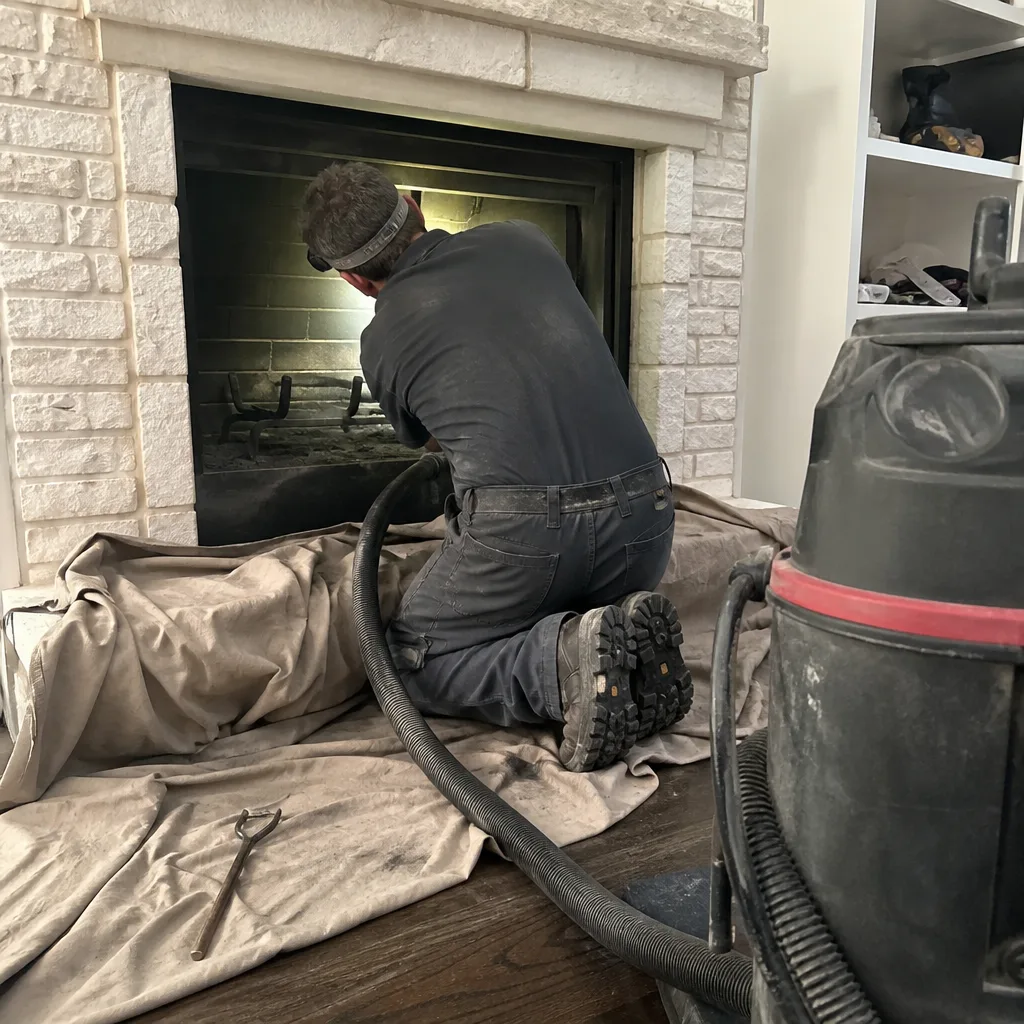
Level 1 sweep and inspection to the NFPA 211 annual standard - flue, crown, cap, and flashing checked and photographed
Chimney sweep logs do not sweep chimneys. They loosen some creosote - which then falls where a brush and vacuum still have to collect it.
Seasonal Chimney Cleaning Care for Richardson: Year-Round Homeowner’s Guide
Most chimney advice you’ll find online was written for New England. It assumes hard freezes, months of steady burning, and a house that sits under snow half the year. Richardson doesn’t work that way. We get mild winters, summers that bake a roof for weeks, and the occasional ice storm that shows up without warning. A chimney here lives a different life than one in Minnesota, and it needs a different calendar. The common mistake is treating a lightly used fireplace as a low-maintenance one. In our experience, a flue that sits idle through a Richardson summer collects moisture and slow mortar damage precisely because it never gets a good draft pushing air through it. This guide maps the real seasonal tasks to Richardson’s actual weather, month by month, so you’re cleaning and inspecting at the right times rather than following a generic “sweep in the fall” script.
Quick Answer
The best seasonal chimney care schedule for Richardson is: inspect and sweep in early fall (September to October) before your first fire, watch for crown and flashing damage during winter ice events, assess moisture and efflorescence damage in spring (March to May), and check mortar joints and the cap through the idle summer heat. A lightly used chimney in Richardson still needs an annual sweep and inspection because low burn counts hide moisture damage that builds up while the system sits idle. Call (888) 873-4715 for a free estimate.
Styles & brands we work with
- Sweep & inspection
- Caps & crowns
- Flue relining
- Masonry repair
- Gas fireplace service
Table of Contents
- Why Richardson’s Climate Changes the Chimney Calendar
- Summer (June to August): The Idle Season That Does the Most Damage
- Fall (September to October): The Right Window to Sweep
- Winter (November to February): Ice Events and Crown Load
- Spring (March to May): Moisture, Efflorescence, and Water Repellent
- Gas-Log Fireplaces: Why They Still Need Seasonal Attention
- The Full Richardson Chimney Care Calendar at a Glance
- Common Mistakes to Avoid
- When to Call a Professional
- Frequently Asked Questions
Why Richardson’s Climate Changes the Chimney Calendar
Chimney care advice travels badly. A guide written for a cold-weather market assumes your flue is under near-constant thermal stress for months, which is why those regions sweep in autumn and never think about the masonry again until next year. Richardson sits in a different zone entirely. Summer heat is the dominant force here, winter is short and mostly mild, and the real wildcard is the occasional ice storm that arrives fast and leaves ice sitting on surfaces it has no business sitting on.
Here’s what that means in practice. In a cold market, the fireplace works hard and the flue stays warm. In Richardson, many homes burn fewer than thirty days a year, so the flue spends most of its life cold and damp. That’s the opposite of what people assume. A cold, idle flue is a moisture problem waiting to happen. Creosote isn’t your main enemy. Water is.
Three Richardson conditions drive the schedule:
- Long hot summers. Weeks of triple-digit heat bake the top of the chimney and expand the masonry, then cool nights pull it back. That expansion and contraction works on mortar joints and crowns slowly but relentlessly.
- Short, mild winters with ice events. Most winters pass quietly, which is exactly why an ice storm catches people off guard. Ice loads crowns, works into hairline cracks, and finds its way toward the liner.
- Humid spring swings. A wet spring pushes moisture into masonry that spent the summer drying out. Efflorescence, those white salt stains on brick, is the visible signature.
The neighborhoods here vary less than the weather does. A chimney on a house off Central Expressway sees the same seasonal stress as one near the Spring Creek Nature Area. The variables that matter are the house, the flue, and the tree cover around it, not the ZIP. Throughout this guide, we’re describing what we see across Richardson rather than in one corner of it.
Summer (June to August): The Idle Season That Does the Most Damage
Summer is when a Richardson chimney does its quiet damage. The fireplace is unused, the damper usually shut, and the flue sits still. That combination traps whatever moisture is already in the system and gives it weeks to work on the masonry. Add 100°F roof-surface temperatures and you get the daily expand-and-contract cycle that opens hairline cracks in mortar joints and crowns.
You don’t need to do anything dangerous to check on it. From the ground, with binoculars, you can watch for several summer warning signs:
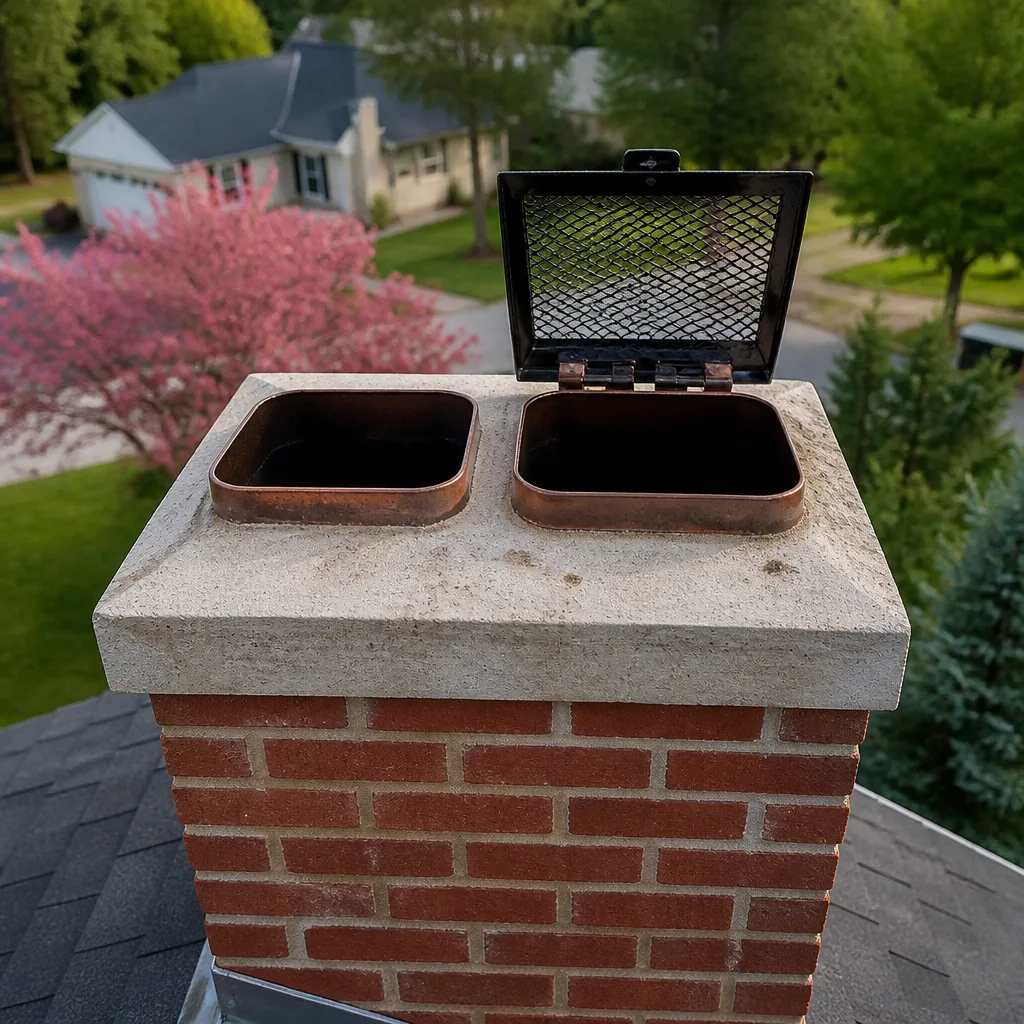
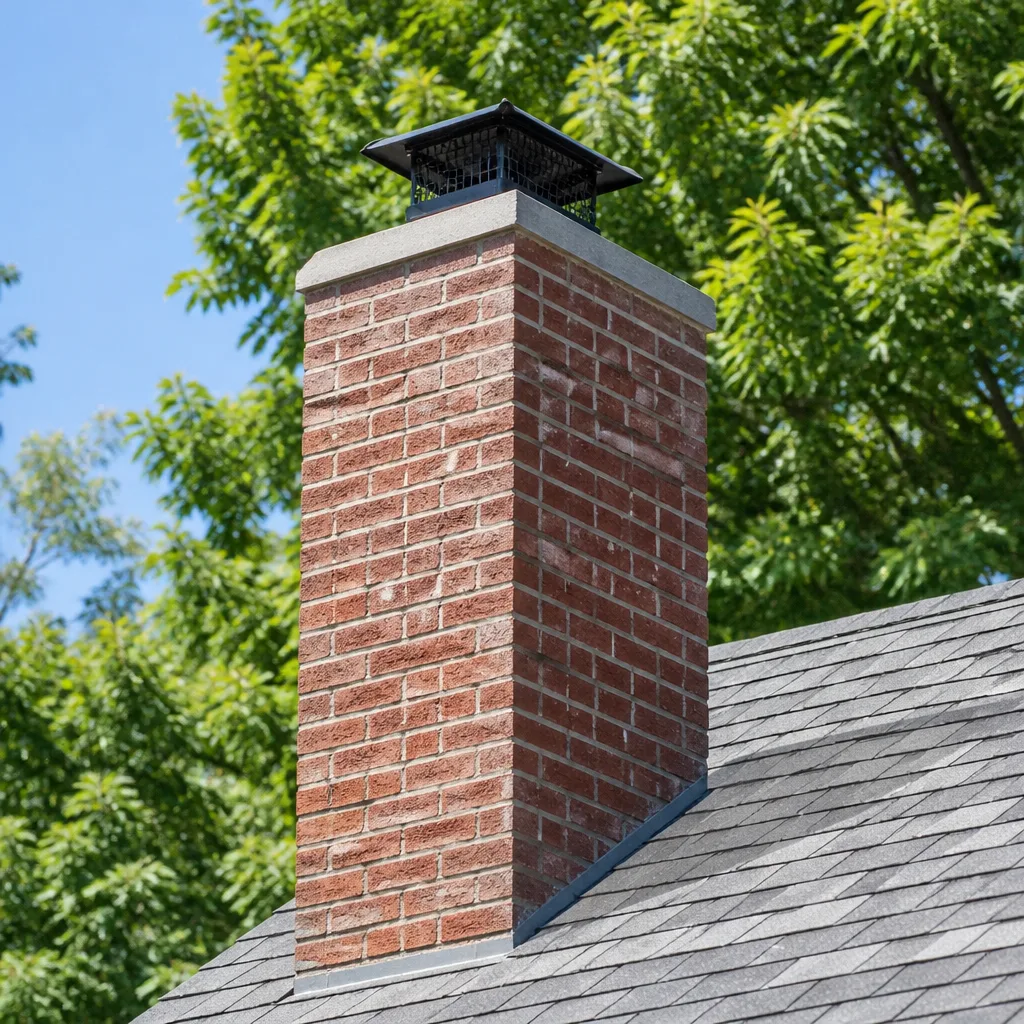
- Crown cracks. The crown is the sloped concrete cap at the very top. Look for cracks, gaps where it meets the flue, or missing chunks. A cracked crown lets water straight into the structure.
- White staining on brick. Efflorescence is a salt deposit that shows moisture is moving through the masonry. It’s a signal, not a surface problem to scrub off.
- Tilted or missing caps. A wind-driven cap that shifts off-center opens the flue to rain and to animals. A cap that failed in a summer storm lets water in for the rest of the season.
- Rust or staining on the firebox. Interior rust points toward moisture coming down the flue rather than a fire problem.
- Crumbling mortar at the roofline. If joints between bricks look recessed or sandy, water and heat have been working on them.
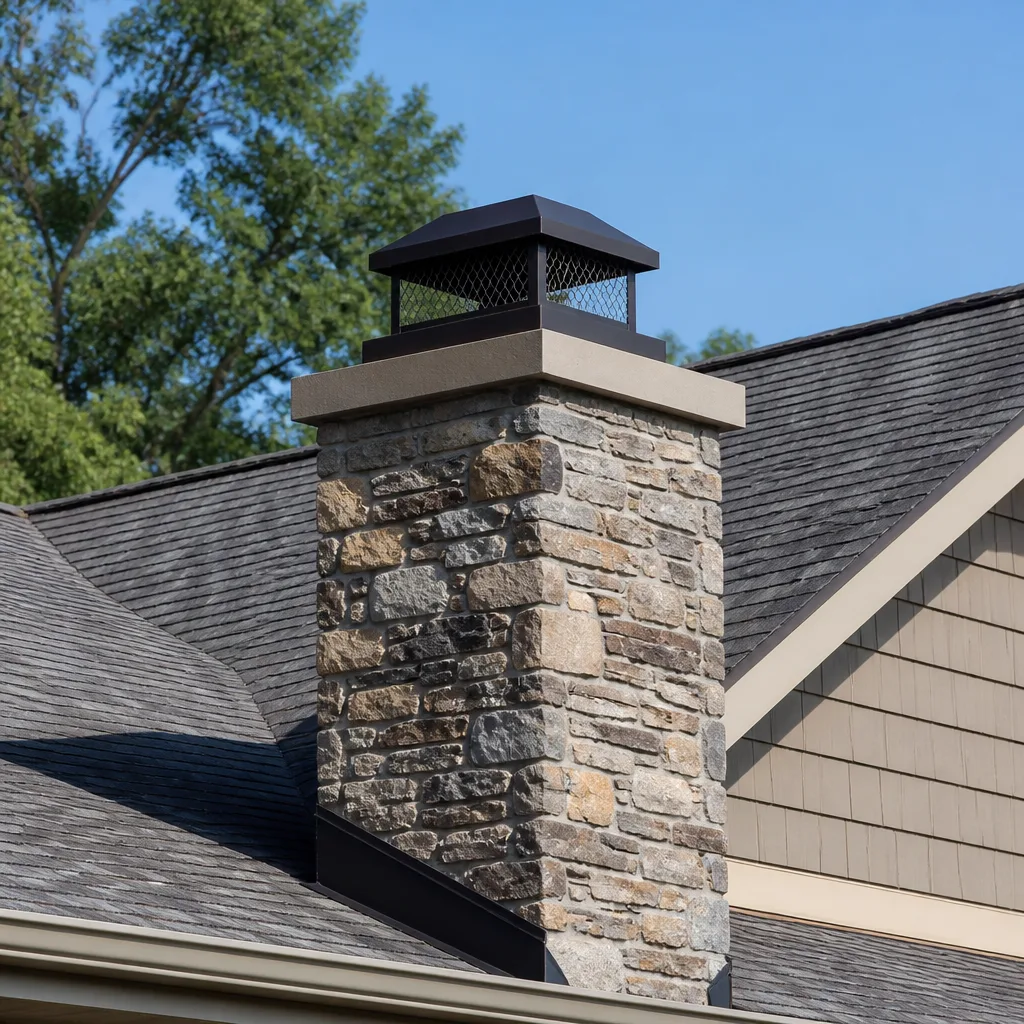
What we’d avoid in summer is running the fireplace without a fall inspection, or sealing the chimney with a product that traps moisture rather than repelling it. Breathability matters, which is why we work with brands like Gelco for caps that actually shed water instead of letting it in. Gelco caps are built for chimney weatherproofing, not adapted from general roofing hardware, and that difference shows up the first time a summer storm tests one.
If the crown is failing, summer is also the right time to think about a repair, before fall brings the burning season and before another winter puts ice into the crack. Water damage doesn’t wait for you to schedule it.
Fall (September to October): The Right Window to Sweep
The optimal window to sweep a chimney in Richardson is September through October, once the summer heat has broken but before you light the first fire. That timing gives you a clean flue for the burning season and a fresh inspection report going into winter, so any repair can be scheduled and done before ice becomes a factor.
Why not earlier? Sweeping in the height of summer means the swept flue sits empty and humid for weeks before you use it. Why not later? A November sweep can collide with a sudden cold snap, and if the inspection turns up a problem, you’re trying to schedule a repair during the weeks you most want to be burning.
Before the first fire of the season, we recommend confirming a short list of items:
- Sweep the flue. Even light use leaves a glaze layer and dust. A proper sweeping removes it and gives the inspector a clear view of the liner.
- Inspect the flue, firebox, damper, crown, and cap. This is the inspection that catches the real problems: cracked liners, deteriorating mortar, failing crowns, and damaged caps.
- Test the damper. It should open and close freely and seat fully. A stuck-open damper leaks heat all winter.
- Check the cap and spark screen. Make sure the cap is seated, the screen is intact, and no debris has collected behind it over the summer.
- Confirm the smoke chamber and shelf. Elbows and rough sections in the smoke chamber collect creosote that a straight flue brush doesn’t reach.
- Walk the exterior. Look at flashing at the roofline. A gap there sends water in even when everything above it looks fine.
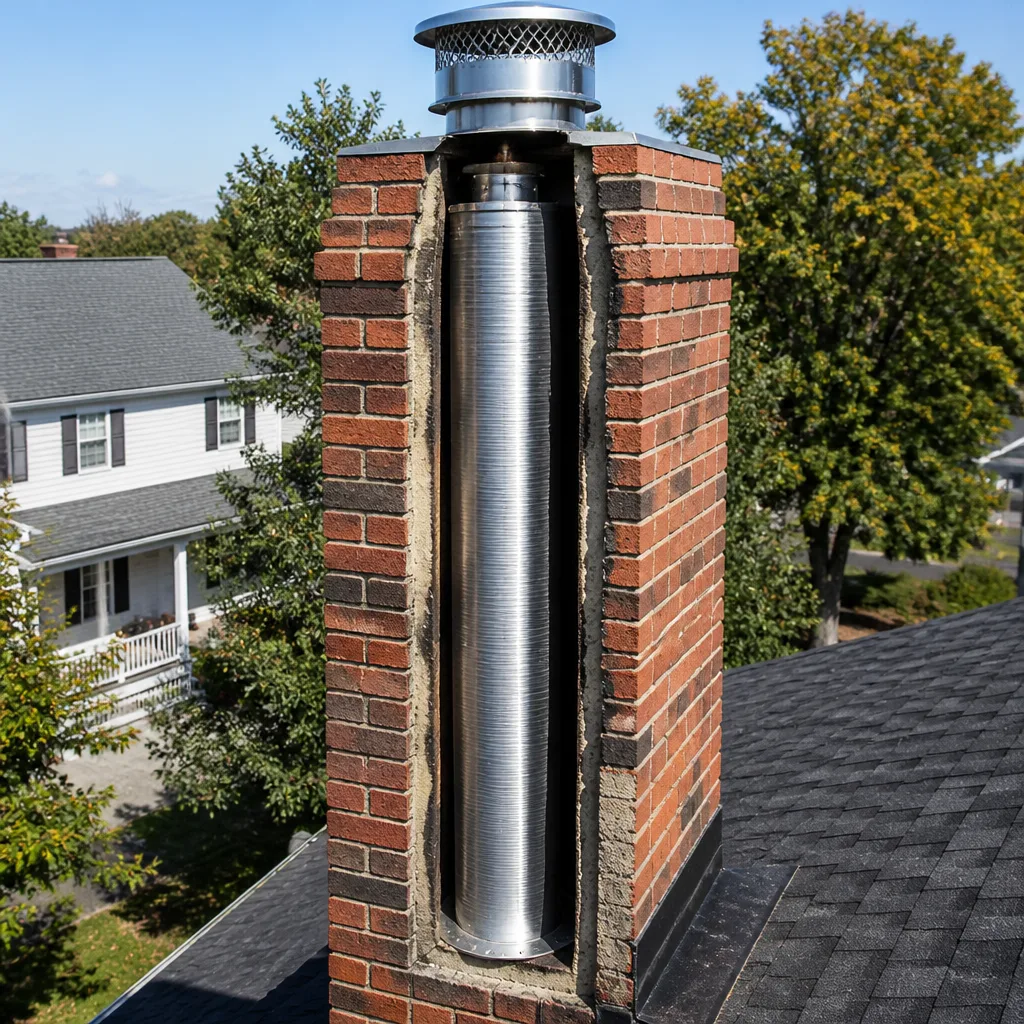
If the inspection finds a compromised liner, we install DuraFlex flexible liner systems, the preferred solution for relining an aged or damaged flue without knocking the chimney down and rebuilding it. For smoke chamber problems or a rough, pitted liner surface, HeatShield ceramic resurfacing is a repair-grade product most general handymen can’t source or install correctly. Fall is when we field the most of both, precisely because it’s the window before burning season.
Scheduling the chimney sweep early in this window also means you have time for any follow-up repair before you need the fireplace. That’s the whole point of a fall schedule that assumes something might need fixing.
Winter (November to February): Ice Events and Crown Load
Richardson winters are mostly mild, which is why a genuine ice event is the season’s real chimney risk. Ice doesn’t just look dramatic on a roofline. It adds weight to a crown that may already have hairline cracks, and when that ice melts and refreezes, water works its way into the masonry and toward the liner.
Here’s what we watch for through the winter:
- Crown load. Ice sitting on the crown stresses the concrete. A crown that was merely aging before an ice event can crack outright.
- Cracked or compromised liner. Moisture that reaches the liner and freezes can widen existing hairline cracks. A flue that was passable in October can be a liability by February.
- Ice flashing into liner cracks. That’s the one that worries us most. Once water finds a crack in the liner, freezing temperatures make it worse, and the gap widens instead of healing.
- Exterior staining or spalling after an event. Brick flaking at the surface after ice is a sign that water saturated the masonry before the storm.
You don’t need to climb anything to check this. Look at the chimney from the ground after a storm and note whether anything looks different from the fall inspection: a shifted cap, a new crack line in the crown, or staining that wasn’t there before. Don’t guess, and don’t try to go up on a frost-covered or ice-covered roof. That’s the wrong risk to take for a problem we can diagnose safely.
If an ice event has left you worried about the flue, winter is also a good time to schedule an inspection rather than wait for spring. Damage that’s caught early in the winter can be repaired before it spreads. By spring, we often find the crack has already widened because it spent months refreezing. Roof and crown work around ice is genuinely a job for someone with the right equipment and the right frame of mind, and it’s one of the clearest cases where a trained professional is worth it.
Spring (March to May): Moisture, Efflorescence, and Water Repellent
Spring is the season Richardson chimney owners most often skip, and it’s arguably the most important for the masonry. The winter is behind you, the burning season is over, and the masonry has spent months taking on moisture without giving it back. Spring is when that shows up.
Here’s what we assess after the burning season ends:
- Efflorescence diagnosis. White mineral staining tells you moisture is moving through the brick. Scrubbing it off without fixing the source just means it comes back.
- Mortar joint assessment. Look for joints that have receded, look sandy, or are missing entirely. These are water’s entry points into the structure.
- Crown condition. A crack that survived the winter is now a bigger crack. Spring is the natural time to repair or rebuild a crown before it fails.
- Flashing and cap integrity. Check that flashing is still seated at the roofline and that the cap hasn’t shifted through the winter winds and ice.
- Liner inspection. The liner is the last line of defense against the living space, and it’s the thing you can’t see without a proper inspection.
Once you’ve confirmed the masonry is sound, spring is the right time to apply a breathable water repellent. Not a sealer that locks moisture in, and not a coating that can trap water behind it. A water repellent that lets the masonry breathe while repelling liquid water is what actually protects the structure. Applying one on top of an unresolved moisture problem just traps the problem. That’s why the assessment comes first.
Spring is also when you should decide whether the fall inspection caught everything you cared about. If there’s a repair hanging over your head from the sweep, spring is the window to get it done, well before you’re thinking about the next burning season. Chimney repair in spring means the job is finished and documented long before the first fire in fall, and you’re not making a decision in a hurry.
We use Gelco caps and Olympia Chimney components at the roofline because those products are made specifically for chimney duty rather than borrowed from general roofing. When we repair flashing in spring, we source Famco flashing components because they fit the job as designed, not as a workaround. If you want the detailed scope of what a repair visit can cover, our chimney repair page walks through it.
Gas-Log Fireplaces: Why They Still Need Seasonal Attention
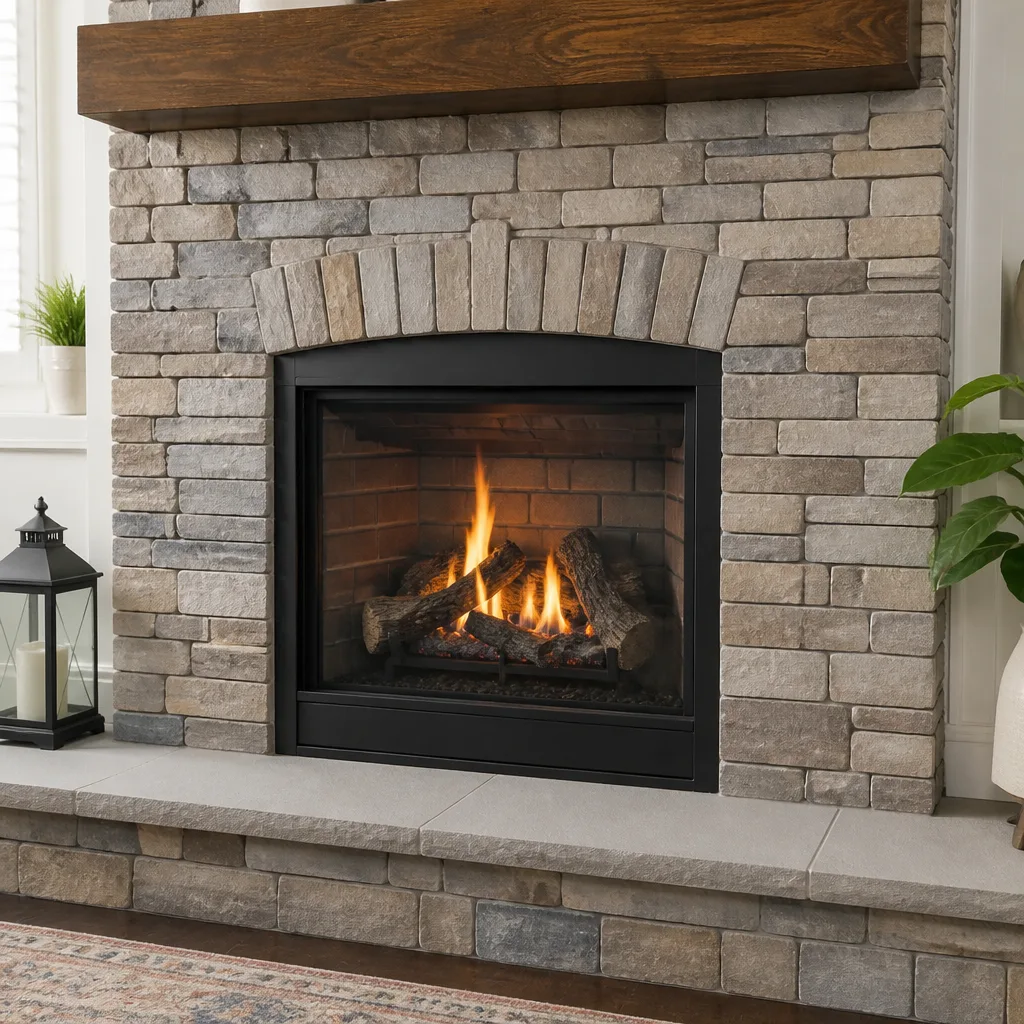
A gas-log fireplace in Richardson doesn’t burn wood, so it doesn’t build creosote the way a wood-burning fireplace does. That’s the reason most gas-log owners skip seasonal care entirely, and it’s a mistake. A gas-log fireplace still needs an annual inspection, and here’s why.
The chimney is the same structure it was before the logs were installed. The flue still vents combustion gases, still collects dust and debris, and still needs its liner, crown, and cap checked. And because a gas log set is often set into a firebox that was originally built for wood, the original flue may be oversized for the smaller gas flame, which means it never warms to an effective draft. That cooler flue is more prone to condensation and moisture. Moisture damages masonry on the same spring-to-summer schedule as any other chimney.
A seasonal check on a gas-log fireplace looks at:
- The flue itself, for debris, animal nests, and any obstruction blocking the vent path
- The liner, for cracks or deterioration that would let combustion gases into the structure
- The damper and venting, for proper operation and draft
- The cap and screen, for wind and animal resistance
- The firebox and surrounding masonry for moisture damage
Carbon monoxide is the safety issue in a gas-log fireplace, and the reason an annual inspection is worth the time even when the chimney “hasn’t been used much.” An obstruction or a failed liner can route exhaust gases back into the living space, and you can’t see that without the proper equipment. That’s the seasonal check that matters most for gas-log owners, and it’s the one most of them skip.
The Full Richardson Chimney Care Calendar at a Glance
Here’s the annual schedule we’d map to a Richardson home, condensed down so you can keep it somewhere useful.
- Early spring (March to May). Post-season moisture assessment. Check for efflorescence and failing mortar. Confirm the crown and flashing. Apply a breathable water repellent once the masonry is sound. Complete any repair flagged in the fall.
- Late spring (May). Final exterior check before the hot season. Confirm the cap is seated and the screen is intact.
- Summer (June to August). Ground-level inspections with binoculars through the heat. Watch the crown for new cracks and the brick for white staining. Don’t sweep yet.
- Early fall (September to October). The sweep window. Full inspection of flue, firebox, damper, smoke chamber, crown, cap, and flashing. Test the damper. Confirm the smoke chamber and shelf.
- Late fall (October). Complete any liner, crown, or smoke chamber work while the weather is still workable. Confirm the flue is clear before the first fire.
- Winter (November to February). Watch for ice events. Check the chimney from the ground after any storm. Leave roof work to a professional.
That’s six touchpoints across the year, and honestly most of them are things you can do yourself from the ground with a pair of binoculars and a notepad. The two that need a professional are the fall sweep and inspection, and any repair the inspection flags. The rest is vigilance. That’s the difference between an annual event and an annual schedule.
If you’re ready to book the fall sweep, our Ridgeway Chimney Sweep team handles sweep, inspect, and repair together, so a problem caught in October is a problem we can schedule for repair in the same season rather than handing you off to another contractor.
Common Mistakes to Avoid
- Treating low use as low risk. A Richardson fireplace that burns fewer than thirty days a year is more likely to sit idle through humid summer months, and moisture damage is the risk that builds. Low use doesn’t mean skip the annual sweep and inspection.
- Sweeping outside the fall window and then letting the flue sit. A sweep in July leaves a clean but empty, humid flue for weeks. Sweep in September or October, close to the first fire.
- Sealing the chimney with a trap-it-in coating. A sealer that locks moisture inside the masonry does more harm than good. Breathable water repellent, applied after moisture is resolved, is what protects.
- Ignoring the crown until it fails. A crown is a concrete slab that takes direct sun, direct heat, and ice load through Richardson’s year. Cracks are easy to overlook from the driveway, and by the time it fails, water has been inside the structure for months.
- Skipping gas-log fireplaces entirely. No creosote doesn’t mean no inspection. The flue, liner, and cap still need an annual check, and carbon monoxide is a real reason to have it done.
- Scrubbing efflorescence off without diagnosing the source. White staining is a symptom. Scrubbing the surface hides the symptom and leaves the moisture source intact.
- Waiting until the first cold week to schedule the fall sweep. By then you’re competing with everyone else’s first cold-snap call, and you’re squeezing in a repair while you want to be using the fireplace.
When to Call a Professional
Call a professional when you’re not sure what you’re looking at, when the firebox shows rust or the brick shows efflorescence, when a crown crack looks like it’s grown since last season, and any time a liner is in question.
You’ll also want a trained technician if the fireplace smokes into the room, if the damper is stuck, if there’s a smell of creosote when the fireplace is off, or if an ice event left the roofline looking different than it did in the fall. None of those should be checked from a ladder on a bad day.
Ridgeway Chimney Sweep offers free estimates in Richardson. Call (888) 873-4715. We answer 24/7. Fast dispatch from 7am to 7pm, Sunday through Friday. Our technicians have up to 15 years of experience, we work with contractor-trusted product lines like DuraFlex, HeatShield, Gelco, Olympia Chimney, Famco, and Copperfield, and we cover the full lifespan of the chimney: sweep, inspect, and repair under one company.
Frequently Asked Questions
Once a year for most Richardson homes, timed to the September to October window before the burning season. A wood-burning fireplace with regular use may need a mid-season sweep too. A gas-log fireplace needs an annual inspection even though it doesn’t build creosote. Call (888) 873-4715 for a free estimate.
Yes. Low burn counts are exactly why a Richardson chimney needs the annual inspection. An idle flue sits through humid summer months and collects moisture that damages mortar joints and crowns. The inspection is what catches that damage before it spreads. Call (888) 873-4715 for an exact quote; estimates are free.
That depends on the inspection, and nothing is recommended without real evidence of a problem. A cracked or pitted liner can often be addressed with HeatShield ceramic resurfacing rather than a full reline. When a full reline is needed, we install DuraFlex flexible liner systems. We’ll show you what we found and explain what it means before you decide. Call (888) 873-4715 for a free estimate.
Moisture damage is the most likely outcome in Richardson, and it builds slowly. Cracked crowns, failing mortar joints, and deteriorated liners don’t announce themselves from the ground. Skipping the check doesn’t cause a fire on its own, but it does let moisture and structural problems grow until a small repair becomes a large one. Call (888) 873-4715 to schedule the inspection before the problem compounds.
No, though spring is a useful time for other work. The fall window (September to October) puts a clean flue and a fresh inspection right before the burning season, which is when you’ll actually notice a problem. Spring is for the moisture assessment, water repellent, efflorescence diagnosis, and any repair the fall inspection flagged. Call (888) 873-4715 to book either.
Check the chimney from the ground only. Look for a shifted cap, new crown cracks, or new exterior staining, then call if anything looks different from the fall inspection. Do not climb the roof while it may still be icy. We answer 24/7. Fast dispatch from 7am to 7pm, Sunday through Friday. A call outside dispatch hours is booked into the next opening.
The Bottom Line
Richardson’s mild winters and hot summers reshape chimney care into a year-round job. The fall sweep and inspection (September to October) sits right before the burning season and catches the problems that matter. The spring window is for moisture assessment and water repellent, applied after the masonry is confirmed sound. Summer is when the idle flue does its quiet work, and winter ice events are when a small crack gets the chance to widen. The single best move is the annual fall sweep and inspection booked before the first cold week, and the second is calling us when something doesn’t look right from the ground. For a Richardson homeowner, that rhythm is what keeps a lightly used chimney in good shape, year after year.
Call (888) 873-4715 for a free estimate. We answer 24/7. Fast dispatch from 7am to 7pm, Sunday through Friday.
Written by the team at Ridgeway Chimney Sweep.
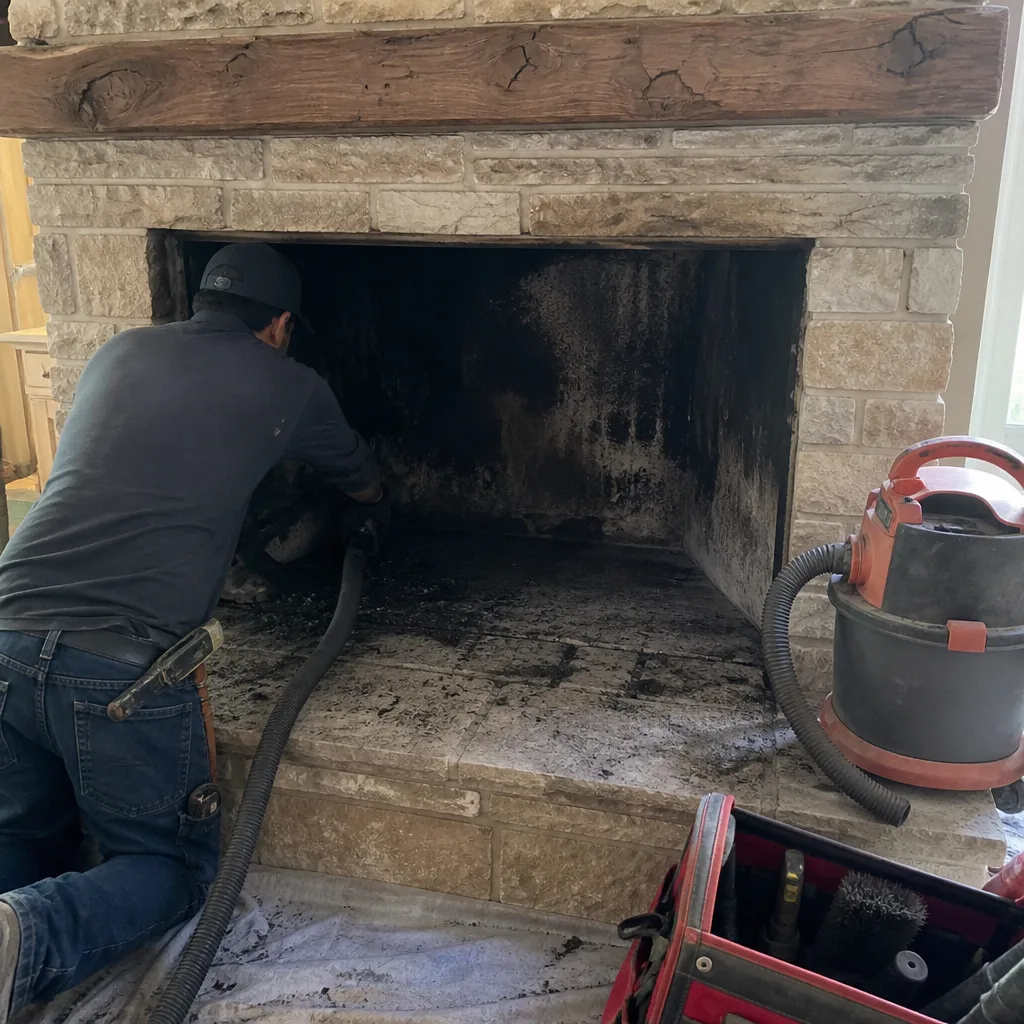
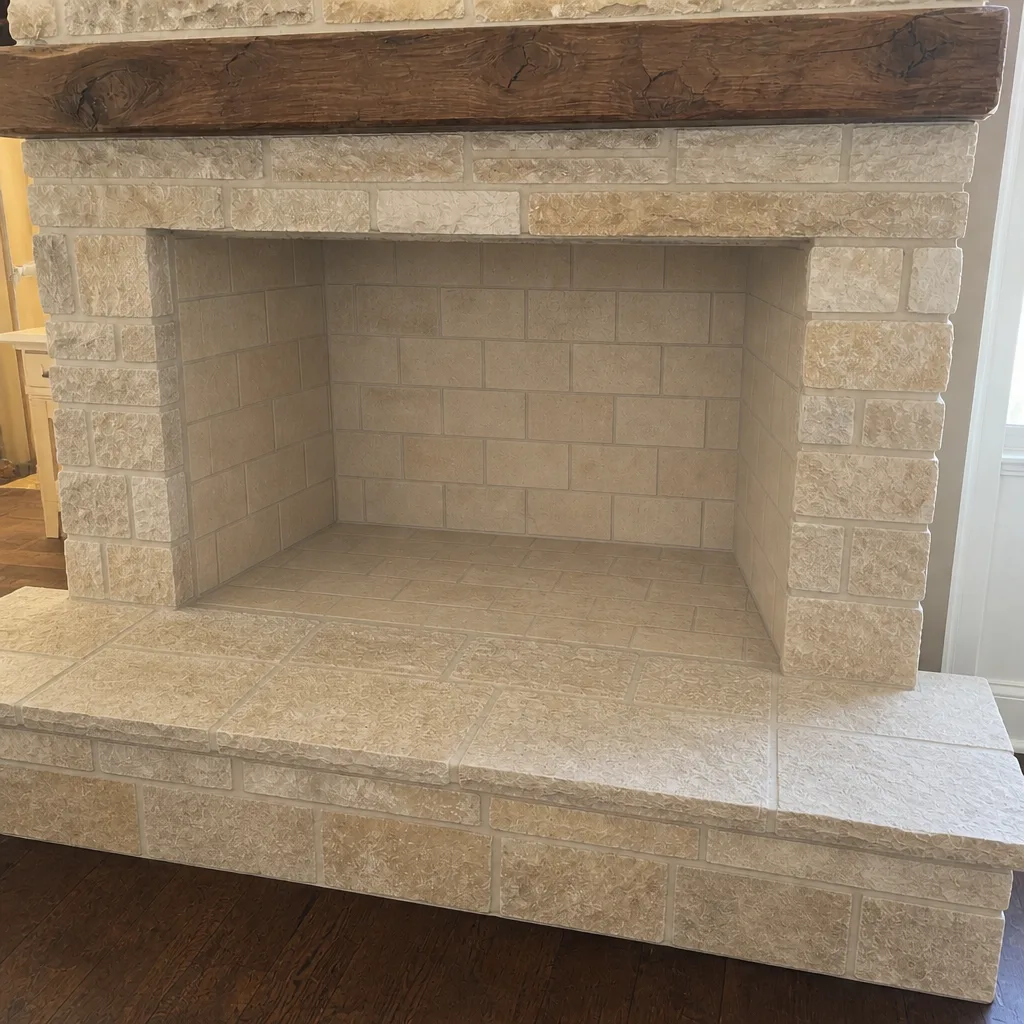
See the difference
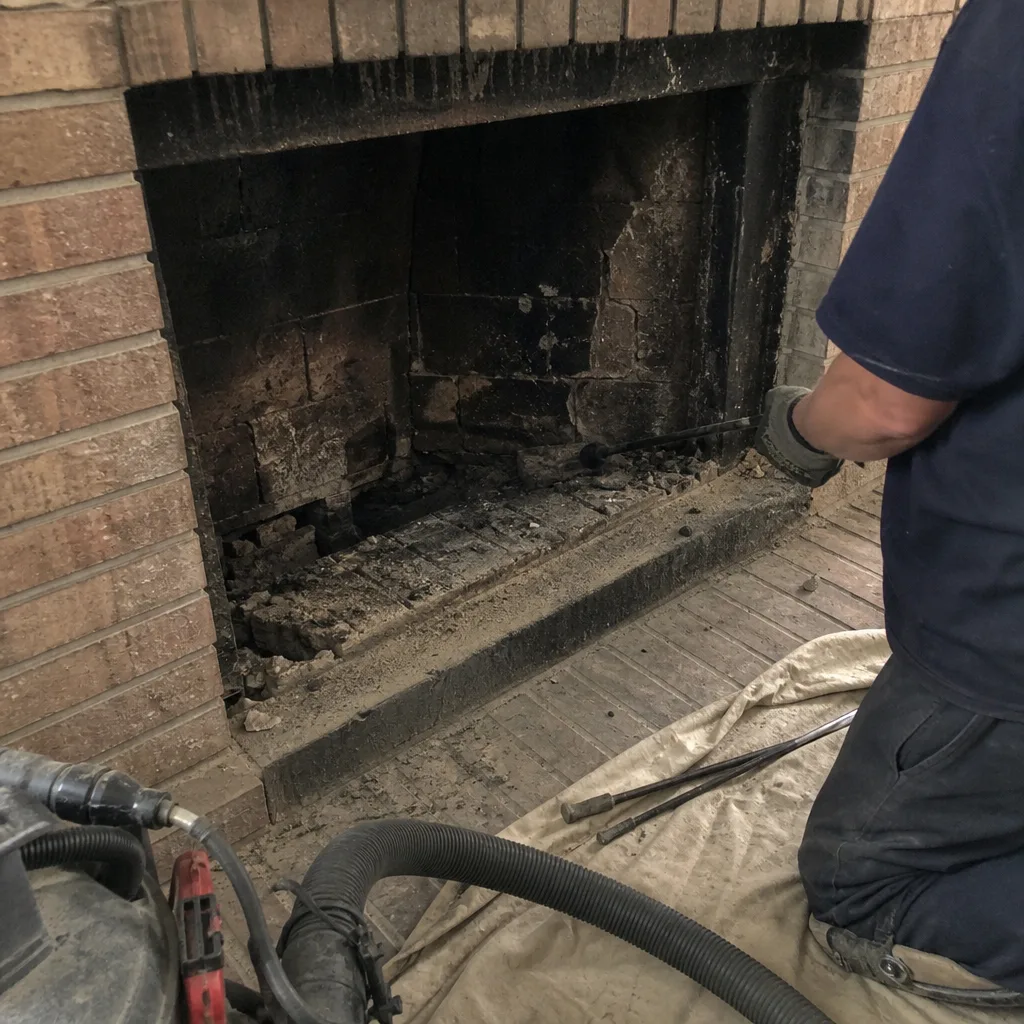 Before
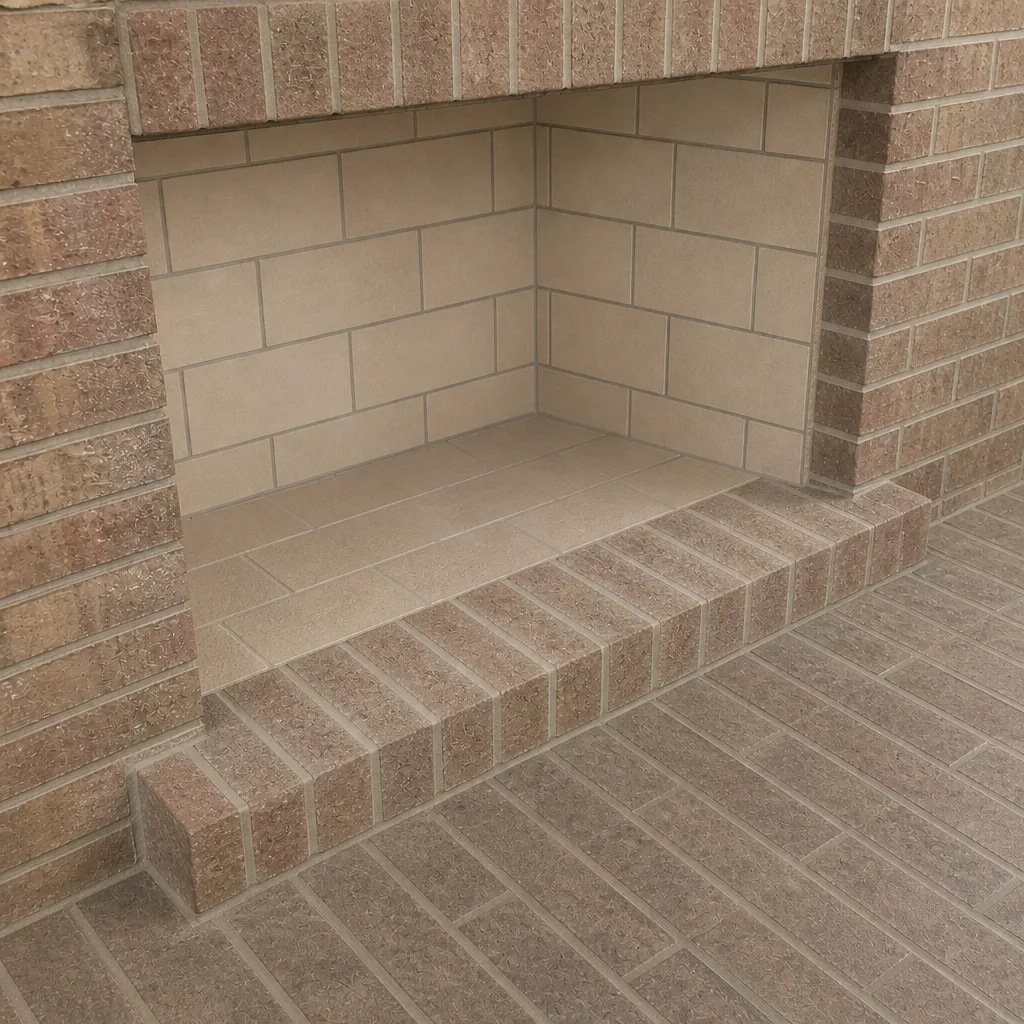 After
 Before
 After
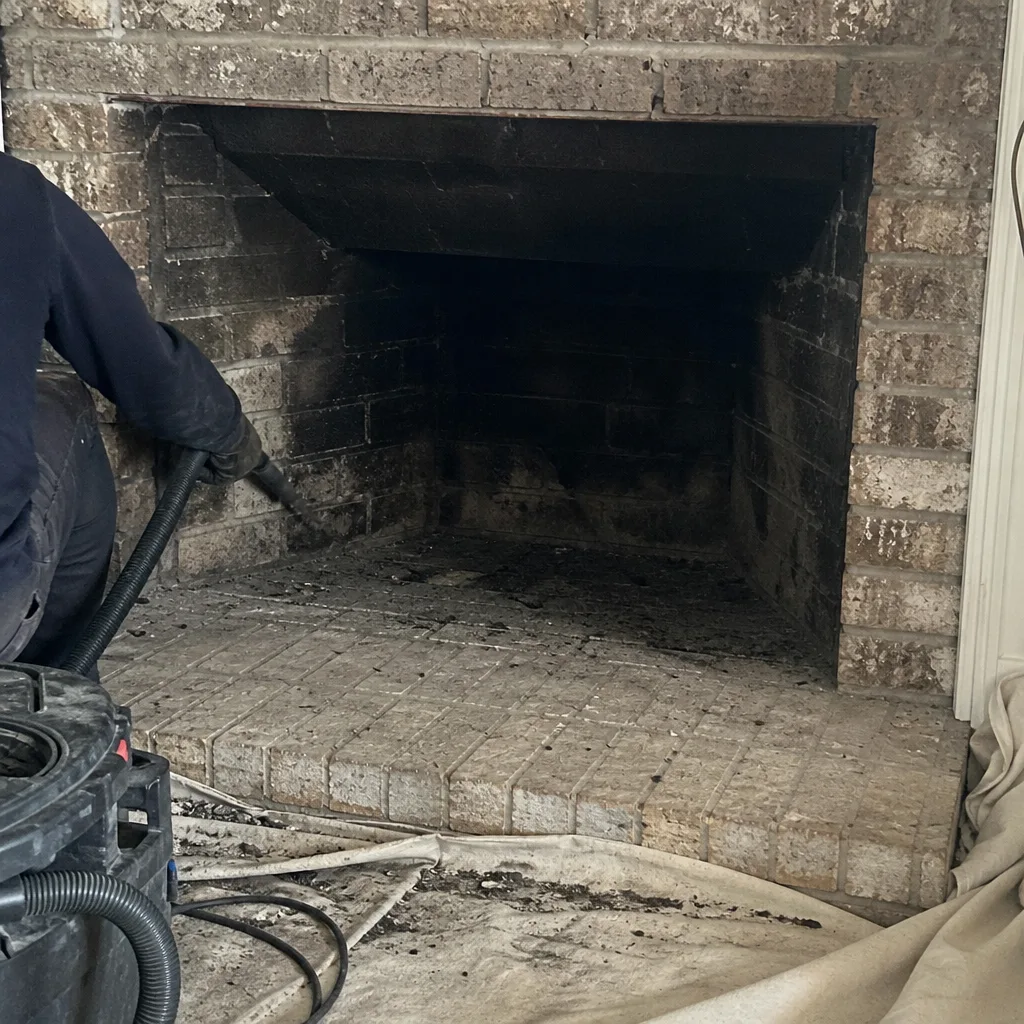 Before
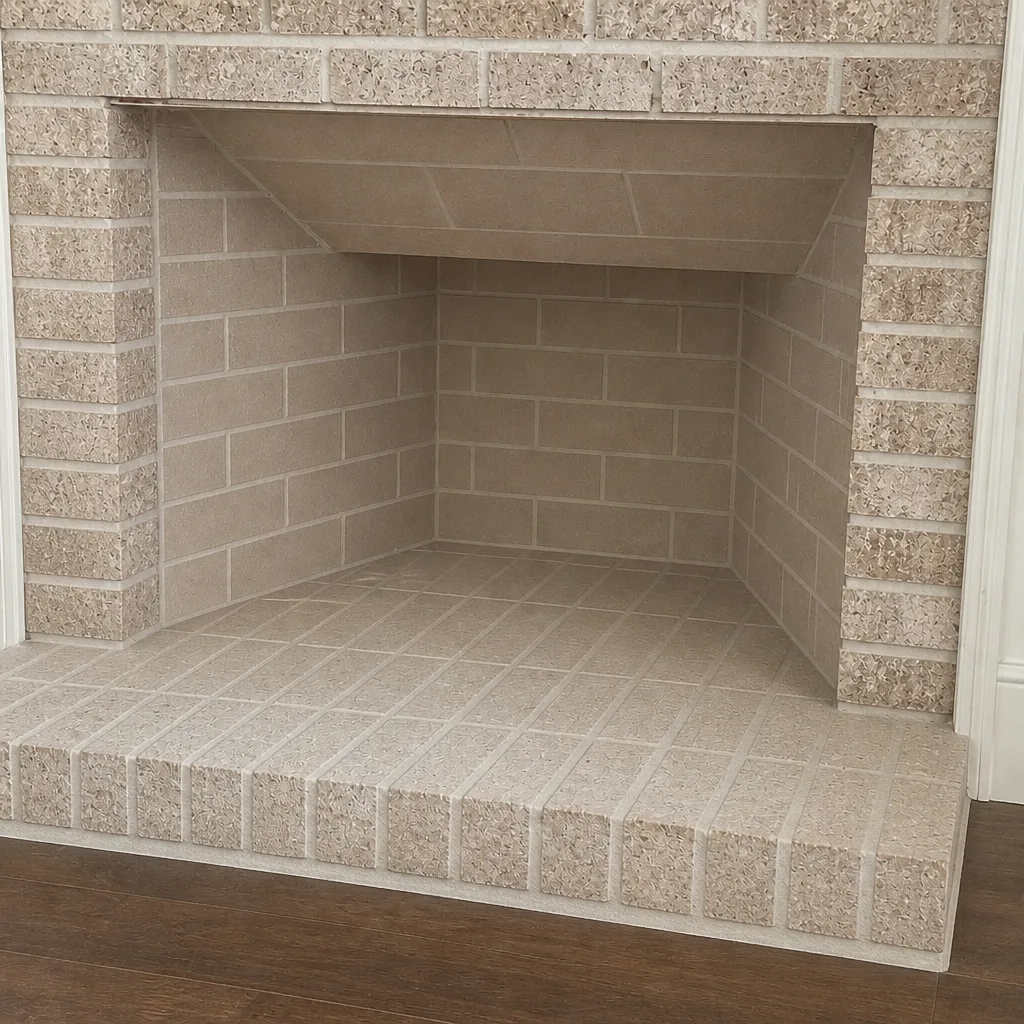 After