
Last updated November 16, 2026
 Sweep & inspection
 Caps & crowns
 Flue relining
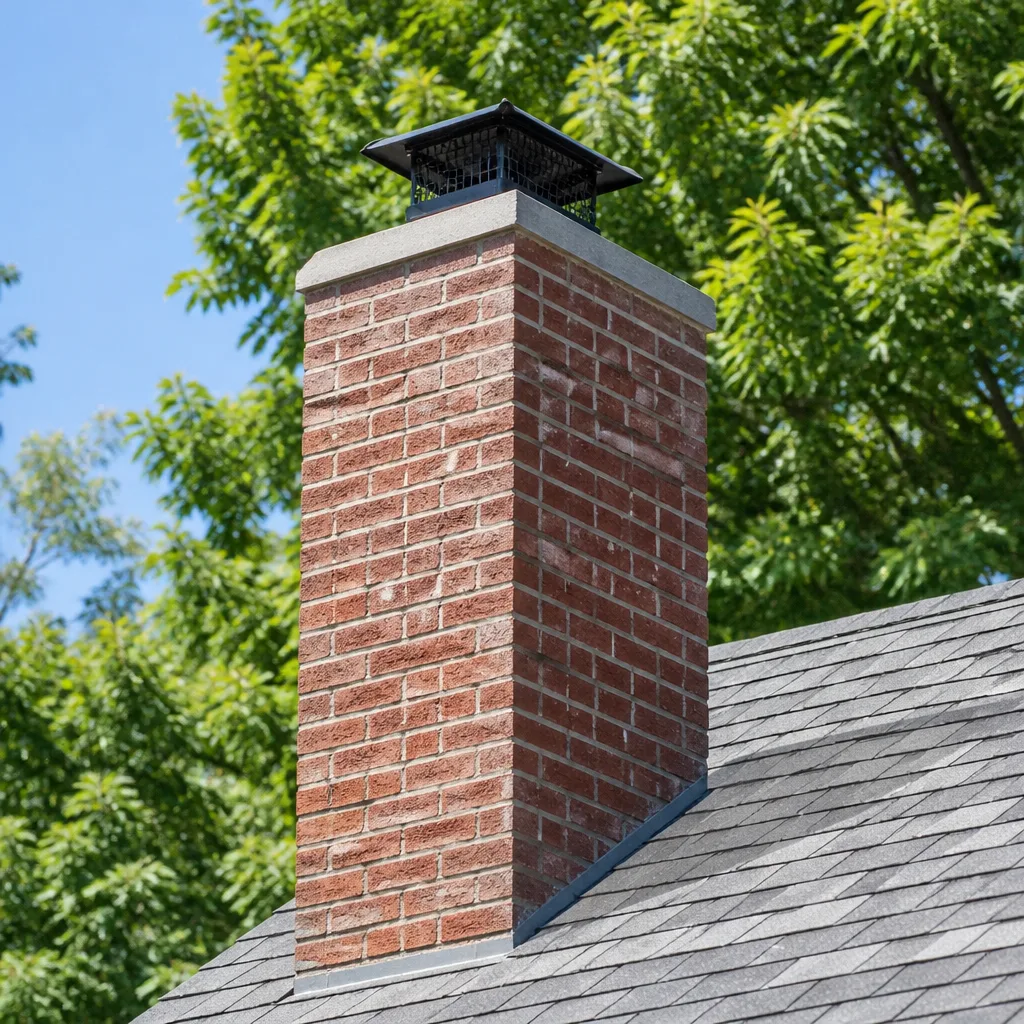 Masonry repair
 Gas fireplace service
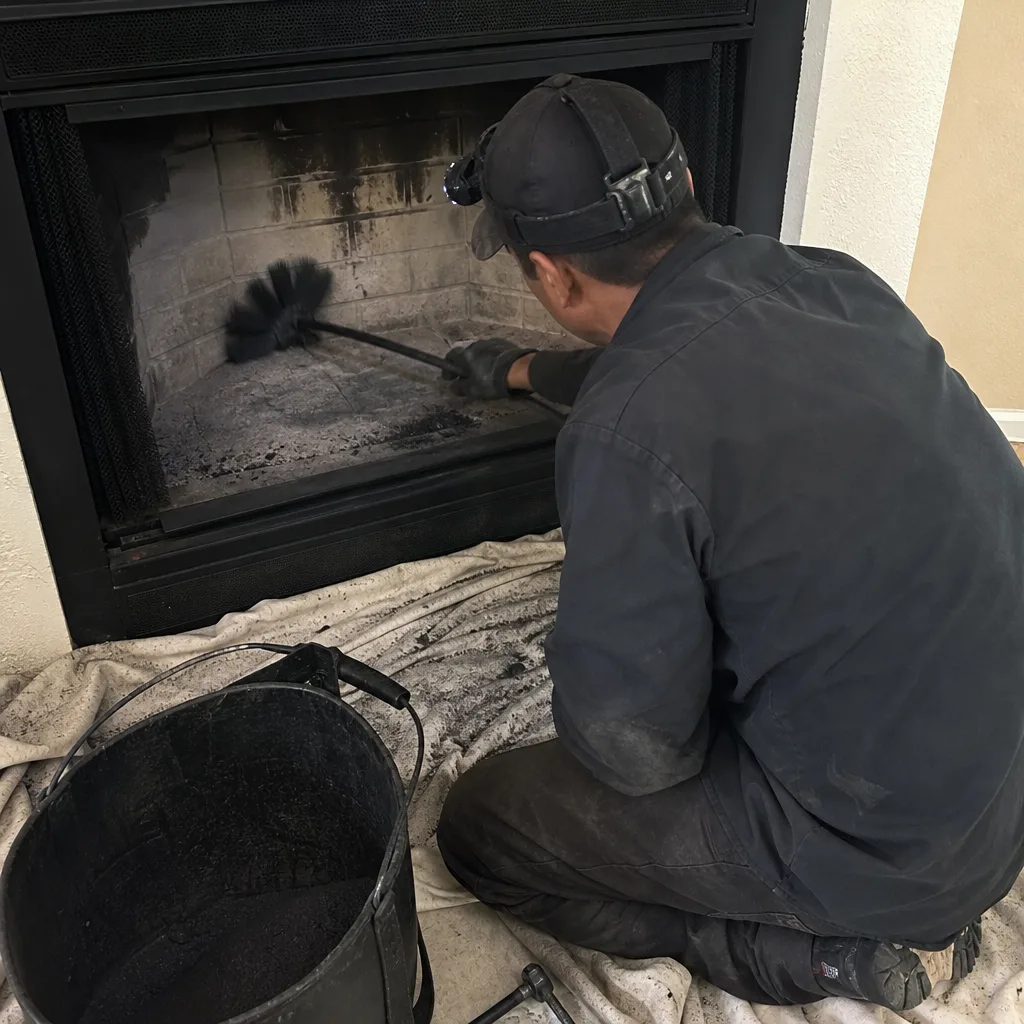
Level 1 sweep and inspection to the NFPA 211 annual standard - flue, crown, cap, and flashing checked and photographed
Chimney sweep logs do not sweep chimneys. They loosen some creosote - which then falls where a brush and vacuum still have to collect it.
Chimney Cleaning Cost Breakdown: The Richardson Homeowner’s Reference for 2026
A $79 chimney cleaning coupon and a $299 cleaning from a sweep who documents the work aren’t really competing on the same service. They’re scoping the job differently. One price buys a brush down the flue and a handshake. The other buys a sweep, a Level 1 inspection, and a written report you can file away and hand to a buyer someday. The gap usually stays invisible for a heating season or two, then it shows up as a hidden liner crack or a creosote stage nobody caught. This guide breaks down what chimney cleaning and the repairs that follow actually cost in the Richardson market for 2026, what drives each price tier, and how to read a quote so you’re comparing deliverables instead of numbers.
Quick Answer
A standard chimney cleaning in Richardson typically runs $150 to $300 and should include the sweep, a Level 1 inspection, and a written report. Add-ons like a camera scan, a cap replacement, or a liner repair push the total higher, with common repairs ranging from roughly $250 for a cap and flashing refresh to $2,500 to $5,000 for a full flexible liner installation. The written estimate you receive sets the final price, and every number here is typical rather than fixed.
Styles & brands we work with
- Sweep & inspection
- Caps & crowns
- Flue relining
- Masonry repair
- Gas fireplace service
Table of Contents
- What a Baseline Cleaning Quote Should Include in Richardson
- What Legitimately Drives the Price Up
- Creosote Stages and Why They Change the Price
- Repair Cost Ranges for Common Findings
- Why the Cheapest Quote Often Skips the Inspection
- How to Compare Multi-Item Repair Quotes
- How Often Richardson Homeowners Should Schedule a Sweep
- What You Can Safely Check Yourself
What a Baseline Cleaning Quote Should Include in Richardson
A baseline chimney cleaning quote in Richardson should cover three things: the physical sweep of the flue, a Level 1 inspection of the accessible portions of the chimney, and a written report of findings. If any of the three is missing, you’re not looking at the same service as a quote that includes it. A brush and a vacuum without an inspection is a cleaning. A brush plus a documented inspection is chimney care. The difference matters most in a market like Richardson, where the housing stock spans mid-century ranch homes and newer builds, and the fireplace setups vary from masonry fireplaces to factory-built inserts to freestanding wood stoves.
The sweep itself involves removing soot, ash, and creosote from the firebox, smoke chamber, and flue. The Level 1 inspection covers what’s visible without opening walls: the firebox, damper, smoke shelf, flue interior as far as the sweep can see, the chimney cap, the crown, the flashing, and the exterior masonry. The written report should note condition, any findings, and any recommendations with photos or a clear description.
- Standard cleaning (single flue, straightforward access): typical range $150 to $300
- Cleaning with camera scan of the flue: often $250 to $400
- Second flue or additional appliance: each additional flue typically adds $75 to $150
- Level 2 inspection (camera, for real estate transaction or after a chimney fire): typically $250 to $500 on its own
When you book a chimney sweep in the area, ask up front whether a Level 1 inspection and written report are included and whether photos will be part of the deliverable. On a home with two flues (one for the fireplace, one for a furnace or water heater), make sure the quote names both, because single-flue pricing is often quoted and then quietly adjusted at the door.
What Legitimately Drives the Price Up
Legitimate cost drivers are real conditions on your chimney, not arbitrary upcharges. A quote that lands well above the typical range should point to at least one of the factors below. A quote that lands well below should be weighed against what’s being left out.
- Liner condition. A cracked or deteriorated clay tile liner can’t be safely swept without risking further damage, and may call for camera inspection or a resurfacing approach instead of a standard brush pass.
- Chimney height and roof access. A tall chimney or a steep or awkward roof pitch adds time and equipment. Single-story homes with easy roof access sit at the low end; multi-story or complex rooflines sit higher.
- Creosote stage. Stage 3 creosote is glazed and hardened and can require chemical treatment or rotary cleaning over a longer session than a routine sweep.
- Number of flues or appliances. Each flue is cleaned and inspected on its own. Two flues don’t get cleaned in the time of one.
- Access difficulty. A wood stove with a tight clearance, an insert that has to be partially removed, or a damper that’s seized all add time to the job.
- Obstructions. Nesting debris, a fallen cap, or a partially collapsed flue tile means the sweep can’t proceed with a straightforward cleaning.
In our experience, quotes in Richardson cluster into three tiers: the sub-$100 coupon tier that usually excludes inspection, the $150 to $300 baseline that includes a documented Level 1, and the $300 and up tier that includes camera work or addresses a condition. The middle tier is where most well-scoped jobs land.
Creosote Stages and Why They Change the Price
Creosote is the residue left behind by wood smoke, and it builds up in three recognized stages. Each stage requires a different cleaning approach, which is the main reason two quotes for the same chimney can diverge by a hundred dollars or more before any repair enters the picture.
- Stage 1: soot and light flaky creosote. Removed with a standard brush and vacuum. Most routine sweeps address Stage 1 buildup.
- Stage 2: hardened, crusty creosote. Requires a stiffer brush or rotary cleaning. More time on the flue, higher price.
- Stage 3: glazed, hardened creosote. The most combustible stage. Removal typically requires chemical treatment or specialized rotary equipment, and the flue should be inspected for damage afterward.
The stage your chimney reaches depends on how the fireplace has been used: how dry the wood was, how hot the fires burned, how often the fireplace was used, and how long it’s been since the last sweep. In the Richardson area, our mild winters mean fireplaces often get used in concentrated bursts during the few cold snaps rather than steadily through a long season, and that pattern can produce more creosote than a steady burn would. It’s one reason a sweep booked before the first cold snap matters. Creosote at Stage 3 is the fuel load behind chimney fires, so a sweep that clears it is a safety service, not a cosmetic one.
If a sweep tells you the creosote is glazed, ask what stage and what method will be used to remove it. A reputable operator will name the stage and the approach. A vague “it’s pretty bad up there” is not a scope.
Repair Cost Ranges for Common Findings
Most chimney sweeps turn up at least one finding worth recommending a repair for. The three most common in Richardson are a damaged flue liner, a failing crown or cap, and flashing that has pulled away from the roof. Each has a typical range and a right material for the job.
Liner resurfacing vs. liner replacement
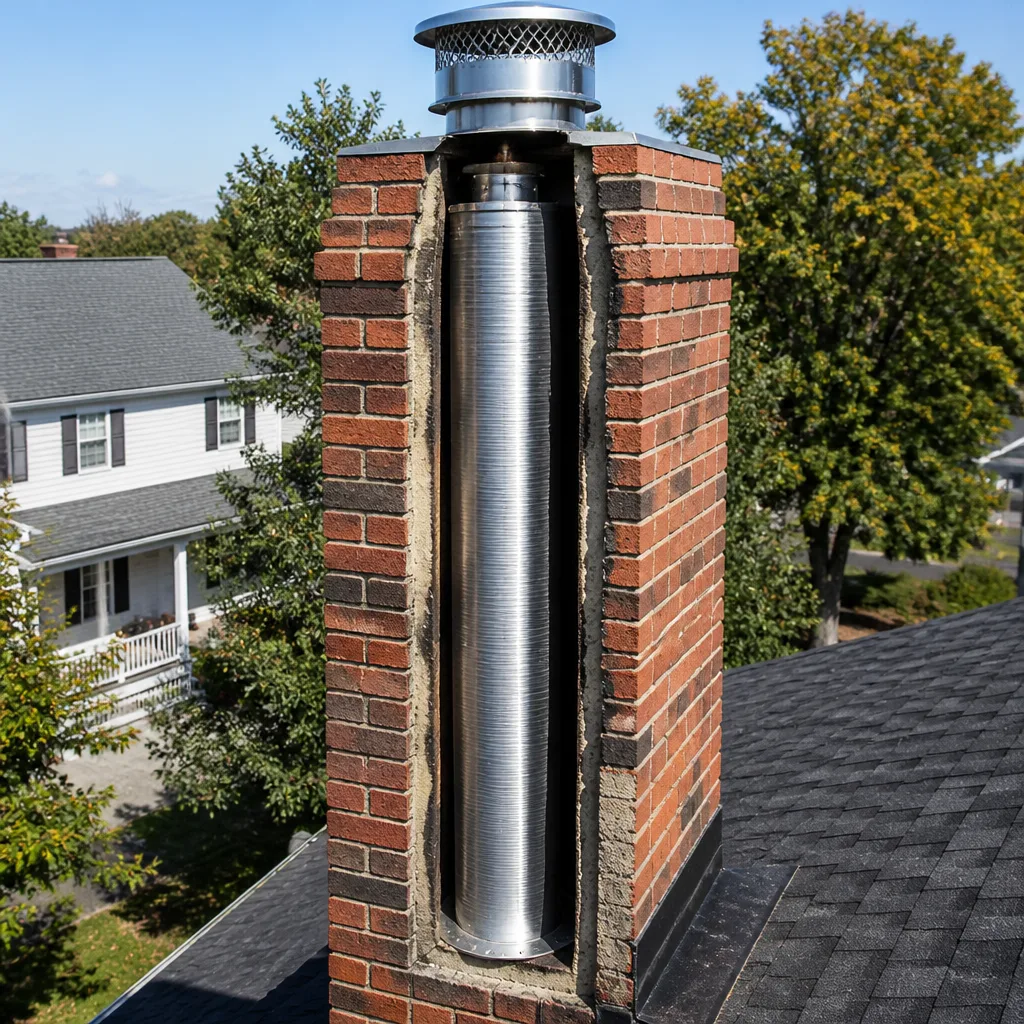
When the clay tile liner is cracked or spalling, there are usually two paths. HeatShield ceramic resurfacing fills and smooths the damaged liner from the inside, restoring a continuous flue surface without demolition. A full reline with a DuraFlex flexible stainless system replaces the flue entirely, which is the right call when the existing liner is structurally beyond resurfacing. Resurfacing typically runs $1,500 to $3,000; a full liner installation usually lands in the $2,500 to $5,000 range depending on flue length, diameter, and insulation.
Cap and flashing work
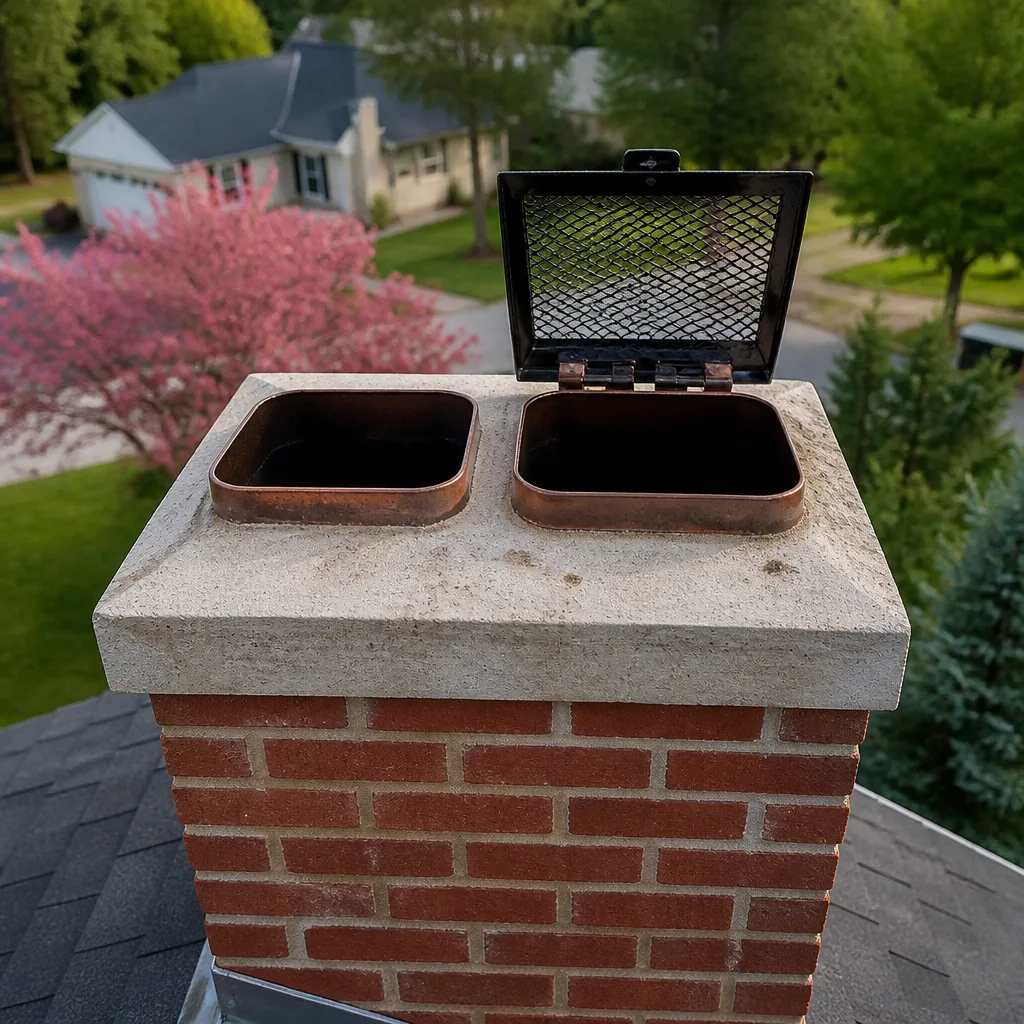
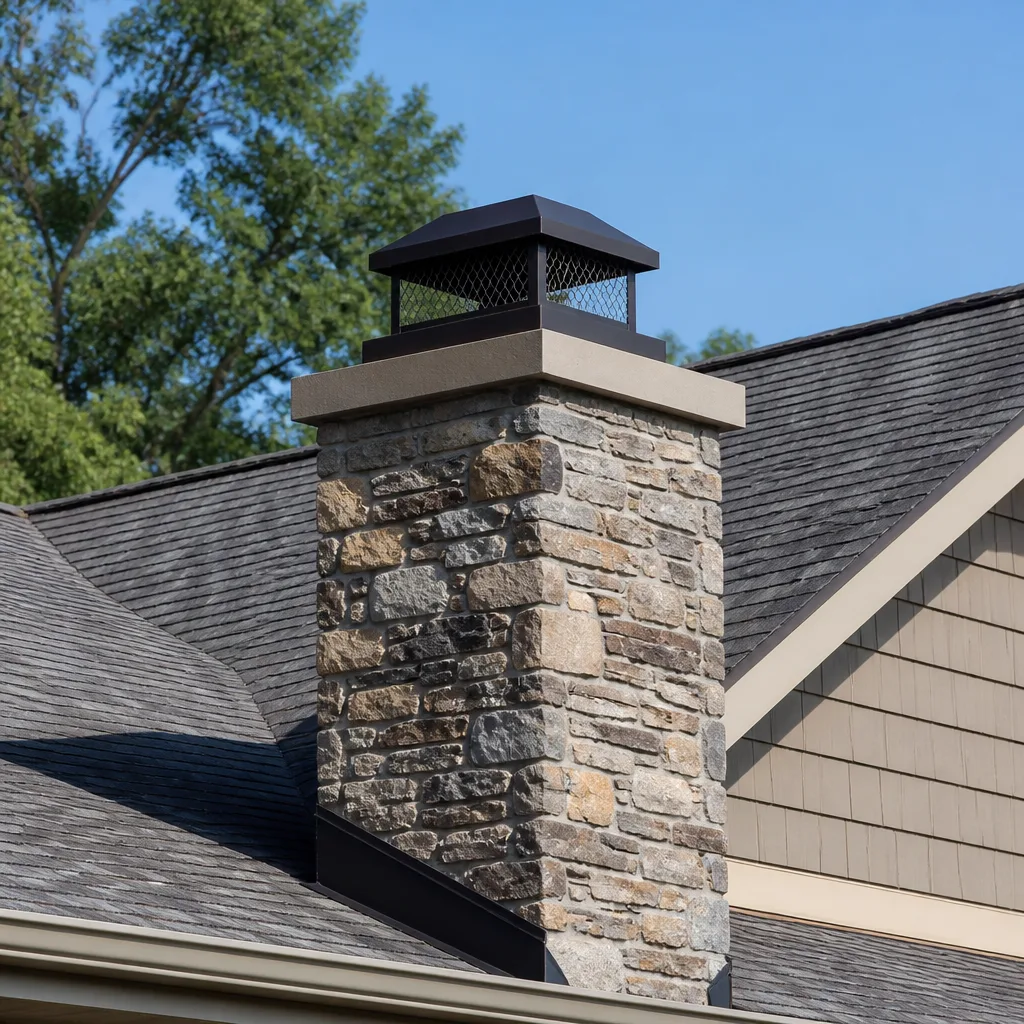
A missing or rusted cap lets water, animals, and debris into the flue. A new cap sourced from Gelco or Olympia Chimney typically runs $250 to $600 installed. Flashing repairs using Famco components usually fall in the $300 to $700 range. These are small numbers next to a liner, but a failed cap is often the reason the liner failed in the first place, so it’s money well spent.
Masonry and crown repair
A cracked crown or spalling brick above the roofline is a water-entry problem. Repointing or crown repair typically runs $500 to $1,500 depending on the extent, and larger rebuilds go higher. None of this work is cosmetic, because water that enters the chimney structure finds its way to the liner and the framing eventually.
If you’re weighing repair options, our chimney repair page walks through how each approach is scoped. Whatever the finding, nothing should be recommended without photo evidence you can see and a line-item estimate you can read.
Why the Cheapest Quote Often Skips the Inspection
The $79 cleaning coupon is real. What it usually doesn’t include is the inspection, and that omission is where the value gap lives. A sweep who brushes the flue and leaves hasn’t told you anything about the condition of the liner, the crown, the flashing, or the smoke chamber. You have a cleaner chimney and a system whose actual condition is still unknown.
The cost of skipping the inspection is deferred, which is why it stays invisible for a season or two. Then it shows up as a liner crack that got worse because nobody looked, a creosote stage that climbed because the chimney wasn’t checked before the season, or a cap that failed a year earlier than it needed to because a loose fastener was never noticed. None of that is dramatic in the moment. It becomes expensive at the point the fireplace can’t be safely used.
- Ask three questions before booking: Is a Level 1 inspection included? Is a written report part of the price? Will I see photos of anything you recommend fixing?
- Ask what the sweep will not cover. A single-flue quote on a two-flue chimney is scoped for half the system.
- Ask whether the inspection is a checkbox or a documented walk-through. A written report should name each component and its condition, not just say “swept.”
The right frame isn’t “cheap quote versus expensive quote.” It’s “cleaning alone versus cleaning with documentation.” If the low price is real and the inspection is included, that’s a legitimate quote. If the low price is low because the inspection is gone, the homeowner is paying later.
How to Compare Multi-Item Repair Quotes
A fair repair estimate is line-item, photo-backed, and specific enough that a second contractor could bid the same scope. A vague “your chimney needs work, it’ll be $2,400” is not an estimate, it’s a number. Comparing quotes is easier once you know what a good one looks like.
- Each finding gets its own line. Liner resurfacing and cap replacement should be separate entries with separate prices.
- Each repair names its material. “HeatShield resurfacing on a 12×12 flue” is a scope. “Liner repair” is not. Similarly, a DuraFlex reline should name the liner, diameter, and insulation.
- Photos accompany each recommendation. If a contractor recommends a repair you can’t see, ask for the photo. Any honest operator will have one.
- The report distinguishes urgent from can-wait. A cracked crown that’s letting water in is urgent. A slightly rusted cap that isn’t failing yet can wait a season. A good estimate says which is which.
- The price is a written estimate, not a verbal range. Verbal numbers change. A written estimate is the number you can hold a contractor to.
- Financing or guarantees are stated plainly, not implied. If a contractor can’t explain the work in plain terms, that’s a reason to get another quote, not a reason to trust the first one.
In our experience, the most common home repair regret in chimney work isn’t paying too much for the right job. It’s paying too little for the wrong scope, then discovering the gap a season or two later. The Ridgeway Chimney Sweep approach is to put everything in writing: what was found, what we recommend, what it costs, and what can safely wait.
How Often Richardson Homeowners Should Schedule a Sweep
Most Richardson homeowners should schedule a chimney sweep once a year, ideally before the first cold snap of the season. If the fireplace sees light use, an annual sweep still makes sense because the inspection that comes with it catches developing problems early. If the fireplace is a primary heat source or burns frequently through the cooler months, annual is the minimum, and a mid-season check is worth considering.
- Once a year: the baseline for any active wood-burning fireplace.
- Before the first burn of the season: best timing for catching creosote and condition issues before they’re a problem.
- After any chimney fire, even a small one: a Level 2 inspection is warranted regardless of the annual schedule.
- Before buying or selling a home with a fireplace: a Level 2 inspection is standard in most real estate transactions.
- After a change in fuel or appliance: switching to a new insert, stove, or fuel type warrants an inspection.
The mild winters here mean a fireplace might sit unused for weeks, then get a workout during a cold snap. That pattern doesn’t reduce the need for a sweep; it changes how creosote accumulates. A chimney that’s swept before the season starts is ready when the first real cold arrives. A chimney that isn’t swept becomes a question mark exactly when you want to use it.
What You Can Safely Check Yourself
There are a few things a homeowner can reasonably check without getting on the roof or opening up the chimney. These checks help you spot when to call a professional, not replace an inspection.
- Look up the flue from the firebox with a flashlight. If you can see heavy crusty buildup, glazed creosote, or anything blocking the flue, book a sweep.
- Check the firebox for cracks or loose mortar. Visible damage to the firebox brick or mortar is a reason to have someone look at it before the next fire.
- Look at the cap from the ground with binoculars. A missing cap, a bent cap, or obvious debris on top of the chimney is worth a call.
- Watch for water stains on the ceiling or chimney breast. Staining indoors can signal a flashing or crown issue.
- Note any smoke spillage into the room. A fireplace that used to draft fine and now doesn’t is worth an inspection.
What you should not do is get on the roof to inspect the flue, attempt to remove creosote yourself, or open up a gas appliance flue. Creosote removal, liner inspection, and any gas-related work are jobs for a trained technician, and a chimney fire or carbon monoxide problem is a serious outcome to risk to save a routine service call. If you’re not sure whether something you see is a problem, that’s a reason to call, not a reason to guess.
Common Mistakes to Avoid
- Booking on price alone. A quote that’s a third of the next one is usually missing the inspection, the report, or a second flue. Compare scope before you compare price.
- Skipping the sweep because the fireplace “looks fine.” Creosote and liner cracks aren’t visible from the living room. The annual sweep is a safety check disguised as a cleaning.
- Scheduling only after a problem appears. Booking in the spring or early fall, before the first cold snap in Richardson, keeps the wait shorter and the fireplace ready when you want it.
- Accepting a verbal “your chimney needs a new liner” without photos. Ask for the picture. If a contractor can’t show you the problem, get a second opinion before you approve the work.
- Assuming a cap is optional. A missing cap is the leading reason liners and crowns fail early. It’s a small line item that prevents a large one.
- Using a general handyman for liner work. HeatShield and DuraFlex installation require product-specific training. A generalist can’t source or install them correctly, and that’s why the resurfacing or reline costs what it does.
- Ignoring the second flue. If you have a furnace or water heater venting through the same chimney structure as the fireplace, both need inspection. A single-flue quote is half a scope.
See the difference
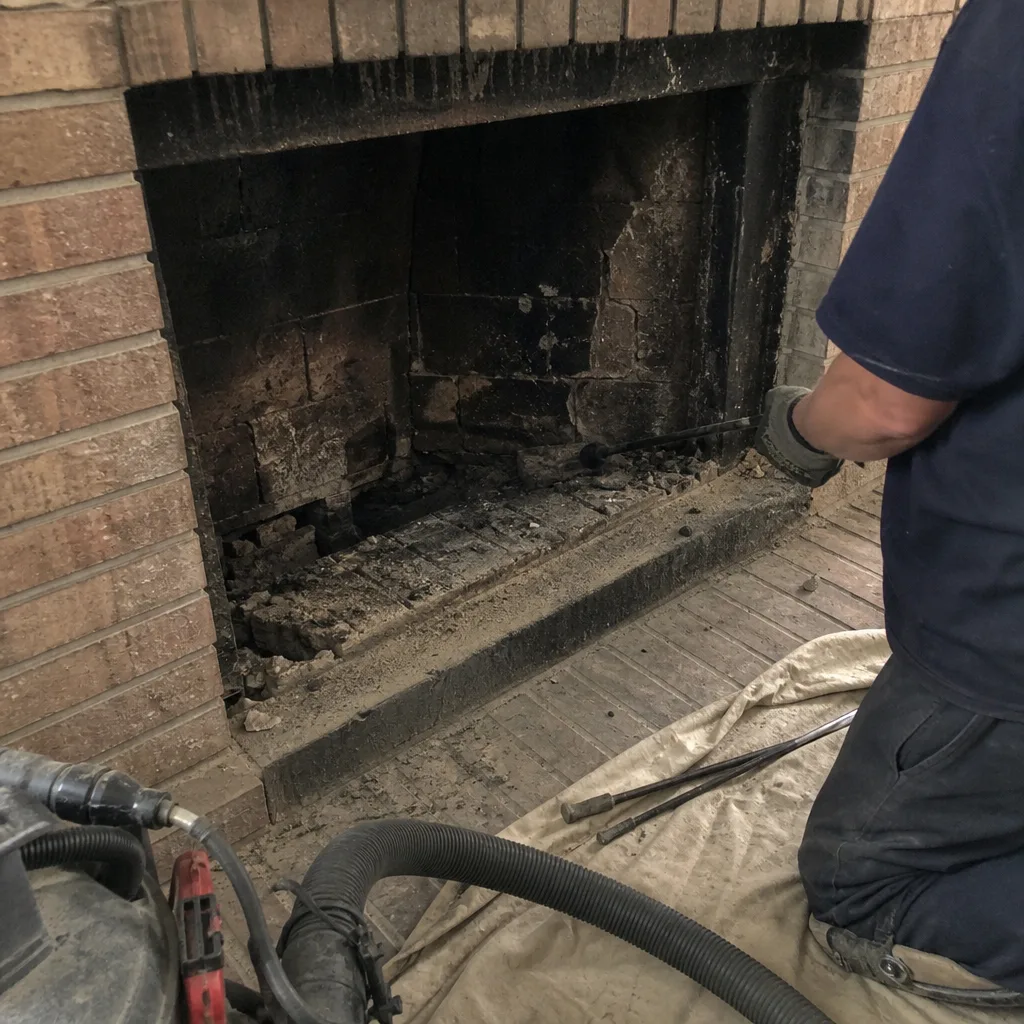 Before
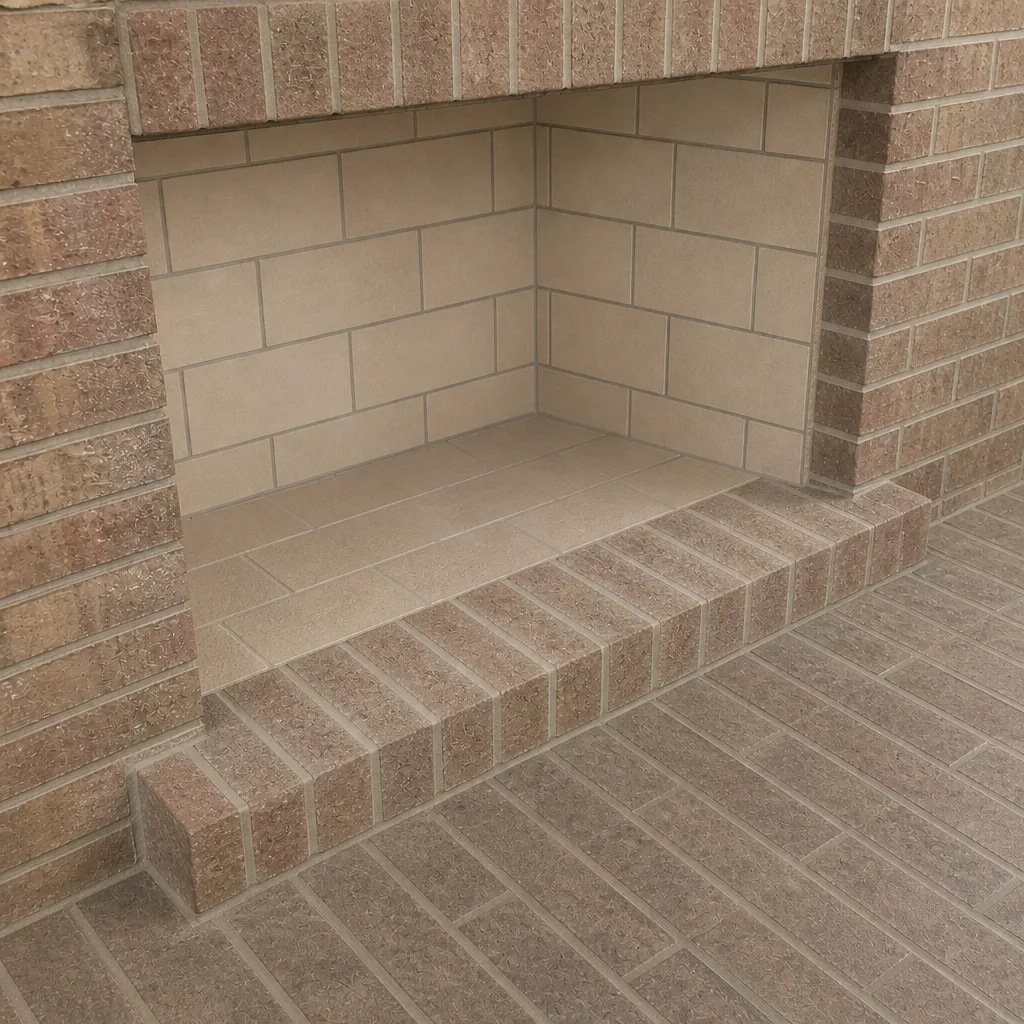 After
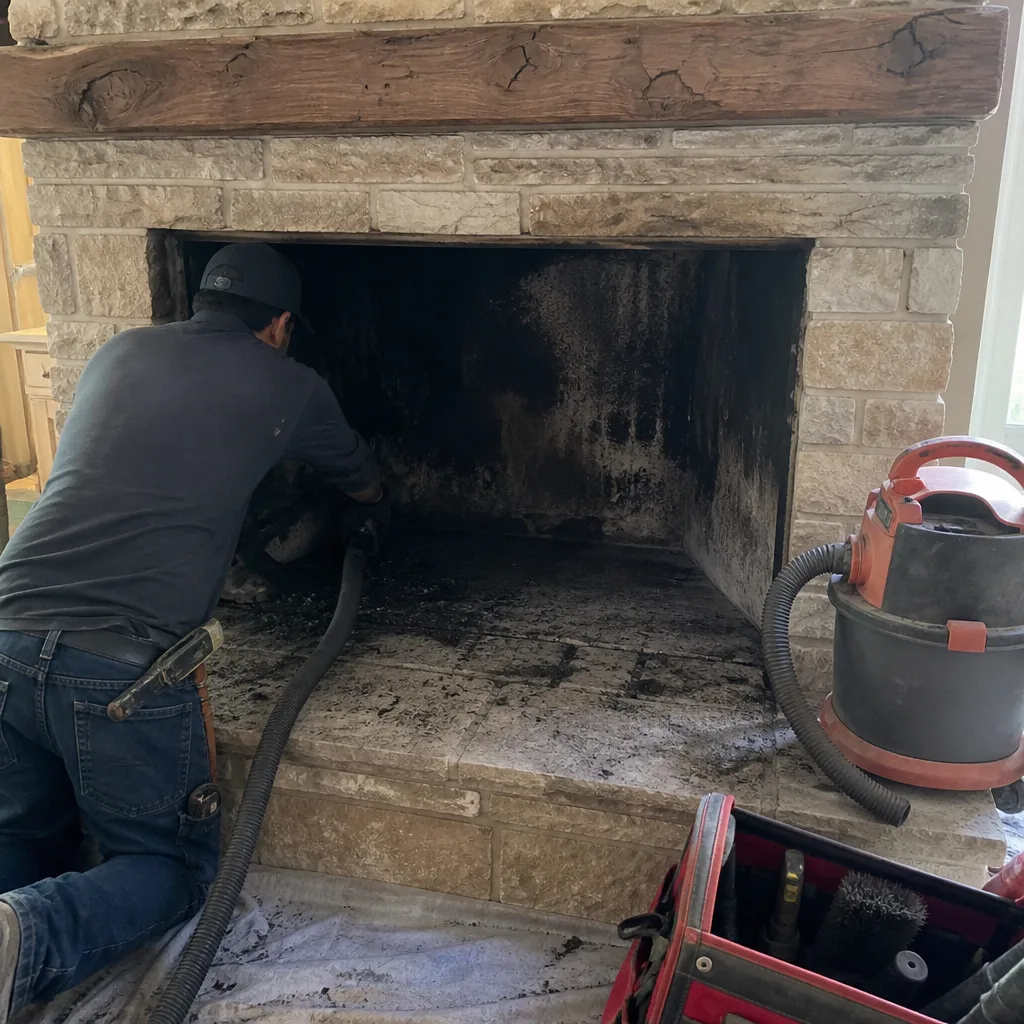 Before
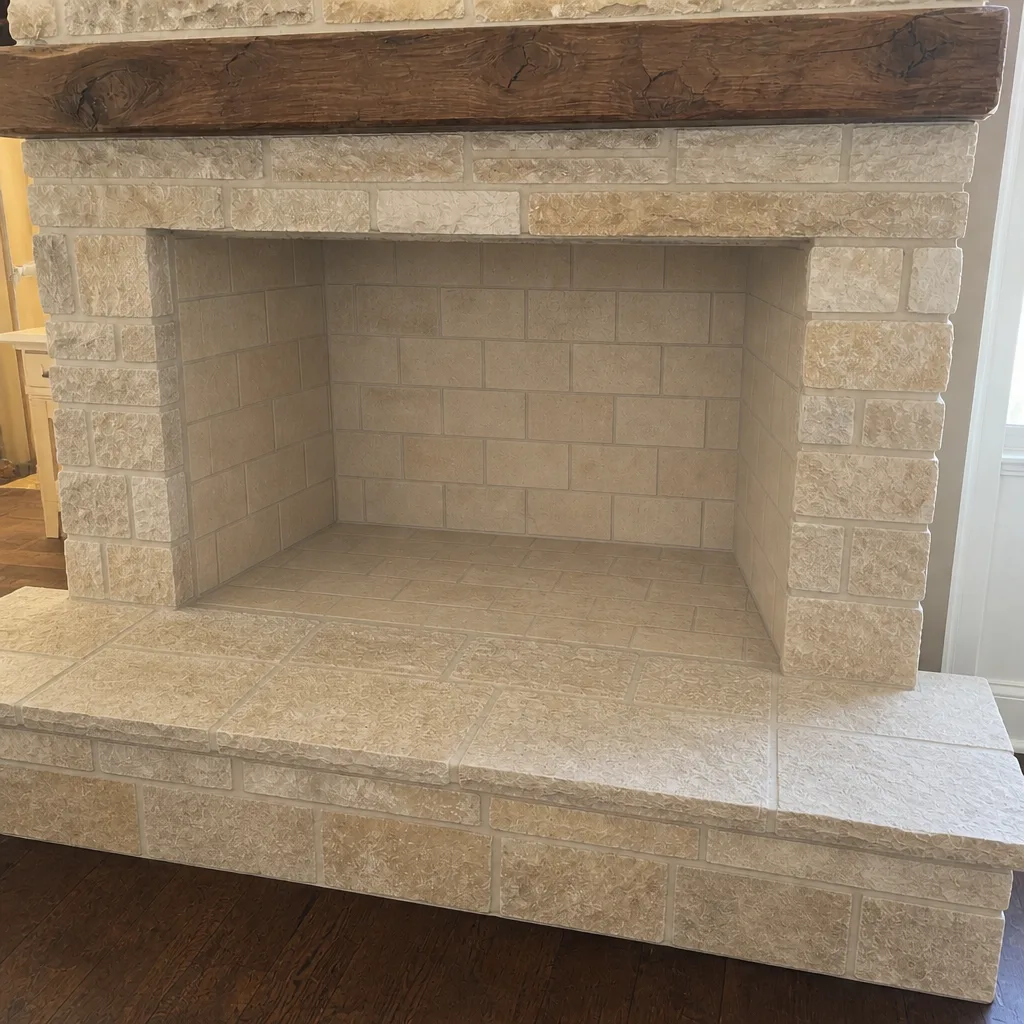 After
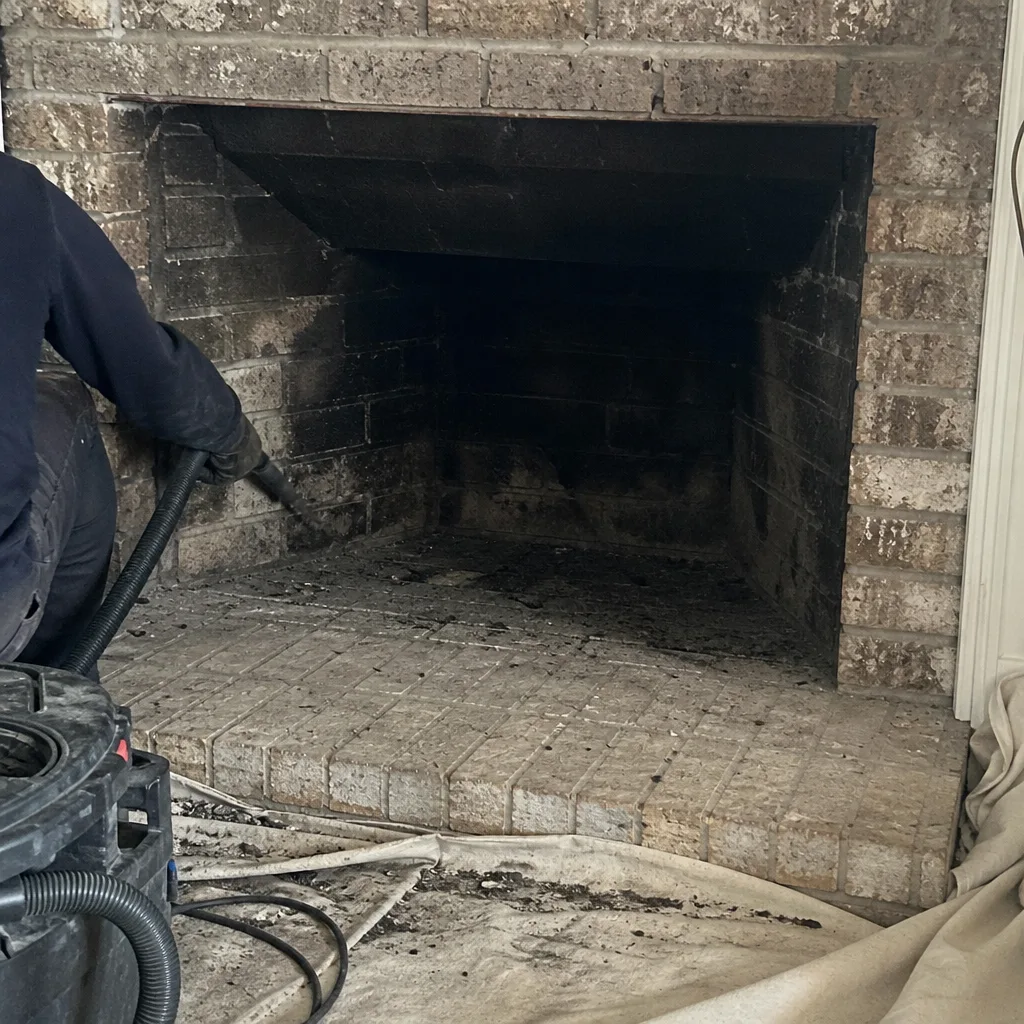 Before
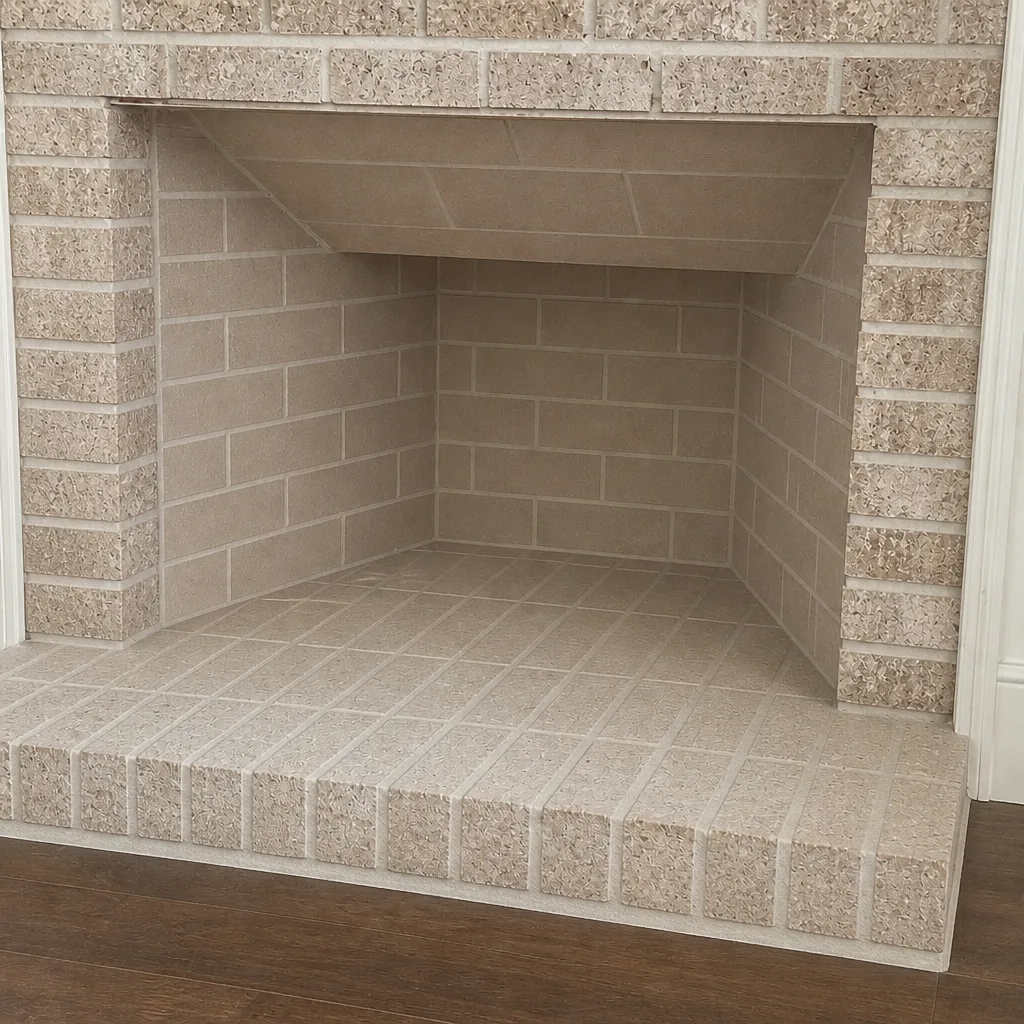 After
When to Call a Professional
Call a professional chimney sweep when you’re due for an annual cleaning, when you see or smell anything unusual around the fireplace, when you’ve had a chimney fire (even a small one), or when you’re buying or selling a home with a wood-burning appliance. Call right away if you smell gas near a gas fireplace or appliance, if smoke is spilling into the room when the fire is burning, or if you notice water staining around the chimney. These are reasons to have the system inspected, not reasons to keep burning. Richardson homeowners deserve a straight answer about what their chimney actually needs, and that answer starts with a documented inspection. Ridgeway Chimney Sweep offers free estimates in Richardson – call (888) 873-4715. We answer 24/7. Fast dispatch from 7am to 7pm, Sunday through Friday.
Frequently Asked Questions
A standard chimney cleaning in Richardson typically runs $150 to $300 and should include the sweep, a Level 1 inspection, and a written report. Cleaning with a camera scan typically runs $250 to $400, and each additional flue usually adds $75 to $150. The written estimate sets the final price, so ask for one up front. Call (888) 873-4715 for an exact quote – estimates are free.
Not always. A liner resurfacing with HeatShield can restore a cracked or spalled clay tile flue at roughly $1,500 to $3,000 without replacing it, and a full DuraFlex reline is only necessary when the existing liner is structurally beyond resurfacing. The right call depends on the actual condition, which is why you should ask for photos of the damage before approving the work. If a contractor can’t show you the problem, get a second opinion. Call (888) 873-4715 for a free estimate – and ask for the photo report.
Once a year is the baseline for any active wood-burning fireplace in Richardson, and more often if the fireplace is a primary heat source or burns frequently through the cooler months. Schedule the sweep before the first cold snap of the season, so the system is checked and ready when you want to use it. After any chimney fire, a Level 2 inspection is warranted regardless of the annual schedule. Call (888) 873-4715 to book a sweep.
A Level 1 inspection is the standard check that comes with a routine cleaning: it covers the accessible portions of the firebox, damper, flue, cap, crown, and flashing that a sweep can see without opening anything up. A Level 2 inspection adds a camera scan of the flue and is required after a chimney fire, before a real estate transaction, or after a change in fuel or appliance. A Level 2 typically runs $250 to $500 on its own. Call (888) 873-4715 for a level-specific quote.
The $79 quote usually covers the sweep only. The $299 quote typically covers the sweep, a Level 1 inspection, and a written report, and sometimes a camera scan. Those aren’t the same service. Compare scope, not price. Call (888) 873-4715 to see what a documented cleaning includes.
A new chimney cap sourced from a purpose-built brand like Gelco or Olympia Chimney typically runs $250 to $600 installed in the Richardson area, and flashing repairs using Famco components usually fall in the $300 to $700 range. It’s a small line item against a liner, and a well-fitted cap is the cheapest way to protect the flue from water and animals. Call (888) 873-4715 for a free estimate – estimates are free.
The Bottom Line
The chimney cleaning price in Richardson in 2026 tells you a lot about the scope, and very little about quality on its own. The three things that separate a well-priced quote from a cheap one are the Level 1 inspection, the written report, and the completeness of the flue count. When a repair is on the table, the deciding factor isn’t the number but the photos, the material spec, and whether the contractor can explain it in plain terms. Ask three questions, get it in writing, and schedule the sweep before the first cold snap. The rest of the numbers take care of themselves.
If you’re ready to book, the team at Richardson service can walk through what a documented cleaning involves. Call Ridgeway Chimney Sweep at (888) 873-4715 for a free estimate. We answer 24/7. Fast dispatch from 7am to 7pm, Sunday through Friday. Our technicians have up to 15 years of experience, and every recommendation is backed by photos you can see for yourself.
Written by the team at Ridgeway Chimney Sweep.