
Last updated November 16, 2026
 Sweep & inspection
 Caps & crowns
 Flue relining
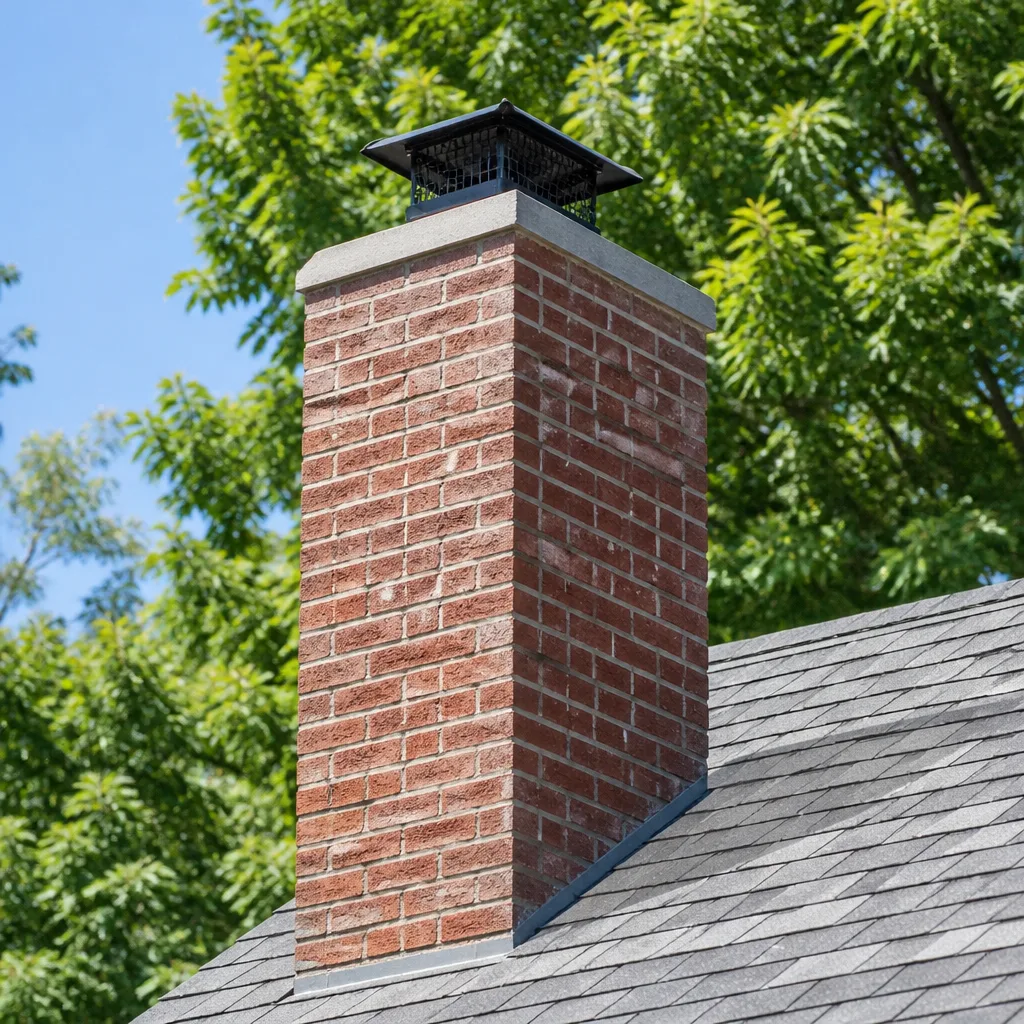 Masonry repair
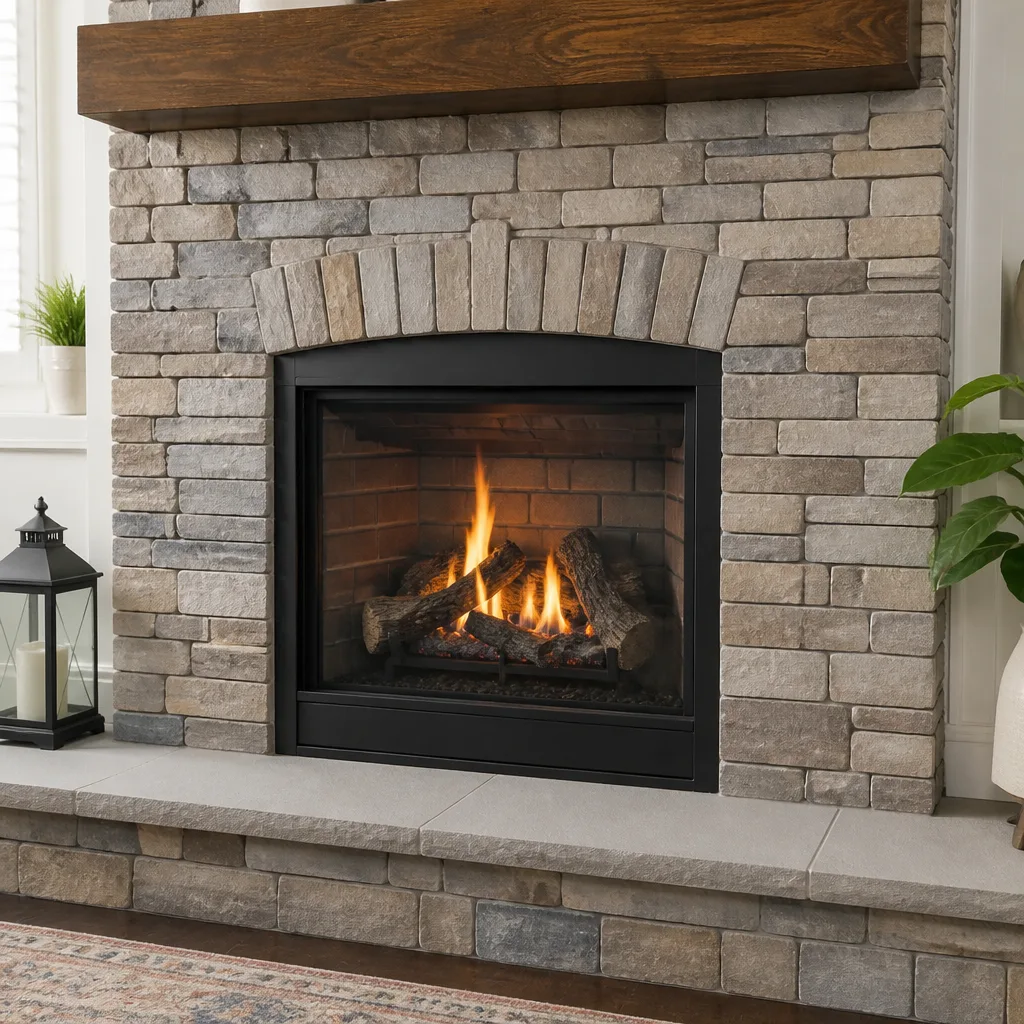 Gas fireplace service
Level 1 sweep and inspection to the NFPA 211 annual standard - flue, crown, cap, and flashing checked and photographed
Chimney sweep logs do not sweep chimneys. They loosen some creosote - which then falls where a brush and vacuum still have to collect it.
The Complete Guide to Chimney Cleaning in Richardson
Most chimney fires in North Texas aren’t caused by homeowners who ignored their fireplace. They’re caused by homeowners who did have the chimney “cleaned” but never had the liner actually inspected afterward. The sweep ran a brush through the flue, the fire lit fine the next cold snap, and everyone assumed the job was done. What nobody checked was whether the flue itself had cracked underneath the soot. Richardson sits on some of the most expansive clay soil in the state, and that geology quietly pushes against foundations and masonry in ways that a brush never sees. This guide walks through what chimney cleaning in Richardson actually involves, why local soil matters to your flue, what the creosote stages mean, and what a completed job should hand you before the technician drives away.
Quick Answer
Chimney cleaning in Richardson is a brush-and-vacuum sweep of the flue paired with a documented inspection, and it should always produce a written report rather than a verbal “you’re good.” A standard sweep handles light soot and Stage 1 creosote, but Richardson’s expansive clay soil and older housing stock mean the inspection matters as much as the cleaning. If a sweep ever skips the camera or the written findings, the job isn’t finished.
Styles & brands we work with
- Sweep & inspection
- Caps & crowns
- Flue relining
- Masonry repair
- Gas fireplace service
Table of Contents
- Why Chimney Cleaning Works Differently in Richardson
- The Clay Soil Problem Nobody Warns You About
- Creosote Stages: What Each One Actually Requires
- Level 1 vs Level 2 Inspections, In Plain Terms
- What a Real Chimney Sweep Includes
- Older Wood-Burning Fireplaces vs Gas-Converted Systems
- How Often Should a Richardson Chimney Be Swept?
- What a Finished Job Should Hand You
Why Chimney Cleaning Works Differently in Richardson
Chimney cleaning in Richardson isn’t the same job it is in a hill-country town or a coastal city. The combination of Blackland Prairie geology, warm humid summers, and a housing stock that spans several decades of construction styles creates flue conditions a generic sweep won’t flag. Homes in neighborhoods like Canyon Creek, Prairie Creek, and the older blocks near downtown Richardson each present their own quirks, and a technician who knows the local terrain reads the chimney accordingly.
Our technicians have up to 15 years of experience working chimneys in North Texas, and the pattern repeats: a flue looks clean from the firebox, sounds fine when tapped, and still shows hairline cracking once the camera goes up. That’s not a cleaning problem. It’s a structural finding, and it’s the reason a proper chimney sweep in this city has to be a diagnostic exercise as much as a maintenance one.
Three local factors shape what we find:
- Expansive clay soil. Blackland Prairie clay swells when wet and shrinks when dry. Over years, that movement pushes against foundations and masonry, and chimneys absorb the shift.
- Warm, humid summers and mild winters. The long cooling season means fireplaces sit idle for months, then get worked hard during the first real cold snap, which stresses a flue that’s had no gradual break-in.
- Mixed-age housing stock. Richardson has homes built across several decades, so a single street can have an older masonry fireplace next to a newer gas-converted insert, each with entirely different liner needs.
When we assess a chimney in Richardson, we treat the flue as a structural component, not just a pipe to brush. That shift in perspective is what separates a sweep that solves a problem from one that hides it until the next fire.
The Clay Soil Problem Nobody Warns You About
Richardson’s clay-heavy soil can crack a flue liner from the bottom up, and a standard brush sweep will never reveal it. Here’s what that means in practice: the chimney is a tall, rigid structure anchored to a foundation that is itself sitting in soil that moves. When the ground swells and shrinks with the seasons, the chimney footing shifts slightly, and the rigid clay tile liner inside the flue does not have the flexibility to follow. The result is hairline cracking, usually starting near the bottom where the chimney meets the firebox and foundation.
This is why a clean-looking flue can still be a hazard. Cracks in the liner let heat, embers, and combustion gases escape into the surrounding masonry, which is exactly the pathway a chimney fire or carbon monoxide exposure uses. A brush doesn’t detect that. A camera does.
What to look for in a home with clay soil movement
- Visible cracks in the firebox masonry or the smoke chamber above it
- Staining on the chimney exterior that wasn’t there a few seasons ago
- Liner tiles that appear out of alignment when viewed with a camera
- A chimney that leans or that has a gap where it meets the roofline
- New cracks in nearby drywall or brick, suggesting broad foundation movement
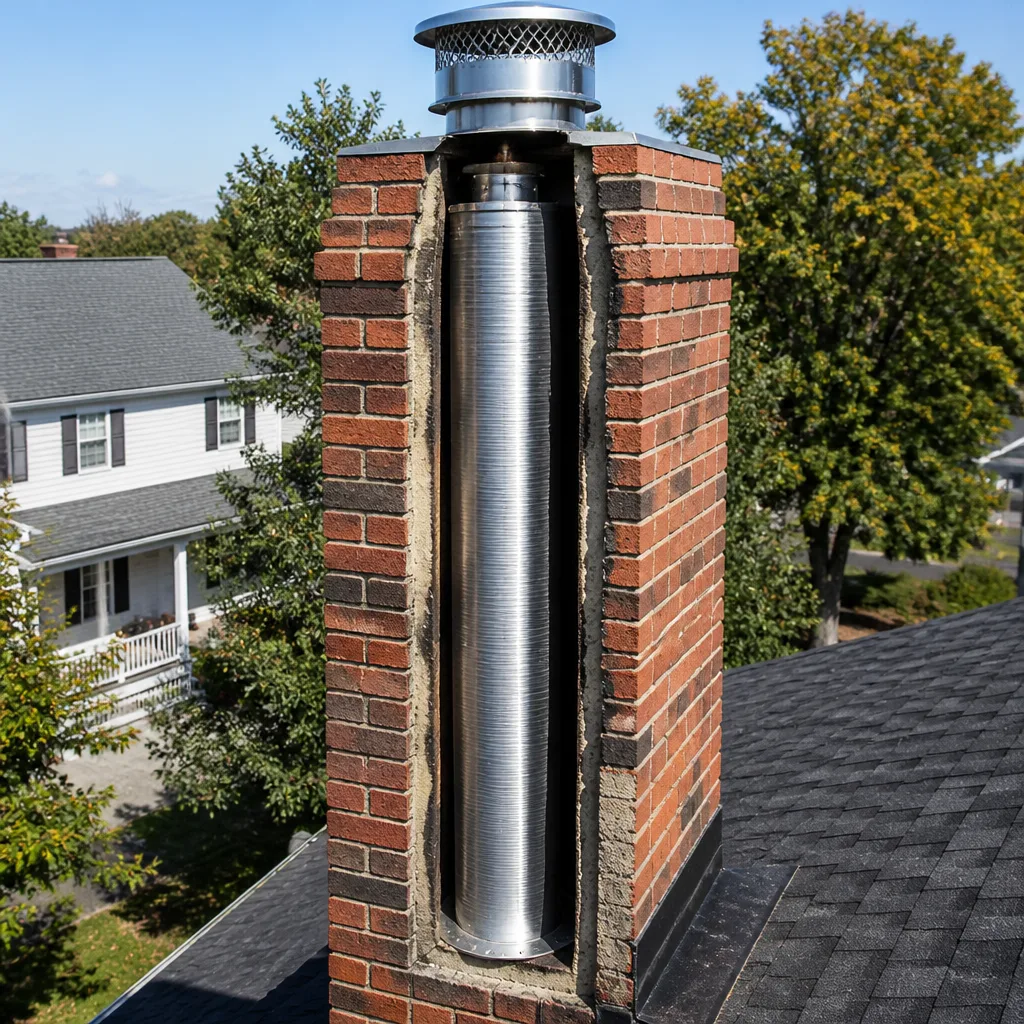
When we find this pattern, the fix usually isn’t a brush. It’s a liner repair or reline, and that’s where product choice matters. We use HeatShield ceramic resurfacing for liner repair, a repair-grade system most generalist handymen can’t access or install correctly. For a flue that’s beyond resurfacing, we install DuraFlex flexible liner systems, which address the crack from the inside without full chimney reconstruction. Both are professional-grade materials built to handle the movement that caused the problem in the first place.
That’s the part most homeowners don’t hear from a budget sweep: cleaning alone can’t solve a cracked liner, and no amount of brushing will. The job is to find the crack, document it, and specify the right repair.
Creosote Stages: What Each One Actually Requires
Creosote builds up in three recognizable stages, and each one calls for a different response. Stage 1 is light soot and flaky residue, and a standard brush sweep handles it cleanly. Stage 2 is a denser, tar-like deposit that clings to the flue wall and often needs a chemical treatment before brushing can remove it. Stage 3 is glazed, hardened creosote that looks almost like a shiny coating inside the flue, and it’s the most combustible form, often requiring more aggressive removal or a liner assessment before the chimney is safe to use again.
Most homes in Richardson that burn wood regularly will bounce between Stage 1 and Stage 2 depending on how hot the fires burn and how dry the wood is. Stage 3 is less common but more dangerous, and it’s the stage that most often gets missed because it develops quietly over several seasons of cool, smoldering fires.
Creosote stage breakdown
| Stage | What it looks like | What it takes to remove |
|---|---|---|
| Stage 1 | Flaky, light soot | Standard brush sweep |
| Stage 2 | Tar-like, sticky deposits | Chemical treatment, then brush |
| Stage 3 | Glazed, shiny, hardened | Aggressive removal plus a liner inspection |
Burning well-seasoned wood and avoiding long, low, smoldering fires are the two simplest ways to keep creosote from climbing the stages. But the larger point is that a homeowner can’t tell Stage 2 from Stage 3 by looking up the flue. The camera does. That’s the reason every sweep we run includes a photo record of what’s actually inside.
The stage also determines scope. A Stage 1 sweep is a straightforward maintenance call. A Stage 3 flue can turn into a liner repair conversation, and that’s when you want the material on hand to fix it right. It’s not an upsell. It’s a finding, and a homeowner deserves to see the evidence for themselves.
Level 1 vs Level 2 Inspections, In Plain Terms
A Level 1 inspection is a visual check of the readily accessible parts of the chimney, done without any special tools, and it happens as part of a routine sweep. A Level 2 inspection goes further: it uses a camera to look inside the flue, assesses accessible parts of the attic and crawl space, and produces a written record. Most Richardson homeowners need a Level 1 during a normal sweep and a Level 2 whenever something changes, whether that’s a new appliance, a property sale, a chimney fire, or visible damage.
The distinction matters because a Level 1 can’t see a cracked liner. It can spot soot and obvious blockages, but the inside of a flue running 20 feet up is out of its reach. A Level 2 gives the technician a documented view of the whole flue, including the sections where clay-soil movement tends to do the most damage.
When Richardson homeowners need a Level 2
- Before buying or selling a home. A Level 2 gives a buyer a written record of the chimney’s condition, which matters more in this market given the age range of the housing stock.
- After any chimney fire, even a small one. Heat damage to the liner isn’t visible without a camera.
- When switching fuel type or adding an insert. A gas-to-wood conversion or a new appliance changes how the flue vents.
- After an earthquake or a noticeable foundation shift, since the chimney is rigid and the soil here moves.
- When a routine Level 1 turns up anything suspicious. Staining, cracking, or a strange draft should trigger a Level 2.
We include a camera inspection and photo report with every sweep, because in our experience the flue tells a different story than the firebox does. When a full Level 2 is in order, we walk through what it covers before we start. The right materials for the job don’t mean much if the diagnosis is wrong, and the diagnosis starts with an honest inspection.
What a Real Chimney Sweep Includes
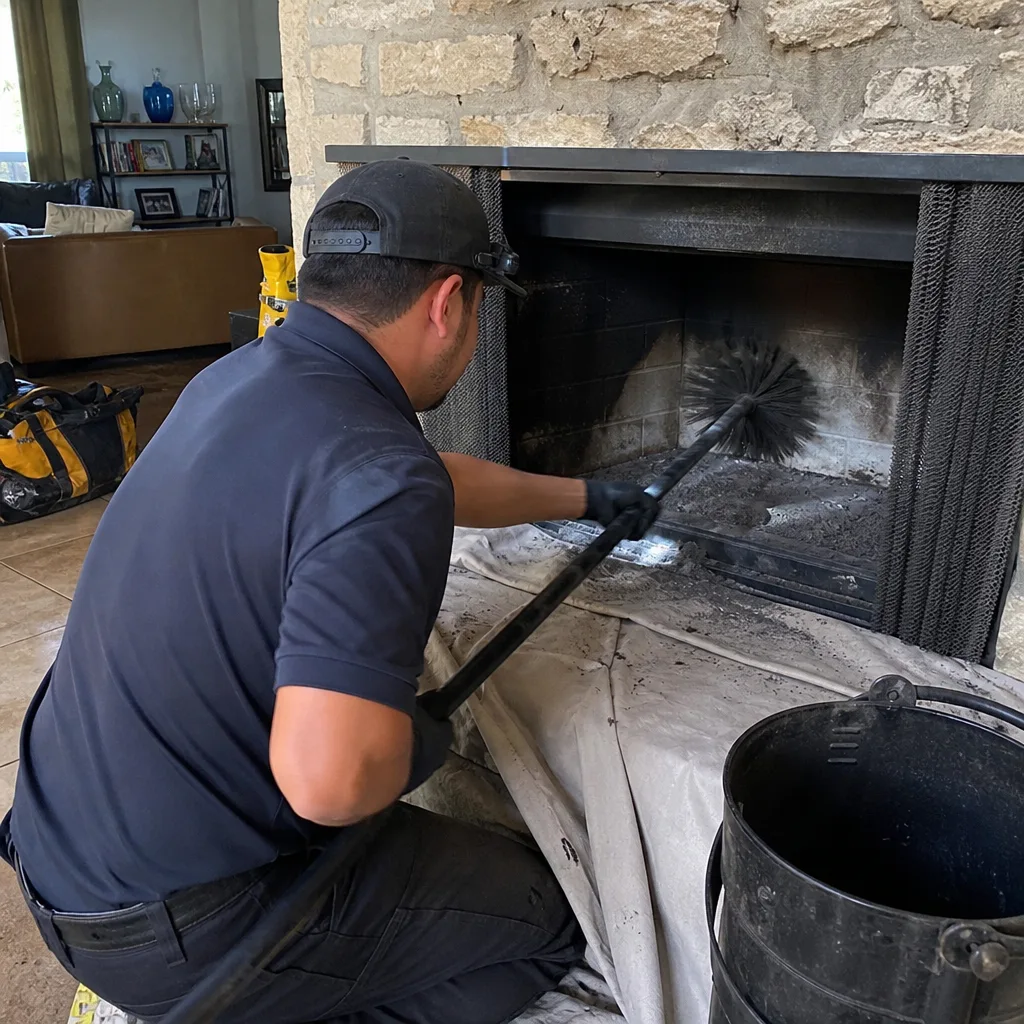
A real chimney sweep in Richardson includes brushing the full flue, vacuuming the firebox and smoke chamber, a camera inspection, and a written report of findings. Anything less is a partial job. The sweep itself uses a rotary brush matched to the flue’s size and material, sealed to a high-powered vacuum so soot stays out of the living space, and follows a sequence that ends with evidence in your hand.
Step-by-step: what a complete sweep looks like
- Protect the room. Drop cloths and a sealed vacuum connection keep soot out of the house.
- Inspect the firebox and smoke chamber before brushing, noting any cracks or staining visible at the base.
- Brush the flue with a rotary tool sized to the liner, working from the top and the firebox simultaneously when needed.
- Vacuum the firebox, smoke shelf, and damper area so the assembly is clean, not just the flue.
- Run the camera up the flue to look for cracks, gaps, misaligned tiles, and creosote stage.
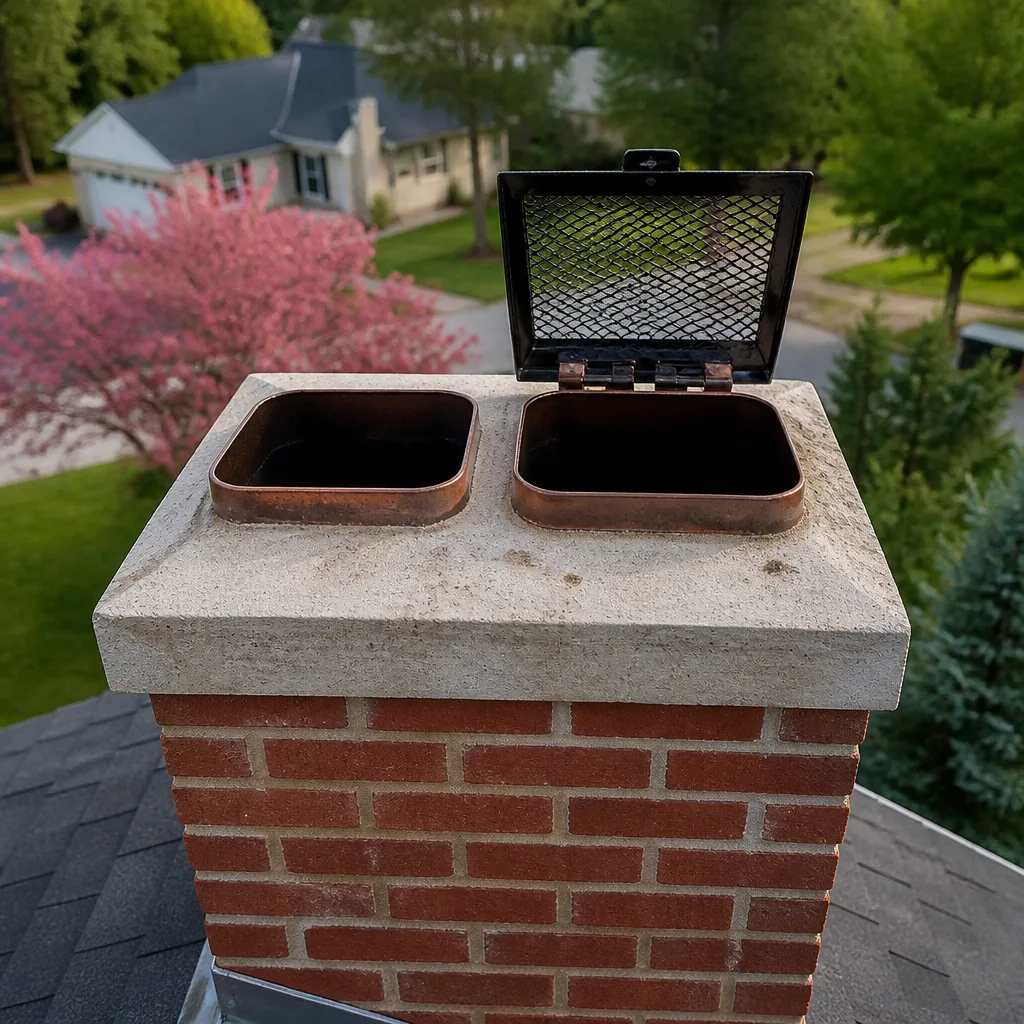
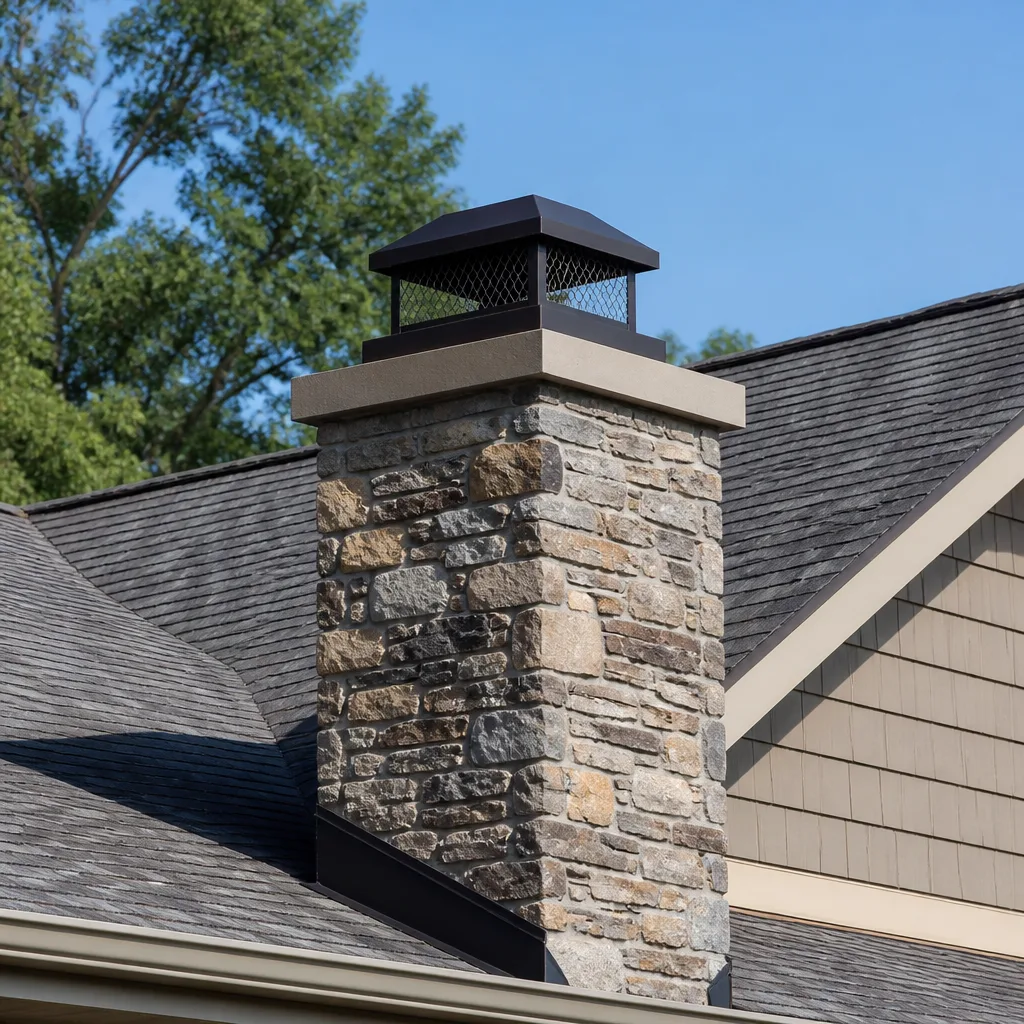
- Check the cap, flashing, and crown to see what weather is getting in. We source caps and flashing from Gelco and Olympia Chimney, brands built for chimney weatherproofing rather than general hardware.
- Write it down. Photos and a written summary of findings, not a verbal “looks good.”
That last step is the one most homeowners don’t think to ask about. It’s also the one that matters most. A chimney fire in Richardson often starts in a flue that was swept but not inspected, and the only way to close that gap is to insist on the report. If your chimney has structural damage that needs more than cleaning, that’s a chimney repair conversation, and you’ll want the same company to handle it rather than coordinating two contractors.
Older Wood-Burning Fireplaces vs Gas-Converted Systems
Wood-burning fireplaces in Richardson homes built before 1990 face different liner conditions than gas-converted systems do. Older masonry fireplaces were typically built with clay tile liners set directly into brick, and those tiles have spent decades absorbing the movement of Blackland Prairie clay. They were also sized for the wood fires of their era, which often means a flue proportioned for a slow-burning open hearth rather than a modern insert. That mismatch can accelerate creosote buildup because the flue runs cooler than the appliance expects.
Gas-converted systems are a different animal. The flue may be lined differently, sometimes with a metal liner installed when the conversion happened, and the combustion byproducts are cleaner. But that metal liner can corrode or separate over time, and a converted fireplace still needs inspection even though it doesn’t produce the same volume of creosote. A homeowner who assumes “it’s gas now, so it doesn’t need cleaning” is skipping a step that a camera would catch.
What each type needs
- Pre-1990 wood-burning masonry: annual sweep, camera inspection, and periodic liner assessment for cracking from soil movement. Above all, the annual camera check matters.
- Gas-converted fireplaces: annual inspection for liner condition and venting, less creosote but no less attention to the flue’s health.
- Wood inserts in older masonry chimneys: a size and venting match check, since a liner built for an open hearth often isn’t right for an insert.
- Newer construction: still needs a routine sweep, but the flue may be factory-built and requires different brushes and inspecting methods.
We see this contrast most often in neighborhoods where the housing stock spans several eras, like the blocks around the University of Texas at Dallas campus, or the older sections near Central Expressway where mid-century homes sit alongside newer construction. Each flue tells you what era built it. The sweep is how you find out whether that flue is still safe to use.
How Often Should a Richardson Chimney Be Swept?
A Richardson chimney should be swept once a year if it’s used regularly, and inspected annually even when it isn’t. That annual inspection is the baseline. The cleaning frequency itself depends on how much you burn, what you burn, and how the flue has behaved in past seasons. A home that lights the fireplace most winter nights will accumulate creosote faster than one that uses it a few times a year.
The most reliable rule is the one the trade has used for decades: sweep when creosote reaches about an eighth of an inch on the flue wall. You can’t see that from the firebox, which is why the yearly visit exists. It’s the check that tells you whether the flue is at Stage 1, Stage 2, or Stage 3, and what comes next.
Practical scheduling in Richardson
- Year-round burners: sweep before the first cold snap, ideally in late summer or early fall, so the flue is clear when the fireplace gets its first hard workout.
- Occasional users: an annual inspection is still the baseline, and a sweep only when the camera shows buildup.
- Homes with foundation movement: add a camera inspection when you spot new cracks in drywall, brick, or the chimney itself. The soil doesn’t wait for the calendar.
- After a chimney fire, even a small one: a Level 2 inspection before the fireplace is used again.
Richardson’s warm, humid summers mean the fireplace typically sits idle for months, so the fall check is the one that pays off. Waiting until the first cold snap means competing with every other household for a booking, and a flue that’s been sitting for eight months deserves a closer look anyway. A sweep booked before burning season gets that done without the fall rush.
What a Finished Job Should Hand You
A finished chimney job in Richardson should hand you a written inspection report with photos of the flue, not just a verbal assurance that everything looked fine. That report is the difference between a maintenance visit and a real diagnostic. It’s the record you keep, the one a buyer’s inspector will ask for, and the one that lets you make an informed decision about whether work can wait or should happen now.
What the report should include
- Photos of the flue interior at multiple heights, showing the condition of the liner
- The creosote stage present, if any, and what was removed
- Findings on the cap, crown, flashing, and smoke chamber
- A clear statement of anything that needs repair, with the reasoning
- An honest note on what can safely wait until next season
That last point matters more than it sounds. A homeowner’s real hesitation is being told they need thousands of dollars of liner or masonry work they have no way to verify. We answer that directly: nothing is recommended without camera evidence you can see for yourself, and we tell you plainly when a piece of work can safely wait. That’s the whole point of the report. When a repair is genuinely needed, we specify the right system for it, whether that’s HeatShield resurfacing, a DuraFlex liner, or Famco flashing for weatherproofing, because the material has to match the finding.
A chimney that’s swept and documented is one you can use with confidence. A chimney that’s swept and forgotten is one that hides its problems until they surface at the worst possible moment. The report is what separates the two, and it’s the standard every Ridgeway Chimney Sweep visit is built around: sweep, inspect, repair, all from the same company.
Common Mistakes to Avoid
- Accepting a verbal “looks good” instead of a written report. A sweep without documentation leaves you with no record of what was found. In a city with moving clay soil, the report is the whole point.
- Skipping the camera because the flue looks clean from the firebox. The most serious findings in Richardson chimneys, like cracked clay tile liners, are invisible without a camera and appear well above the firebox.
- Assuming a gas-converted fireplace doesn’t need inspection. The creosote load is lower, but the metal liner can still corrode or separate, and a converted fireplace is not self-inspecting.
- Letting a Stage 2 or Stage 3 creosote deposit sit through another season. Glazed creosote is the most combustible form, and it doesn’t resolve on its own with more brushing.
- Hiring a sweep who can’t handle the repair that follows. If the inspection finds a cracked liner, coordinating a second company to fix it adds delay and splits responsibility.
- Ignoring foundation movement elsewhere in the house. New drywall cracks or brick cracks often signal the same soil movement that stresses a chimney, and they’re a cue to book a camera inspection.
- Burning green or unseasoned wood to save money. It produces more creosote and pushes the flue toward Stage 2 faster, which raises the cost of the next sweep.
See the difference
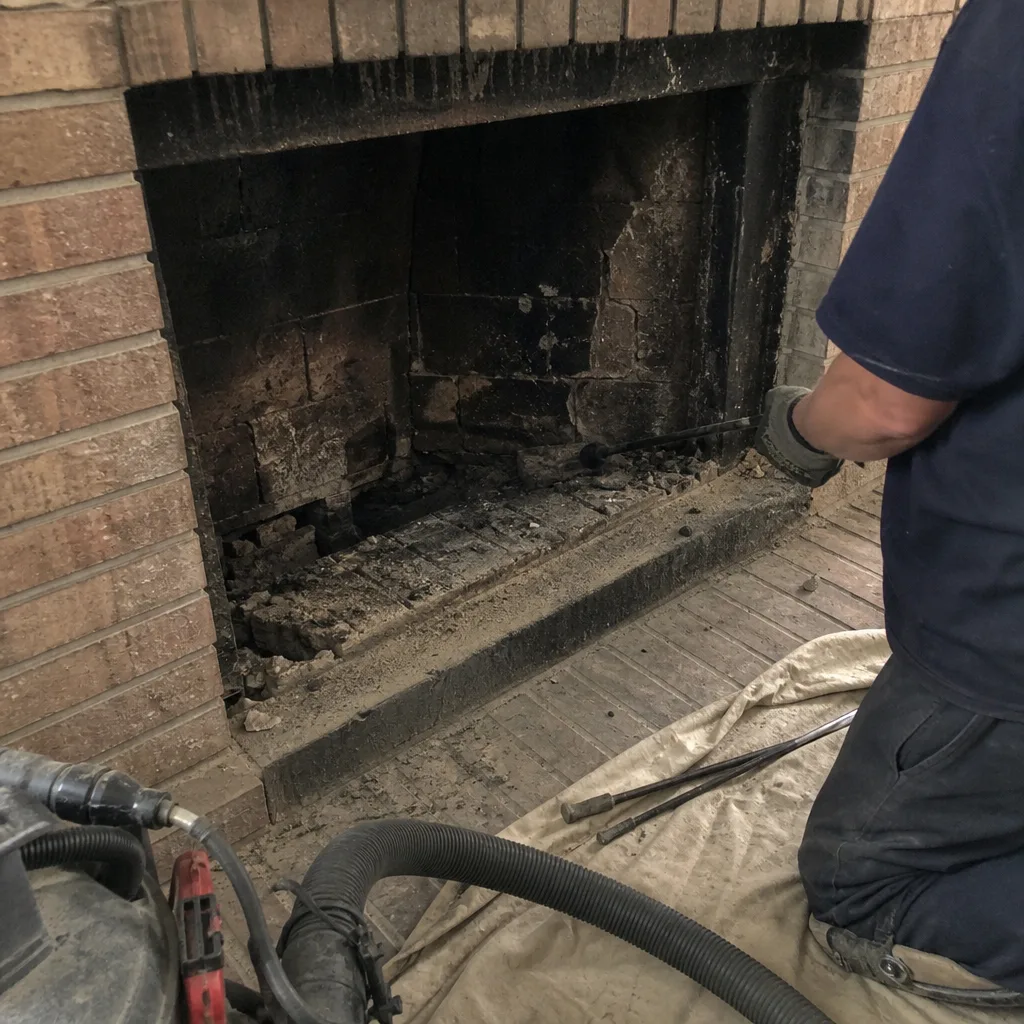 Before
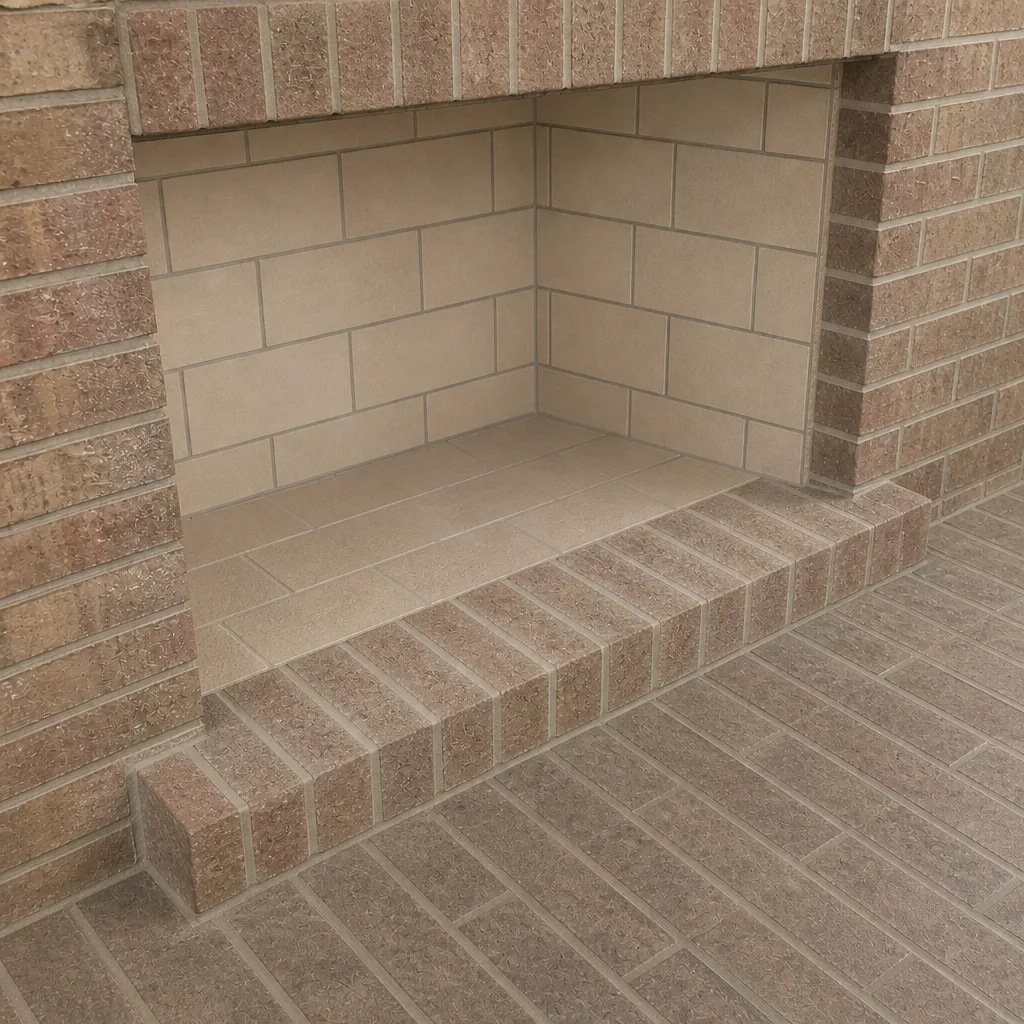 After
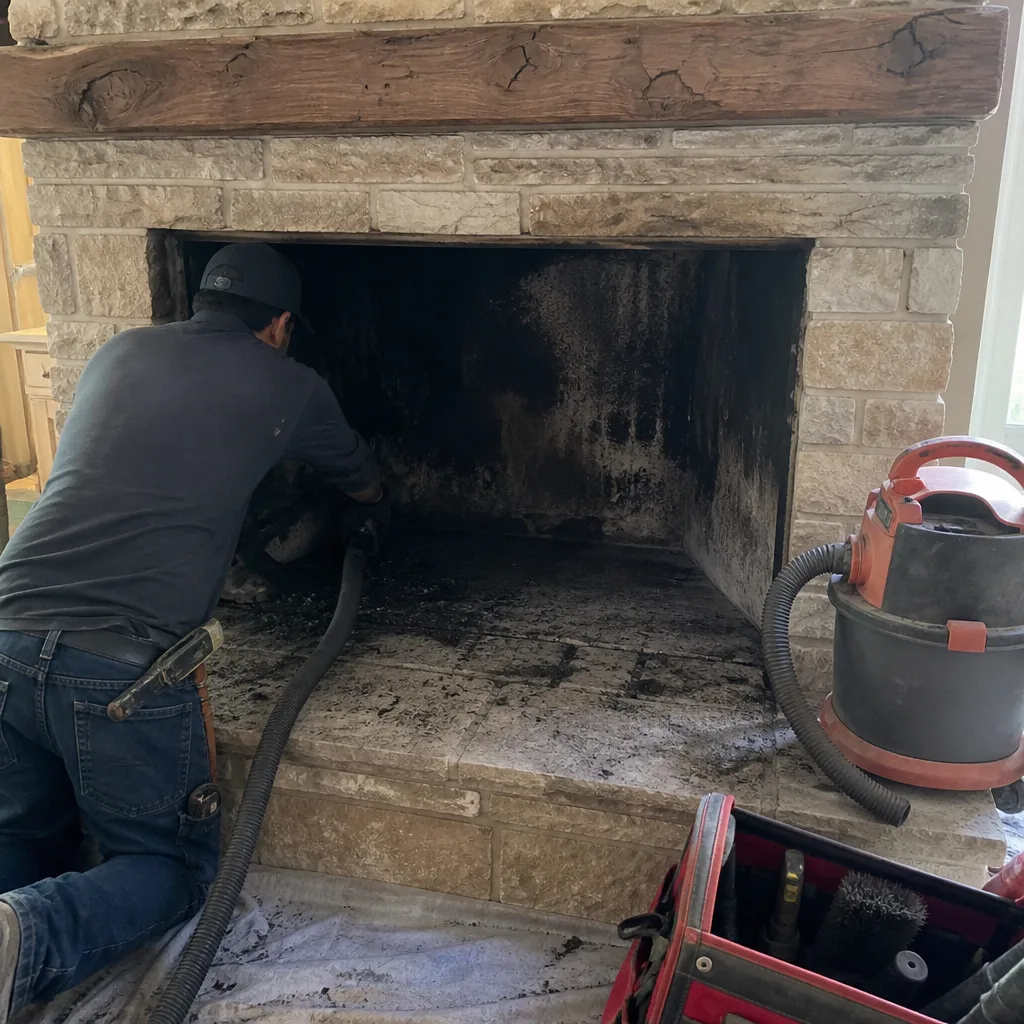 Before
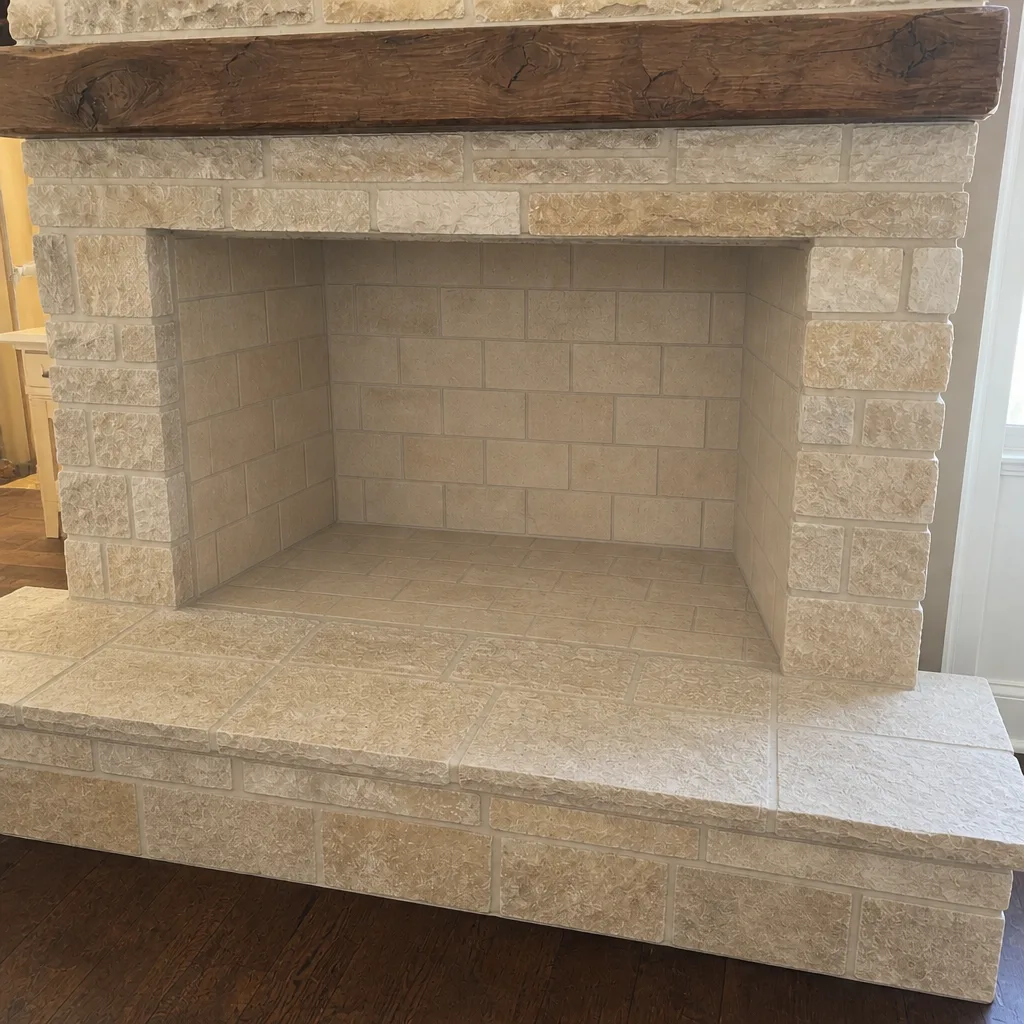 After
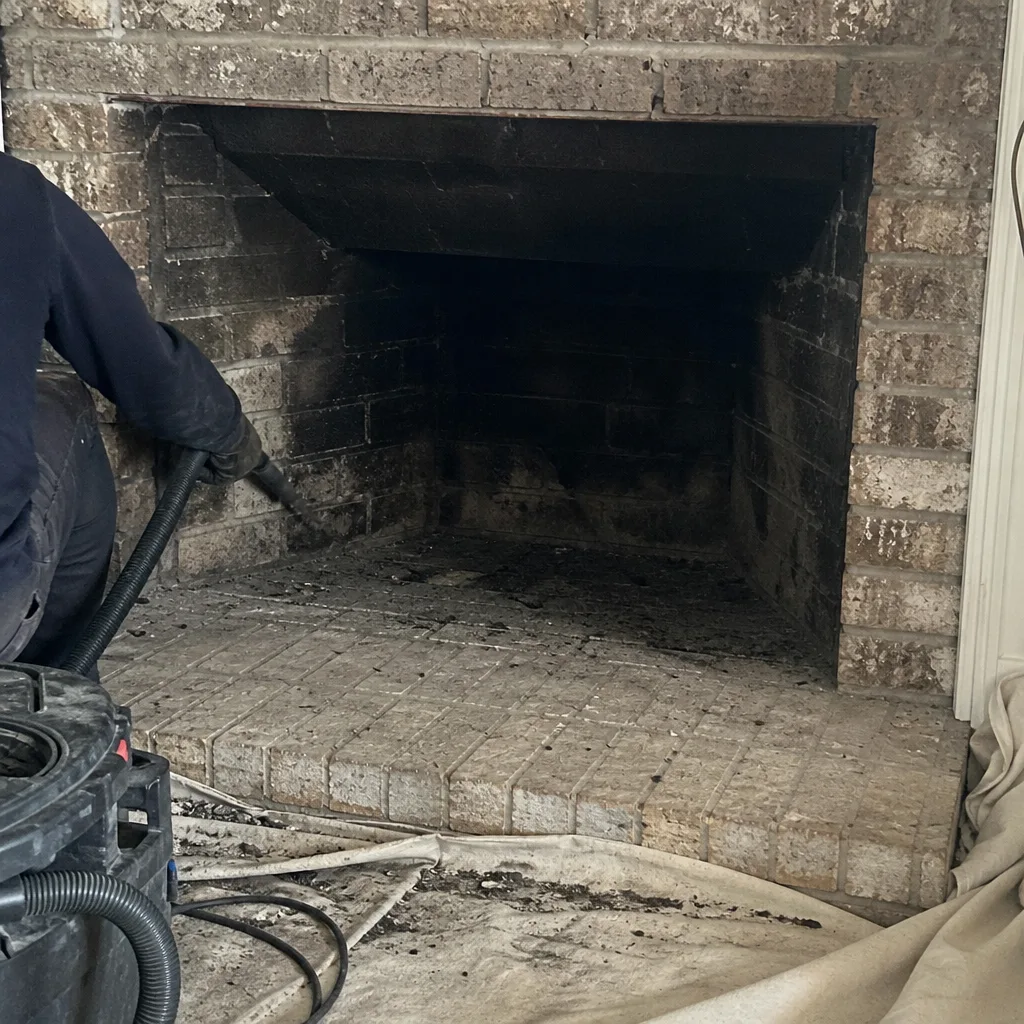 Before
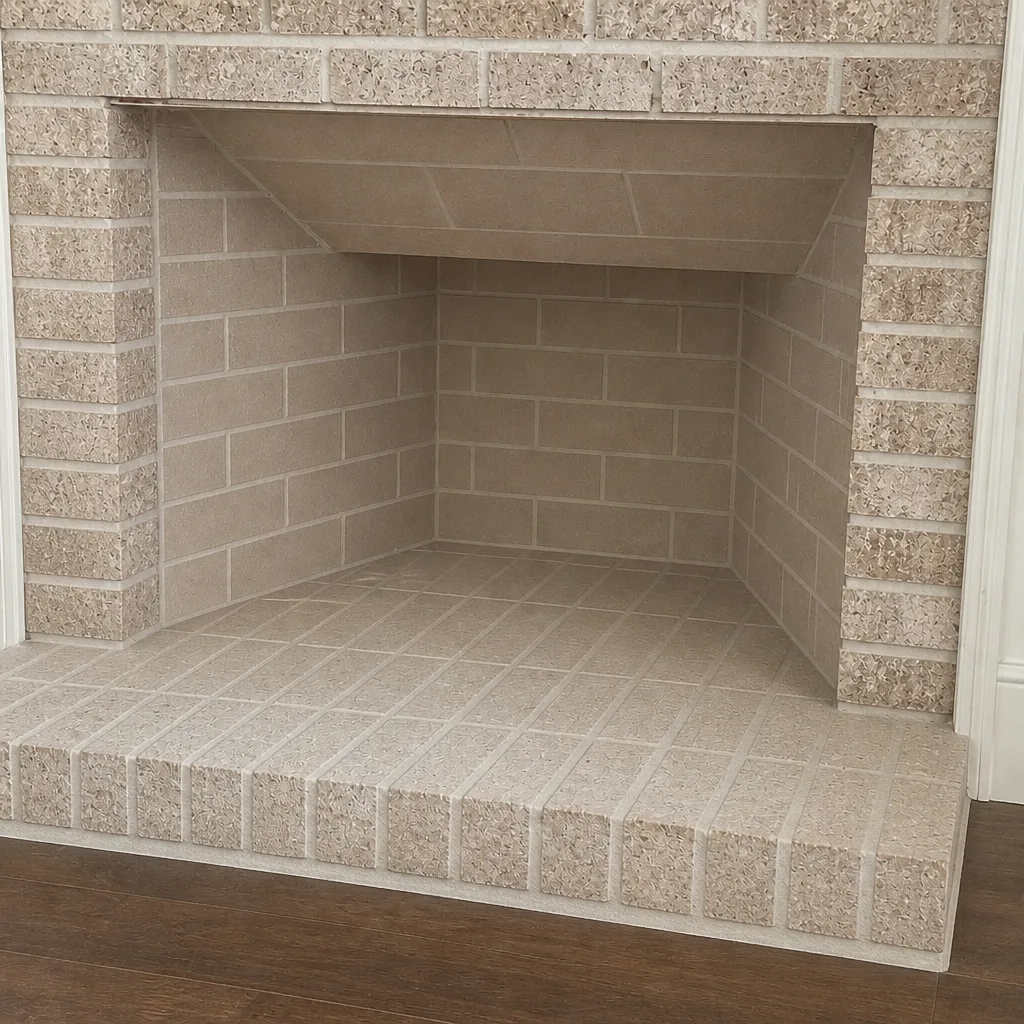 After
When to Call a Professional
Call a professional when you smell a strong creosote odor after a fire, when the fireplace struggles to draw smoke up the flue, or when you spot cracks in the firebox or staining on the chimney exterior. Those are all signs that something inside the flue needs a camera, not another brush. The same goes for a home purchase, a recent chimney fire, a fuel conversion, or any new foundation cracking you’ve noticed in the house. And a chimney that simply hasn’t been inspected in a few seasons is due, even if it burns fine. Ridgeway Chimney Sweep offers free estimates in Richardson, so call (888) 873-4715 to book a sweep and get a written report you can use. We answer 24/7, with fast dispatch from 7am to 7pm, Sunday through Friday.
Frequently Asked Questions
A chimney cleaning in Richardson typically costs between $150 and $300, depending on flue length, creosote stage, and whether a camera inspection is included. The written estimate sets the final price, and a full Level 2 inspection runs higher because it covers more of the flue. Call (888) 873-4715 for an exact quote – estimates are free.
You need a new liner when the camera shows cracking or gaps that brushing can’t fix, and not before. In Richardson, the clay soil movement can crack clay tile liners from the bottom up, so a cracked liner is a real possibility once foundation shifts are in play. When repair is possible, HeatShield ceramic resurfacing often restores the liner without a full replacement, and only when the damage is beyond resurfacing does a DuraFlex liner system come into the conversation. We won’t recommend either without camera evidence you can see. Call (888) 873-4715 for an exact quote – estimates are free.
A Richardson chimney should be swept once a year if it’s used regularly, with an annual inspection as the baseline even when it isn’t. Homes that burn wood most winter nights will need the yearly sweep, while occasional users may only need the inspection some years. The camera shows whether creosote has reached the eighth-inch mark that signals a sweep. Call (888) 873-4715 for an exact quote – estimates are free.
Skipping a sweep lets creosote build into Stage 2 or Stage 3, and glazed creosote is the most combustible form a flue can develop. It doesn’t resolve on its own, and a standard brush often won’t remove the worst of it without chemical treatment first. The other risk is a cracked liner that never gets found, since the flue can look fine from the firebox while the damage sits higher up. Call (888) 873-4715 for an exact quote – estimates are free.
Richardson sits on Blackland Prairie clay, which swells and shrinks with the seasons and can shift a chimney’s foundation enough to crack the rigid clay tile liner inside the flue. The cracking usually starts near the bottom and moves up, which is why a camera inspection catches what a brush never will. If you’ve noticed new foundation cracking elsewhere in the house, that’s a good reason to book an inspection.
You should get a written inspection report with photos of the flue interior, the creosote stage found, findings on the cap and crown, and an honest note on what can safely wait. A verbal “looks good” isn’t a report, and it leaves you with nothing to verify or keep. The written record is the standard, not an add-on.
The Bottom Line
Chimney cleaning in Richardson is a diagnostic exercise, not just a brush down the flue. The Blackland Prairie clay under so many local homes moves, and that movement can crack a liner from the bottom up in a way that only a camera will catch. Get the sweep, but insist on the inspection and the written report that goes with it, especially in pre-1990 wood-burning homes or anywhere the foundation has shifted. Creosote stages, liner condition, and cap integrity all belong in the findings you walk away with. When repair is needed, the right material matters, and so does having one company handle sweep, inspection, and repair together. That’s the standard here.
Call (888) 873-4715 to book your free estimate. We answer 24/7. Fast dispatch from 7am to 7pm, Sunday through Friday.
Written by the team at Ridgeway Chimney Sweep.