
Last updated November 16, 2026
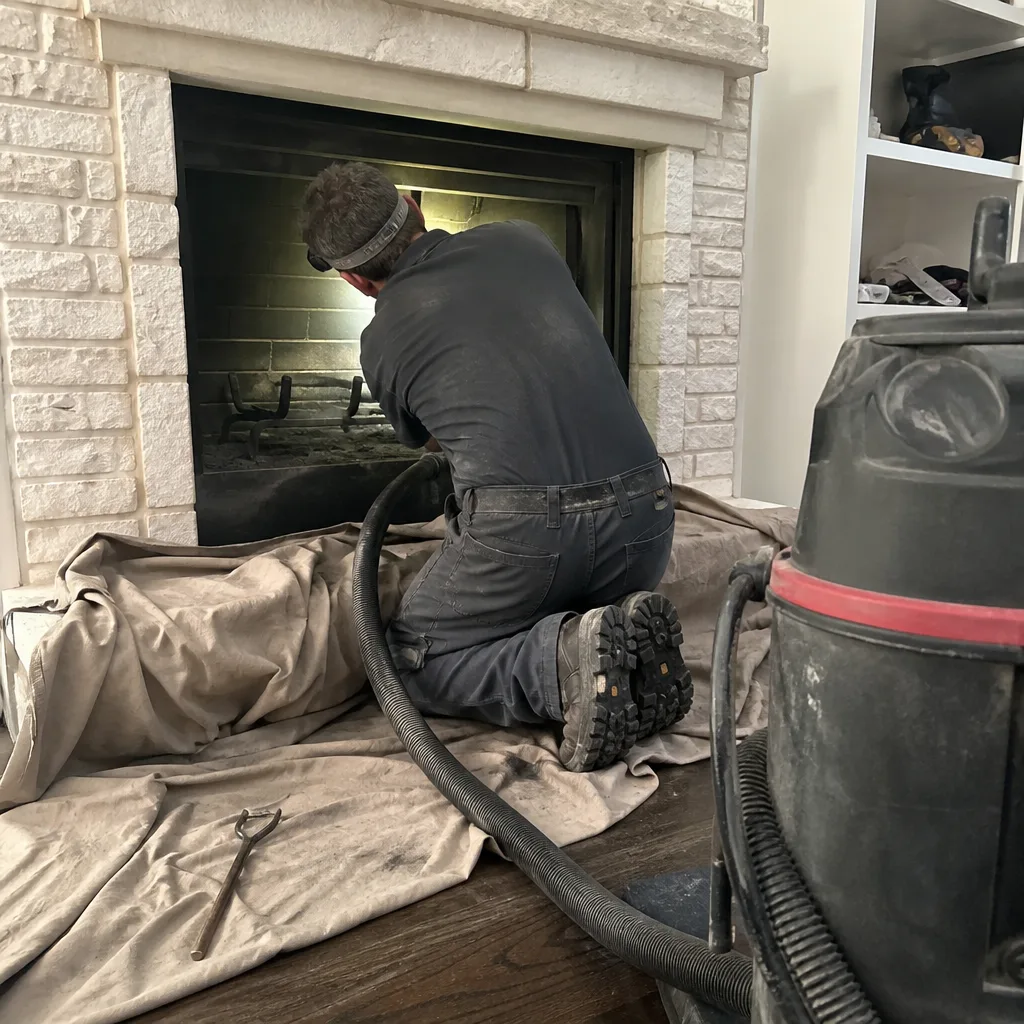
 Sweep & inspection
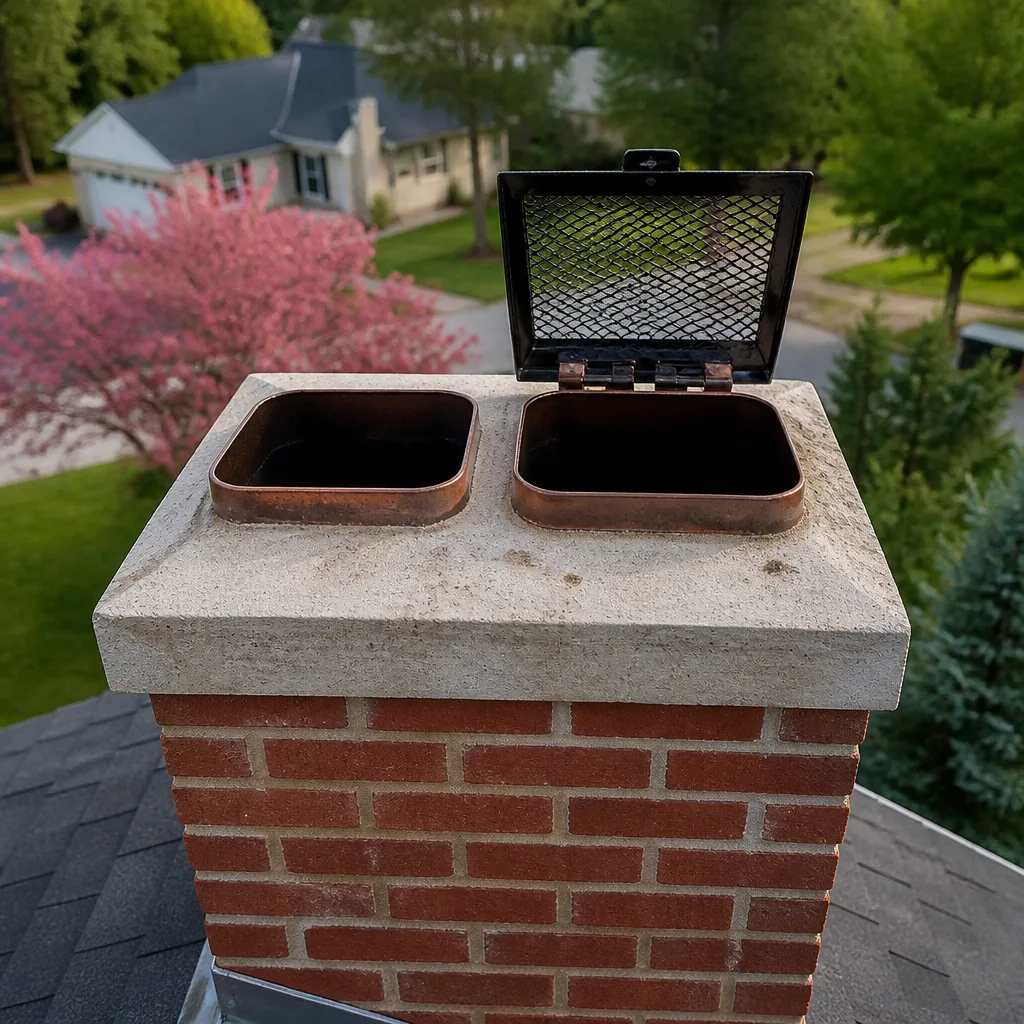
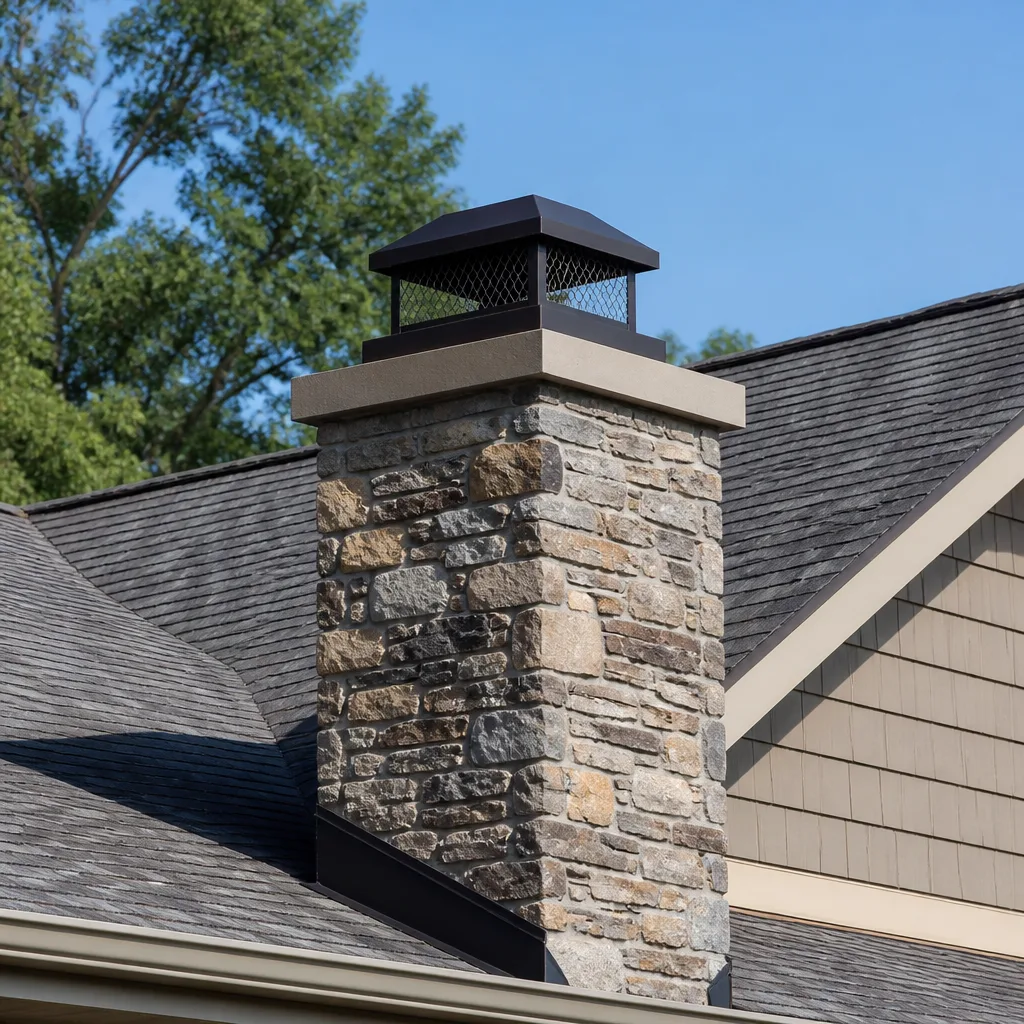 Caps & crowns
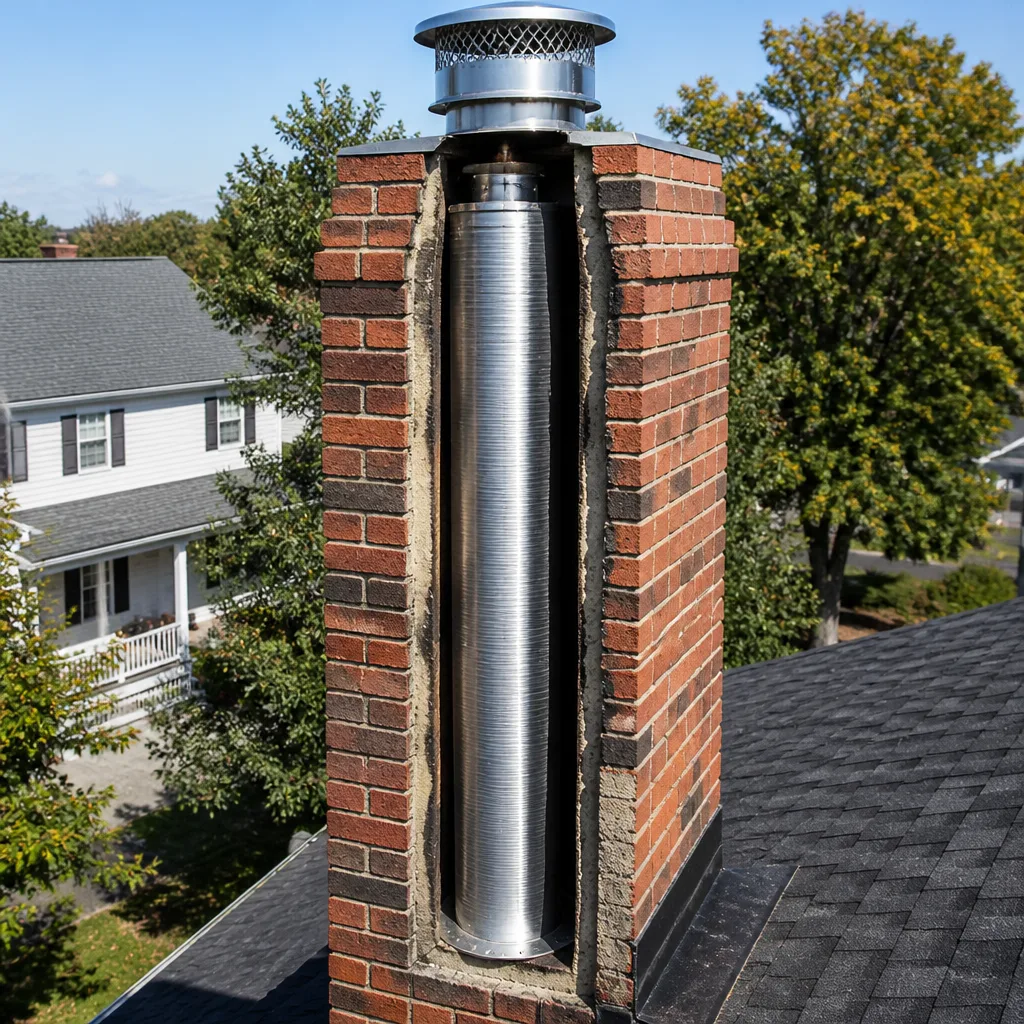 Flue relining
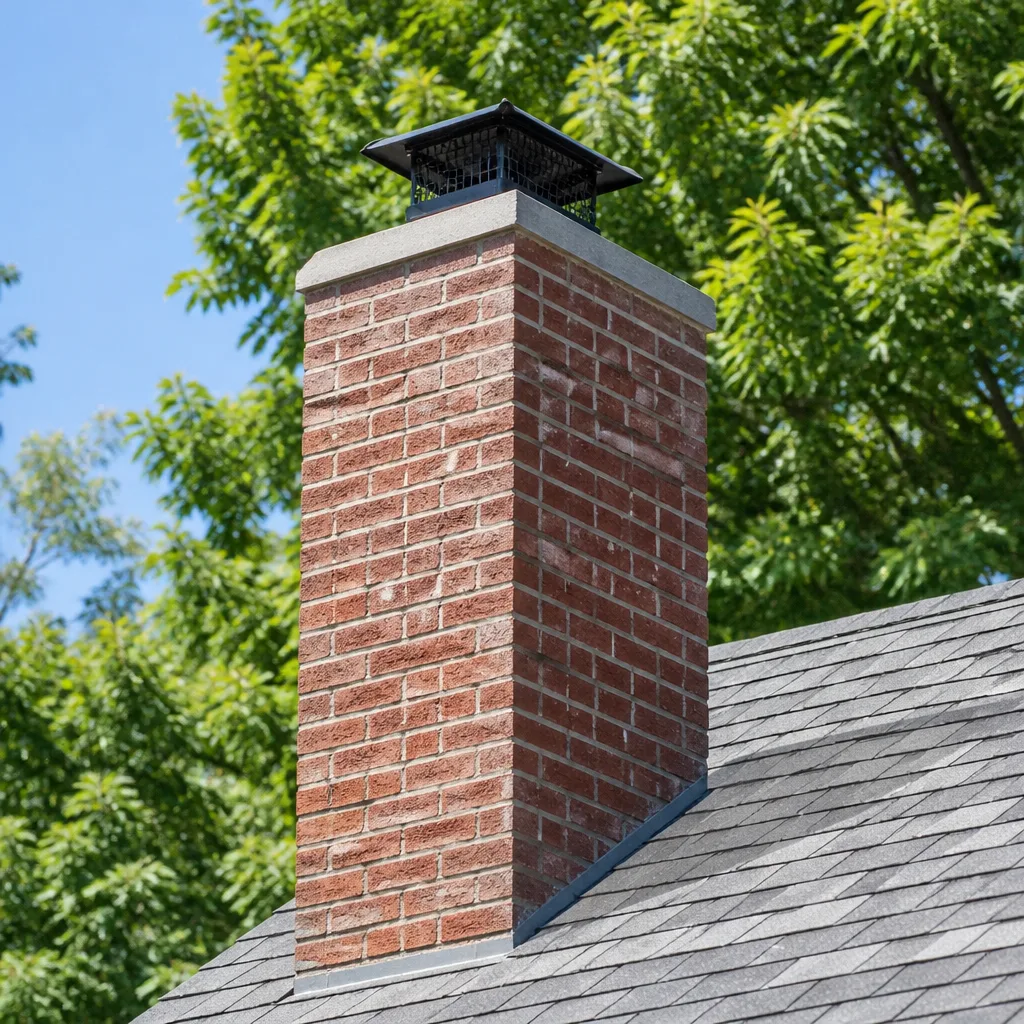 Masonry repair
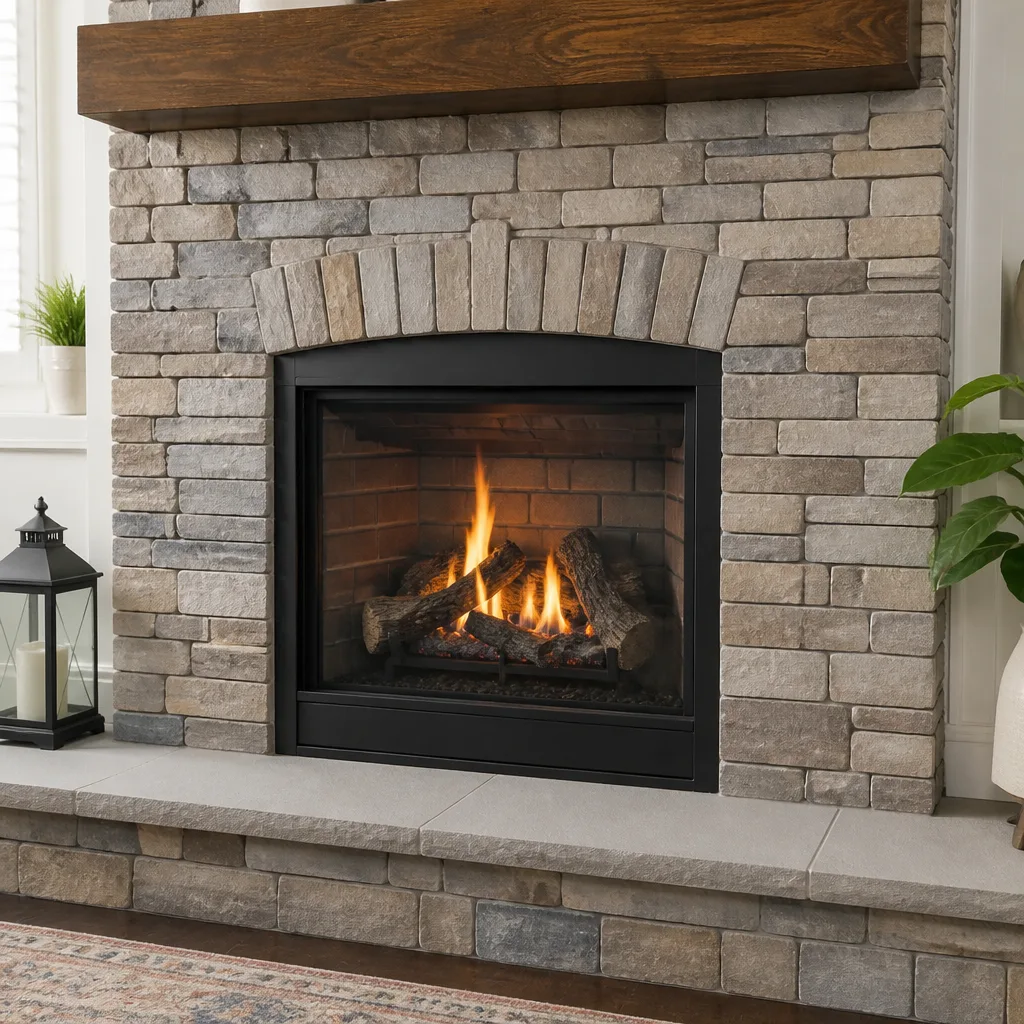 Gas fireplace service
Level 1 sweep and inspection to the NFPA 211 annual standard - flue, crown, cap, and flashing checked and photographed
Chimney sweep logs do not sweep chimneys. They loosen some creosote - which then falls where a brush and vacuum still have to collect it.
How to Hire a Chimney Cleaning Contractor in Richardson: A Step-by-Step Guide
Most homeowners shop for a chimney sweep the way they’d shop for a haircut: they search, they pick whoever answers first, and they trust the person who shows up. That works fine for a haircut. It doesn’t work for the inside of a flue, where the difference between a real sweep and a guy with a brush is the difference between a documented inspection and a vague nod from the roof. CSIA certification is the floor, not the ceiling, and it’s the first filter most Richardson homeowners never think to check. Below, we walk through exactly what to verify, what to ask, what to demand in writing, and which red flags should end the conversation before anyone climbs a ladder.
Quick Answer
To hire a chimney cleaning contractor in Richardson, confirm current CSIA certification for the technician doing the work (not just a logo on the website), ask for proof of insurance and a written scope before booking, and insist on a camera inspection with a photo report delivered after the sweep. The contractor should name the specific product brands they use for liner and cap work, show you a written quote with line items, and offer a clear callback policy. If any of those requests gets deflected, walk.
Styles & brands we work with
- Sweep & inspection
- Caps & crowns
- Flue relining
- Masonry repair
- Gas fireplace service
Table of Contents
- What CSIA certification actually verifies
- The five questions to ask before you book
- Why the brands a contractor specifies tell you everything
- Door-to-door sweep offers and other red flags
- How to read a chimney sweep quote
- “Full cleaning” versus a real inspection
- Hiring in Richardson: what’s specific to this market
- The paper trail to keep after the job
What CSIA Certification Actually Verifies
CSIA stands for Chimney Safety Institute of America, and their certification is the most widely recognized credential in this trade. It verifies that an individual technician has passed a proctored exam covering NFPA 211 (the national chimney and venting standard), demonstrated knowledge of venting systems, clearances, and combustion byproducts, and committed to a code of ethics. It’s a per-technician credential, not a company credential. That distinction matters more than most homeowners realize.
A company can advertise “CSIA certified” and still send an uncertified helper to your roof. The certification belongs to a person who sat the exam and renews it. So the question isn’t “is your company certified?” The question is “will the technician who physically sweeps my flue and performs my inspection be CSIA certified, and can you tell me their name before they arrive?”
You can verify a technician’s current status through the CSIA’s public directory. Look up the name, check the certification is active, and confirm the expiration date hasn’t lapsed. A technician whose certification expired two years ago is not currently certified, no matter what the truck says.
Here’s the part often missed: certification is the floor. Many excellent chimney professionals hold it and many unqualified operators don’t. But it tells you the technician has been tested on the code, understands what they’re looking at, and has agreed to a standard of conduct. In a market like the Dallas metro, where a lot of general handyman services moonlight in chimney work, that baseline filter does more filtering than price ever will.
The Five Questions to Ask Before You Book
If you only remember five questions from this guide, these are the five. Each one targets a specific failure mode we’ve seen in the field, and each has a clear “good answer” and “walk-away answer.”
- What’s your liner inspection protocol? The right answer describes a camera inspection of the flue interior, top to bottom, with photos or video included. A vague answer like “we look down from the top” means they are not actually inspecting the liner, which is where most chimney fire damage hides.
- Which product brands do you use for liner and cap work? The right answer names specific, industry-recognized brands: DuraFlex for flexible liners, HeatShield for ceramic resurfacing, and Olympia Chimney or Copperfield for caps and components. The wrong answer is “whatever’s available” or “we use whatever works.”
- How and when do I get the written report? Every sweep should end with a written inspection report, photos included, delivered before the technician leaves or within the same week. If the answer is “we’ll call if there’s a problem,” that is not a report.
- Are you insured, and can I see the certificate? General liability coverage is the minimum. A professional operation will produce a certificate of insurance on request without irritation. If they can’t or won’t, that’s not a conversation worth continuing.
- What’s your callback policy if something’s off? A serious contractor stands behind the work and will explain, in plain language, how they handle a return visit if the sweep was incomplete or a concern comes up later. A shrug is an answer, and it’s the wrong one.
Write the answers down. Ask the same questions of two contractors if you’re comparing. The one who answers all five specifically and in writing is your contractor.
Why the Brands a Contractor Specifies Tell You Everything
A chimney sweep who can name the brands they use for repair and relining work is telling you something important: they’ve committed to a supply chain. That commitment costs more than buying whatever’s on the shelf, and it usually means the contractor is doing professional-grade work rather than patching holes.
Specific products become relevant when the inspection turns up a problem:
- DuraFlex flexible liner systems are the standard for relining aged or damaged flues without a full chimney reconstruction. A sweep who knows DuraFlex is a sweep who has relined chimneys, not just cleaned them.
- HeatShield ceramic resurfacing is a repair-grade liner restoration system. It’s not available through general contractors, which means a handyman who says they can “fix the liner” usually can’t.
- Olympia Chimney and Copperfield make caps and chimney components built specifically for this trade, not the big-box substitutions that rust out in two winters.
- Famco flashing and venting components are the code-compliant choice for weatherproofing a chimney at the roofline, which is where most water intrusion begins.
None of those brand names should be the deciding factor on their own. But when a Richardson contractor can talk about them fluently, reference what they do, and explain why they chose them over the alternatives, it signals they’re specifying actual products rather than improvising. Our technicians work with a curated set drawn from these lines; we mention them because they’re the ones we’d specify for a homeowner’s chimney whether the homeowner asked or not.
What you’re looking for at the interview stage is whether the contractor answers product questions with specifics. “We use HeatShield for liner resurfacing” is a whole different answer from “we fix liners.”
Door-to-Door Sweep Offers and Other Red Flags
In the Dallas metro, and especially after a storm cell rolls through Richardson, Plano, Garland, or the neighborhoods between them, a specific pattern circulates: subcontractors with a truck, a ladder, and a clipboard, going door to door and offering a “free chimney inspection” or an unbelievably cheap sweep. Most of them are not qualified and none of them have your interests in mind.
The red flags, in no particular order:
- Unsolicited door-knocking. A legitimate chimney contractor does not need to drum up business by knocking. If they show up without you calling, the answer is no.
- “Free inspection” as the entire offer. An inspection has value; it’s part of what a professional does. A free inspection from someone with no CSIA credential and no camera is just a sales pitch.
- A scary finding on the first visit. If the technician immediately says you need thousands of dollars in liner work with no camera evidence, no photos, and no written report, stop. That’s the classic upsell.
- No written quote, no line items. A quote on the back of a business card with one dollar amount and no scope breakdown is not a quote. It’s a price tag.
- Pressure to decide right now. A real chimney problem is a real problem, but it’s rarely so urgent that it must be solved before you have time to compare. If the sales pitch relies on fake urgency, that’s the tell.
- No verifiable business presence. No address, no verifiable reviews, no CSIA directory listing, and a phone number that doesn’t match any company name. Walk away.
- “We’re already in the neighborhood.” The most common opening line for unlicensed operators. Real contractors book appointments, not drive-by offers.
If any of those apply, don’t waste time negotiating. Call a real contractor.
How to Read a Chimney Sweep Quote
A chimney sweep quote should be one page, itemized, and clear about what’s included and what’s not. If what you receive is a single number with no breakdown, you’re being asked to buy a promise, not a service. Here’s what a legitimate quote always contains:
- Line item for the sweep itself, with a clear scope description of what gets brushed and cleaned. This should match the flue your appliance actually uses (fireplace flue, appliance flue, or both).
- Line item for the inspection, with the method described (camera inspection, visual inspection, or both) and the standard being applied (usually NFPA 211 Level 1, 2, or 3).
- Photo or video documentation included in the price, not offered as an add-on for an extra charge.
- Written report delivery, described in the quote, typically by email within the same week.
- Any recommended repairs itemized separately, with a clear note that the repair is optional pending the homeowner’s decision. Nothing gets bundled into the sweep.
- Disposal and cleanup included, spelled out. A sweep should leave the firebox and hearth cleaner than it found them.
- Written estimate that sets the final price, not a range with a “starts at” bait number.
What the quote should NOT contain: bundled repairs added automatically, “free” anything that requires a later commitment, and any price that isn’t tied to the specific scope of work on your chimney. When a quote is complete, it’s a document you can compare against another contractor’s quote line by line. When it isn’t, it’s marketing.
“Full Cleaning” Versus a Real Inspection
Half the disagreements between homeowners and chimney contractors come down to confusion about what “cleaning” and “inspection” actually are. They’re different services, and a professional quote will treat them as such.
A chimney sweep removes creosote and soot from the flue, smoke chamber, and firebox, and clears the smoke shelf so the flue draws correctly. That’s the cleaning. It’s important and it’s part of the job, but it’s not an inspection, and it doesn’t tell you anything about the structural condition of the liner.
An inspection looks at the flue interior with a camera, checks the liner for cracks, gaps, and deterioration, examines the damper, the crown, the cap, the flashing, and the firebox masonry. It produces a written report with photos, ideally categorized by condition and urgency. It also assigns a level of inspection per NFPA 211:
- Level 1: A visual inspection of the readily accessible portions of the chimney and venting. Standard for an annual sweep when the appliance hasn’t changed.
- Level 2: A camera inspection of the flue interior, required when the appliance has changed, a property has changed hands, an event has occurred (chimney fire, storm damage), or the homeowner is buying or selling.
- Level 3: An inspection that requires access to concealed portions of the chimney, sometimes involving removing building material. Rare and specific to suspected hidden damage.
Here’s the practical upshot. If you ask for a sweep and the technician cleans without a camera, you haven’t received an inspection. If they recommend repair without showing you what they saw, you haven’t received evidence. A professional will offer both, in writing, without you having to ask. In our work, the camera inspection and the written report are the point, not an upsell.
Hiring in Richardson: What’s Specific to This Market
Richardson sits in the Dallas metro, and the hiring landscape for chimney work reflects that. There are hundreds of chimney companies across the metro, and the operators range from fully credentialed, brand-specifying sweeps to handyman services that will pressure-wash your house and brush out a flue for a flat fee. It’s not always obvious which is which from a website.
A few things specific to hiring here:
- Code compliance follows the national standard. Richardson homeowners whose chimney work is inspected will typically be held to NFPA 211 through local permitting. Ask your contractor to reference the standard in writing when describing liner or flashing work.
- Older housing stock in central Richardson and around the older neighborhoods tends to have original masonry chimneys with terra-cotta liners. Those liners are not always suitable for high-efficiency appliances or gas fireplace inserts, and the inspection should call that out specifically.
- Summer heat affects attic venting and chimney crowns. The Texas sun is hard on the mortar crowns and caps at the top of a chimney. A cap that’s cracked and loose is both a water entry point and a carbon monoxide concern in the right conditions, and both are the kind of thing a camera inspection catches early.
- Seasonal timing matters. Northern Texas burns in the winter, so booking before the first cold front beats booking in the middle of it. A Richardson homeowner who books a sweep in September or October avoids the winter rush and gets a longer window to address any repair the inspection turns up.
If you’re comparing Richardson contractors, ask each one the five questions from earlier in this guide. The ones who answer all five with specifics are the ones worth shortlisting. The ones who answer two and deflect three are the ones who won’t stand behind the work.
The Paper Trail to Keep After the Job
The hiring process doesn’t stop when the truck leaves. What you should end up with, ideally by email within a week of the visit, is a small packet of documents. Keep it, because the next contractor you hire will need it and because it’s what actually protects you if a question comes up later.
- The written inspection report, with photos of the flue interior, liner condition, firebox, crown, cap, and flashing. This is the single most valuable document you’ll get.
- The sweep record, showing what was cleaned, when, and by whom (technician name plus CSIA certification number if the contractor provides it).
- Any repair quote, itemized and written, even if you decide to defer the work. You’ll want to compare it against a second opinion if you get one.
- Proof of insurance if you didn’t already have it. Keep the certificate of insurance on file.
One last point on documentation: not every inspection finding needs to be acted on immediately. If the liner is sound and the only issue is a cap that’s a little weathered, a professional will say so and tell you when to revisit it. Deferred maintenance is a legitimate answer as long as it’s documented. What’s not acceptable is the opposite, where a contractor recommends thousands of dollars in work with nothing to show you. If that happens, get a second inspection from another contractor and compare the reports.
Common Mistakes to Avoid
- Hiring on price alone. In the Richardson market, the lowest quote usually reflects the shortest scope. The cheapest sweep is often the one that skips the camera inspection and delivers no report, so you never actually find out the state of your liner.
- Accepting a verbal “you’re fine” as a report. If the technician says “flue looks good” and nothing else, you’ve received a verbal impression, not an inspection. Ask for the photos and the written report.
- Not verifying CSIA certification. A logo on a website proves nothing. Look up the technician in the CSIA directory and confirm the certification is current and not expired.
- Booking a door-knocker after a storm. Storm season brings out sweep offers in Richardson and Plano that are really a sales funnel. If they knocked without an appointment, they’re not your contractor.
- Treating “full cleaning” as if it includes inspection. It doesn’t, unless the quote says so. Cleaning removes creosote; the inspection tells you what shape the liner and chimney are in.
- Skipping the proof-of-insurance request. A chimney incident is a property damage incident, and if the contractor isn’t insured, you’re the one on the hook. Request the certificate and read it.
- Forgetting to ask what products they specify. “Whatever’s on the shelf” is not a specification. A contractor who names DuraFlex, HeatShield, Olympia Chimney, or Copperfield by product line has chosen their materials deliberately and will use them on your chimney the same way.
See the difference
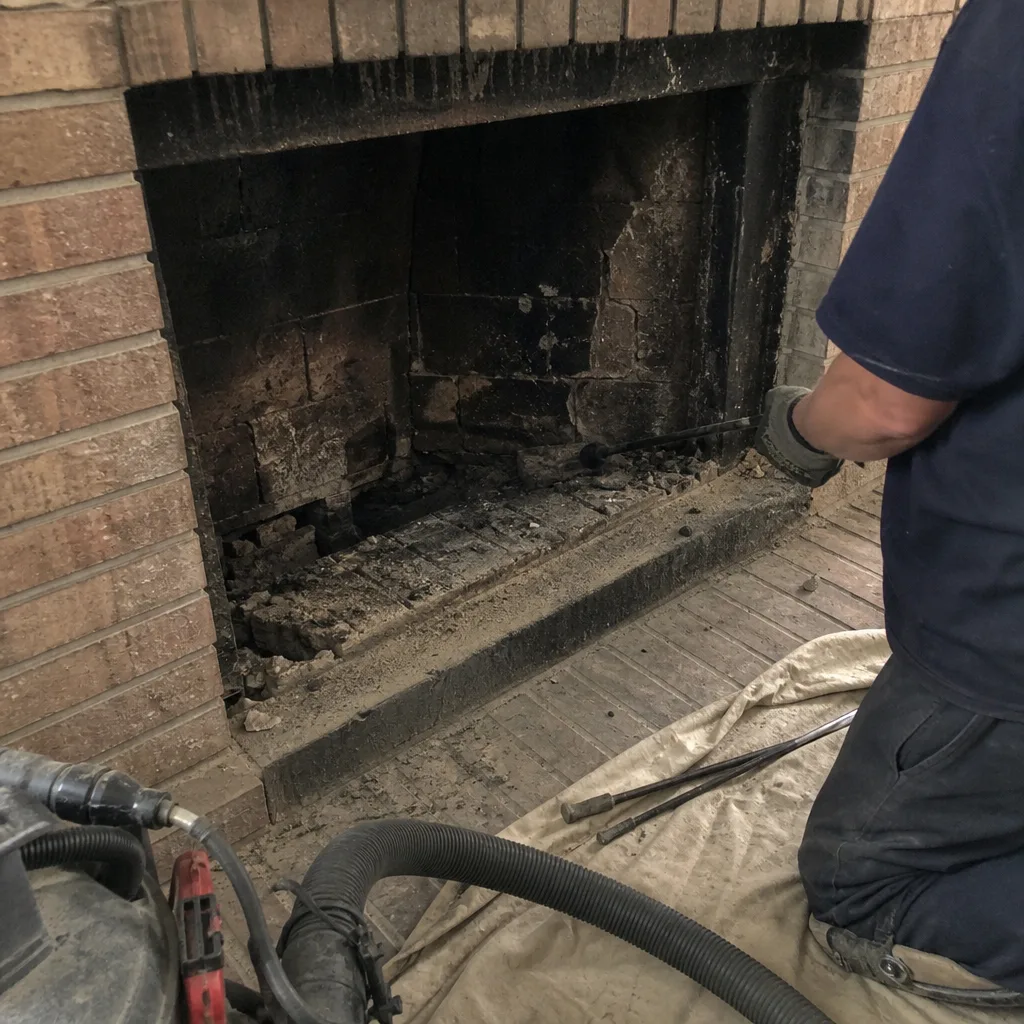 Before
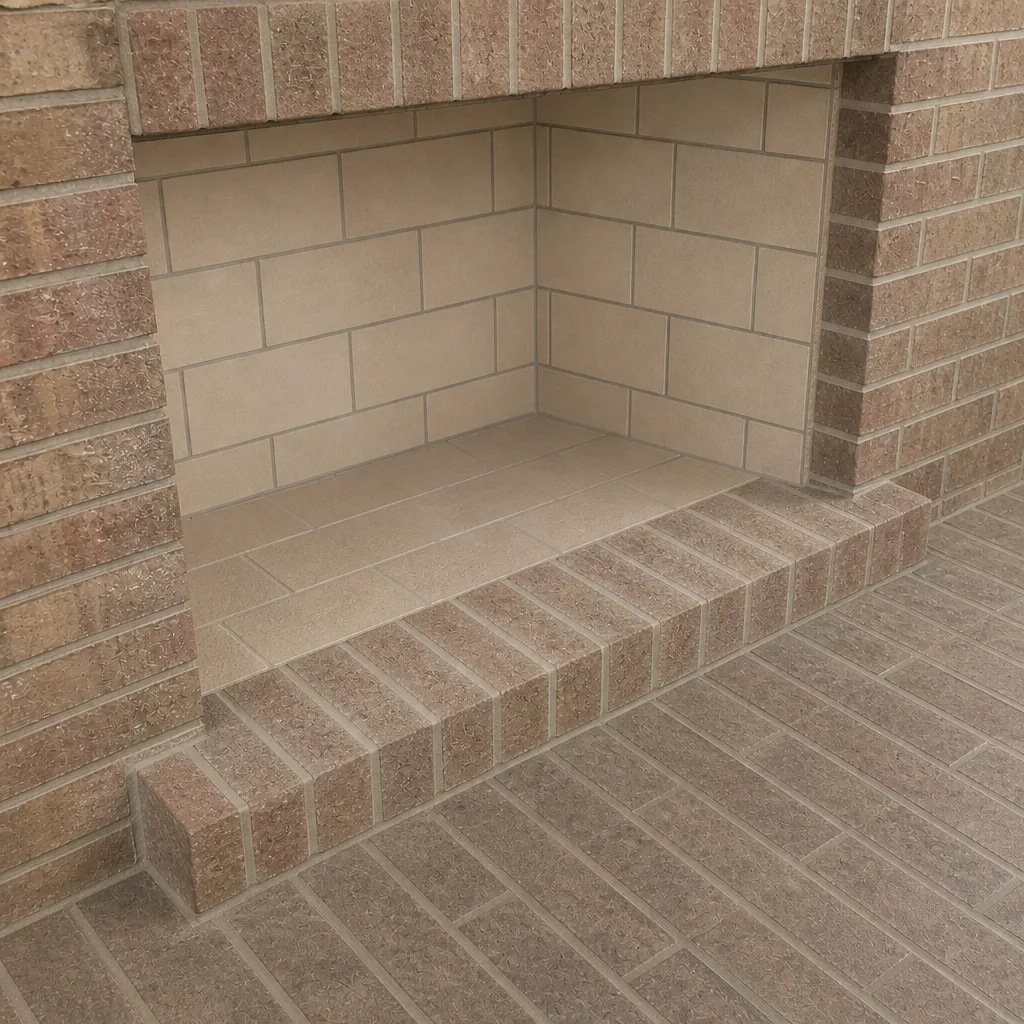 After
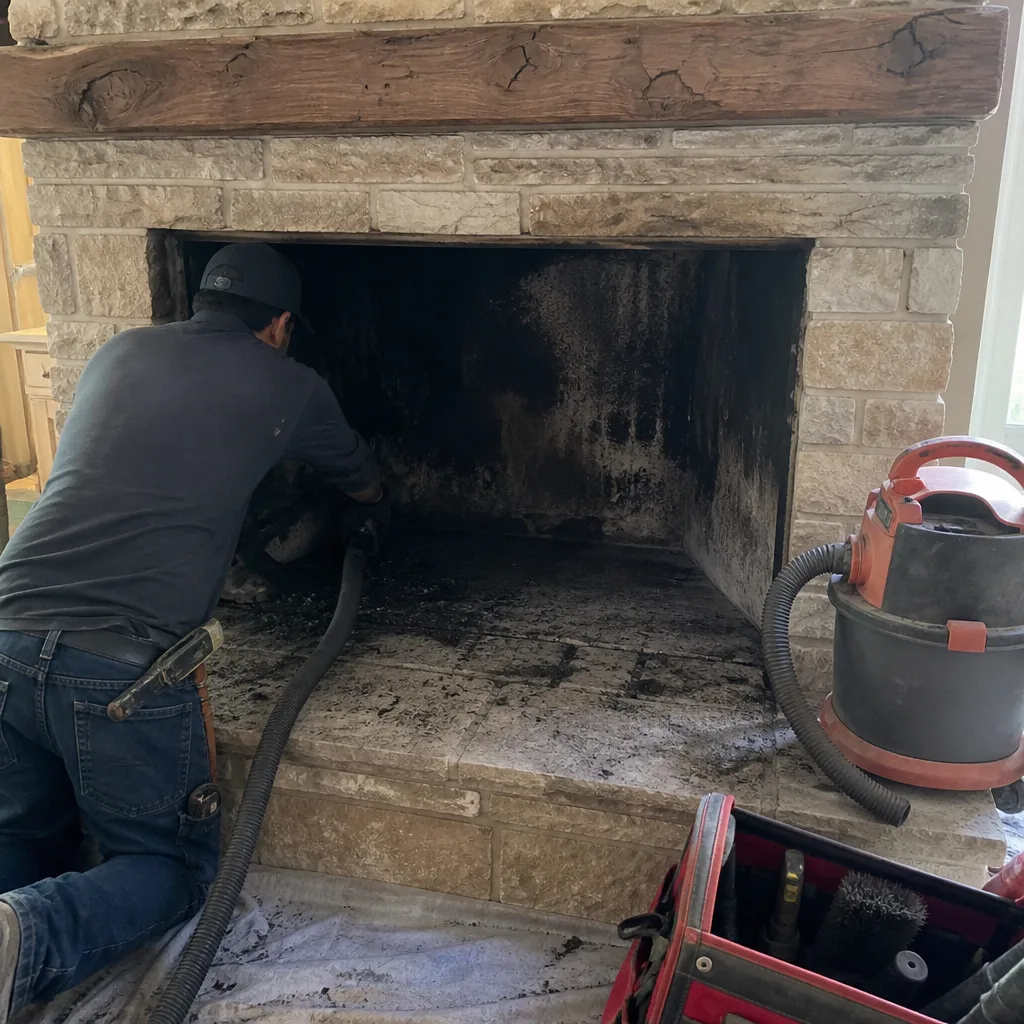 Before
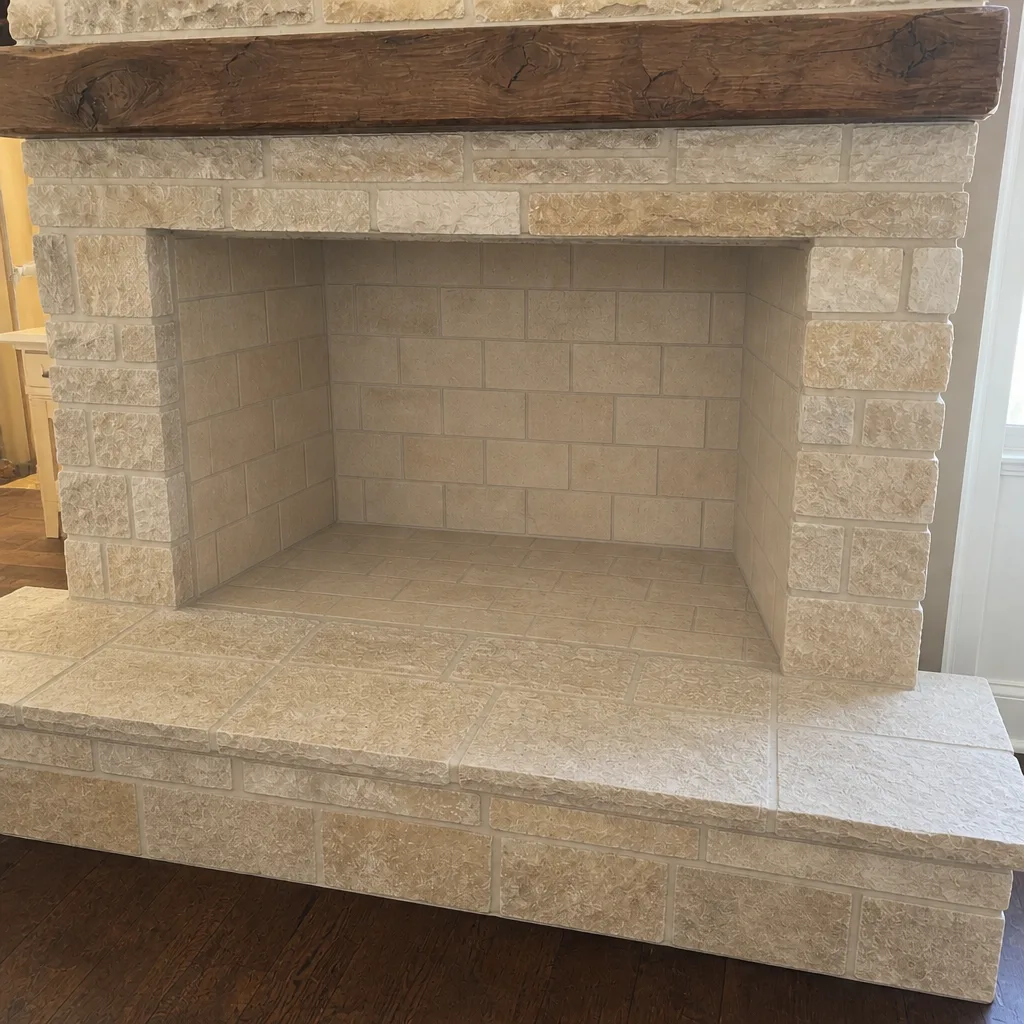 After
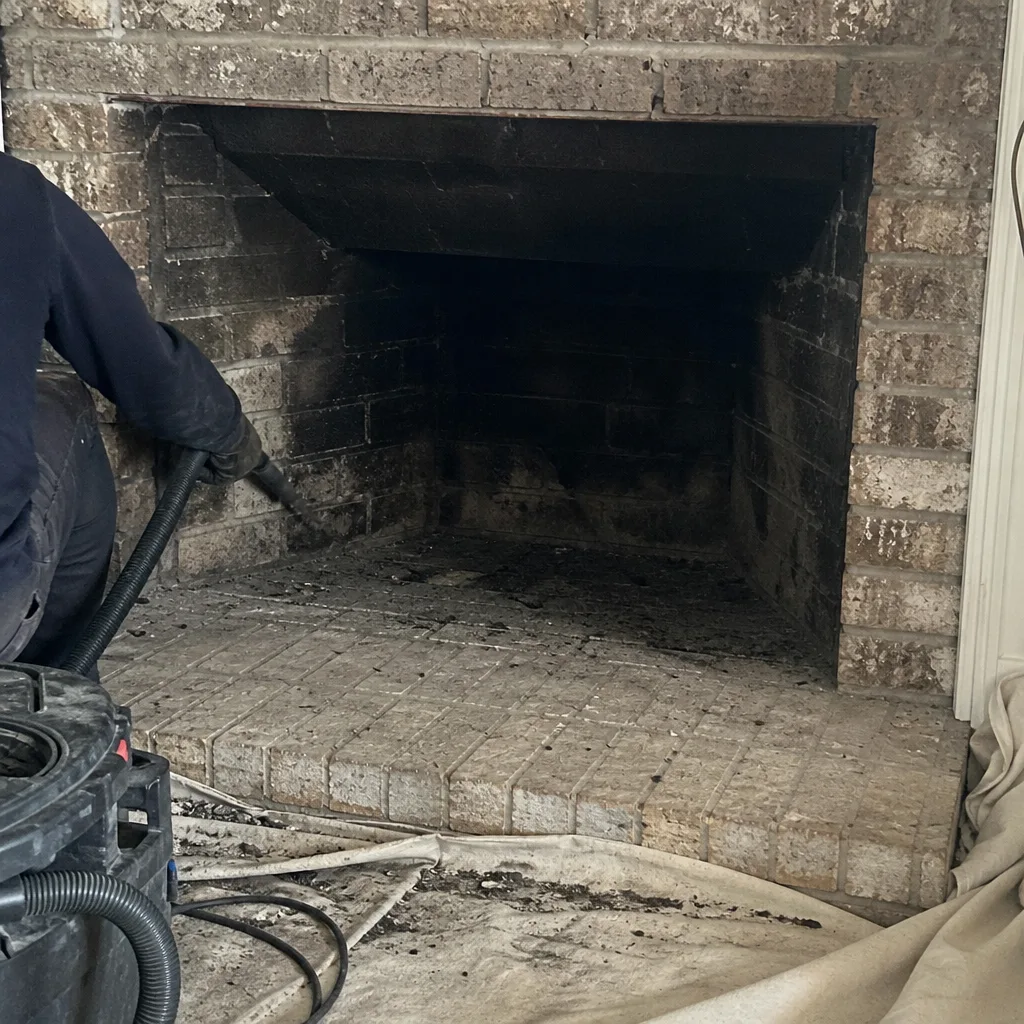 Before
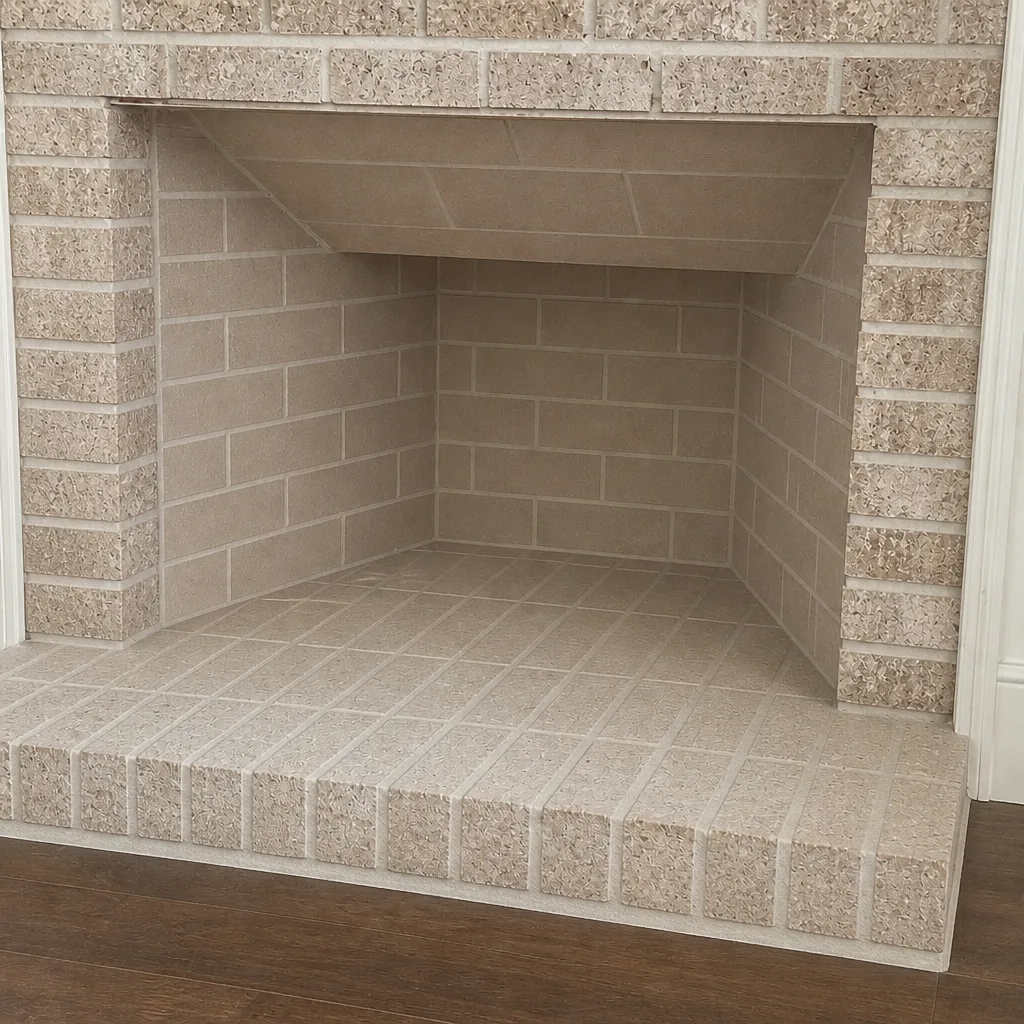 After
When to Call a Professional
Call a professional chimney contractor when the flue hasn’t been swept in a year or more of active burning, when you’ve moved into a home with a fireplace of unknown service history, when you’ve changed appliances (a wood stove or insert replacing an open fireplace requires a Level 2 inspection), or when you notice signs like smoke backing into the room, a strong creosote odor on warm days, visible cracks in the firebox masonry, or a chimney cap that’s rusted, loose, or missing. In a Richardson home that burns through the winter, an annual sweep plus inspection is the standard; anything less is deferring maintenance rather than avoiding it. Ridgeway Chimney Sweep offers free estimates in Richardson. Call (888) 873-4715. We answer 24/7. Fast dispatch from 7am to 7pm, Sunday through Friday.
Frequently Asked Questions
A standard chimney sweep in the Richardson area typically costs in the low hundreds of dollars, and an inspection may be bundled or priced separately depending on scope. The written estimate sets the final price, and it’s based on the specific flue and condition of your chimney rather than a flat “starts at” number. Call (888) 873-4715 for an exact quote. Estimates are free.
You need a new liner only when the inspection shows the existing liner is cracked, misaligned, deteriorated, or inappropriate for the appliance venting into it. Ask to see the camera photos before any repair decision, and expect a written report documenting the condition. Nothing should be recommended without photographic evidence you can see for yourself. Call (888) 873-4715 for an exact quote. Estimates are free.
Once a year for a wood-burning fireplace or appliance during active use, or more often if you burn frequently or use unseasoned wood. A Level 2 camera inspection is the baseline at move-in and whenever the appliance or fuel type changes. Call (888) 873-4715 for an exact quote. Estimates are free.
Creosote builds up inside the flue, and at certain concentrations it can ignite. That’s a chimney fire, and even a small one can crack the liner and compromise the venting. Skipping a sweep also means missing the inspection that would catch liner damage and venting problems early. The work is a routine maintenance item, not an emergency you wait on. Call (888) 873-4715 for an exact quote. Estimates are free.
You can, but the certification is the clearest available signal that the technician has been tested on NFPA 211 and the code of ethics this trade operates under. The certification belongs to an individual technician, so ask which technician will be assigned and verify that name in the CSIA public directory before booking. If they can’t tell you the name, verify someone else.
Get a second opinion from another Richardson contractor before you commit. Compare the two quotes line by line, and specifically compare the inspection method, the products specified, and the written report deliverable. If one quote is dramatically higher with no clear scope difference, that’s worth asking about directly before you sign anything. Call (888) 873-4715 for an exact quote. Estimates are free.
The Bottom Line
Hiring a chimney sweep in Richardson comes down to five filters and a paper trail. Verify current CSIA certification for the technician doing the work, not just the company. Ask five specific questions before booking, and listen for whether the answers are concrete or vague. Treat the product brands a contractor specifies as a professional signal, because a sweep who can name their liner and cap suppliers has made a supply-chain choice that costs more than improvisation. Watch for the door-knocker pattern after storm season, and decline it without hesitation. And when the visit ends, keep the inspection report, the photo evidence, and the written quote on file. A sweep who delivers all of that is a real contractor, and the chimney repair recommendation that follows is one you can trust. If any part of the process feels off, the Ridgeway Chimney Sweep team is here to help. Call (888) 873-4715 for a free estimate. We answer 24/7. Fast dispatch from 7am to 7pm, Sunday through Friday.
Written by the team at Ridgeway Chimney Sweep.