
Last updated November 16, 2026
 Sweep & inspection
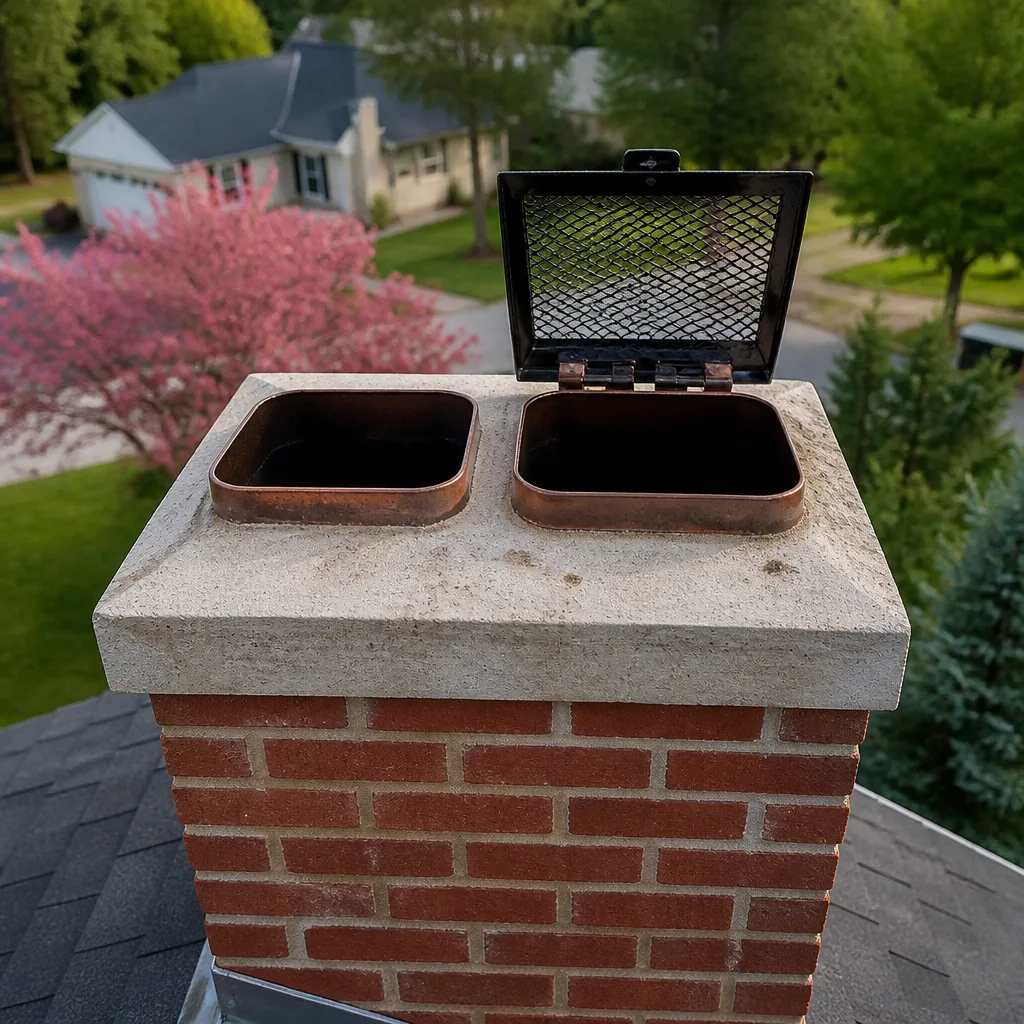
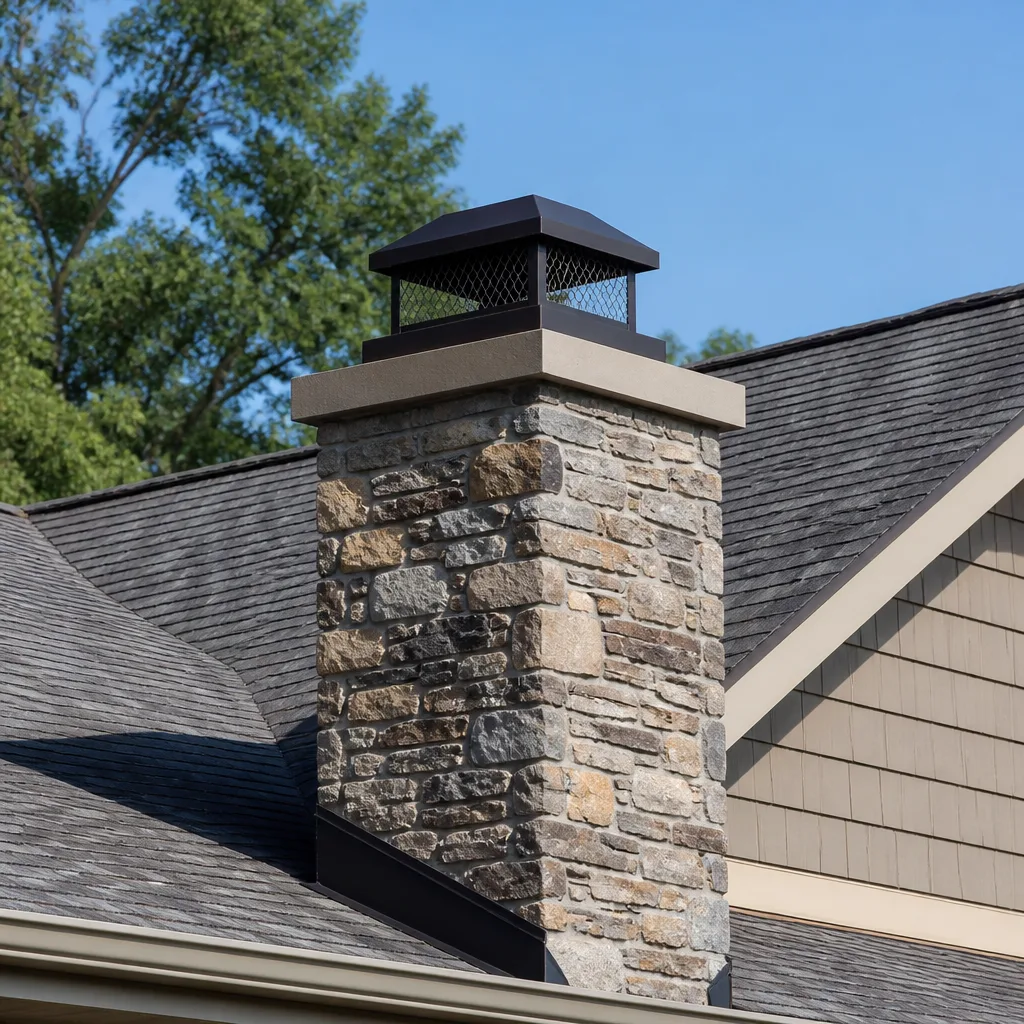 Caps & crowns
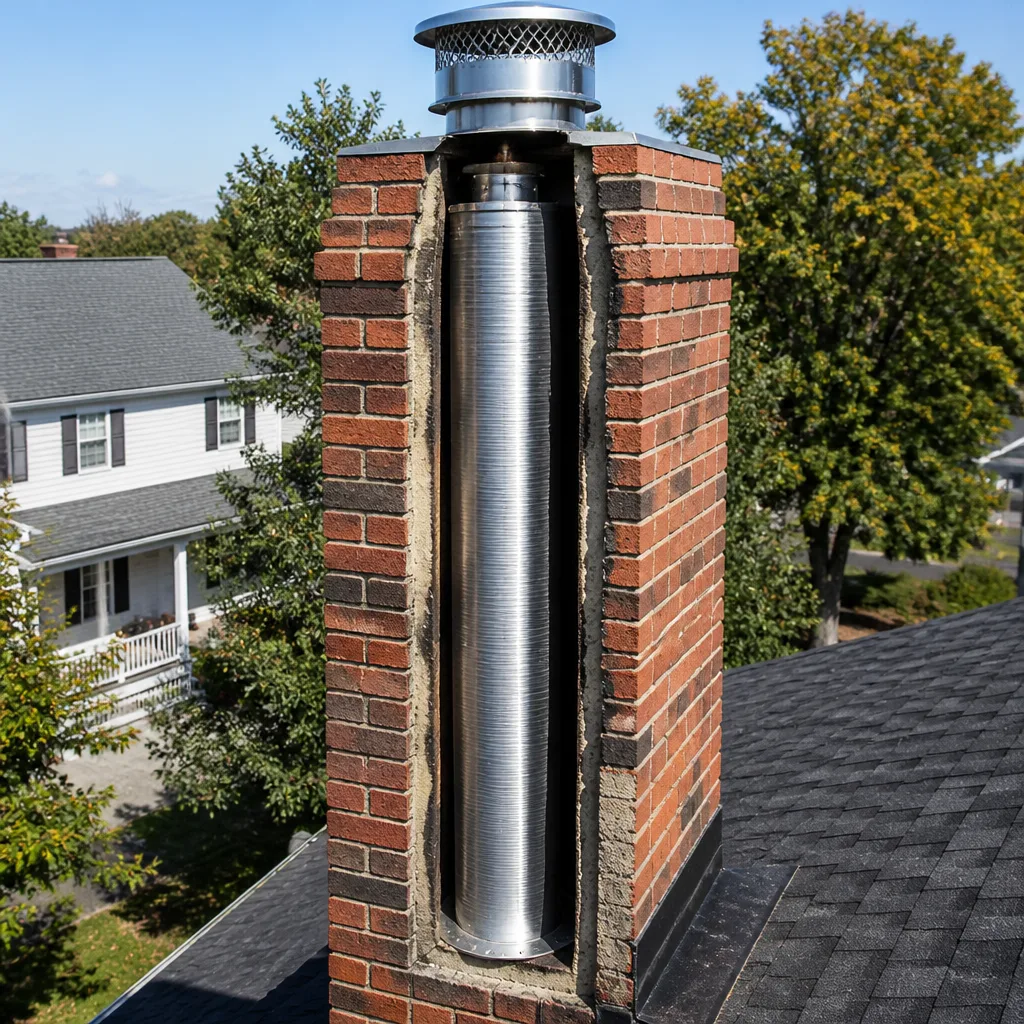 Flue relining
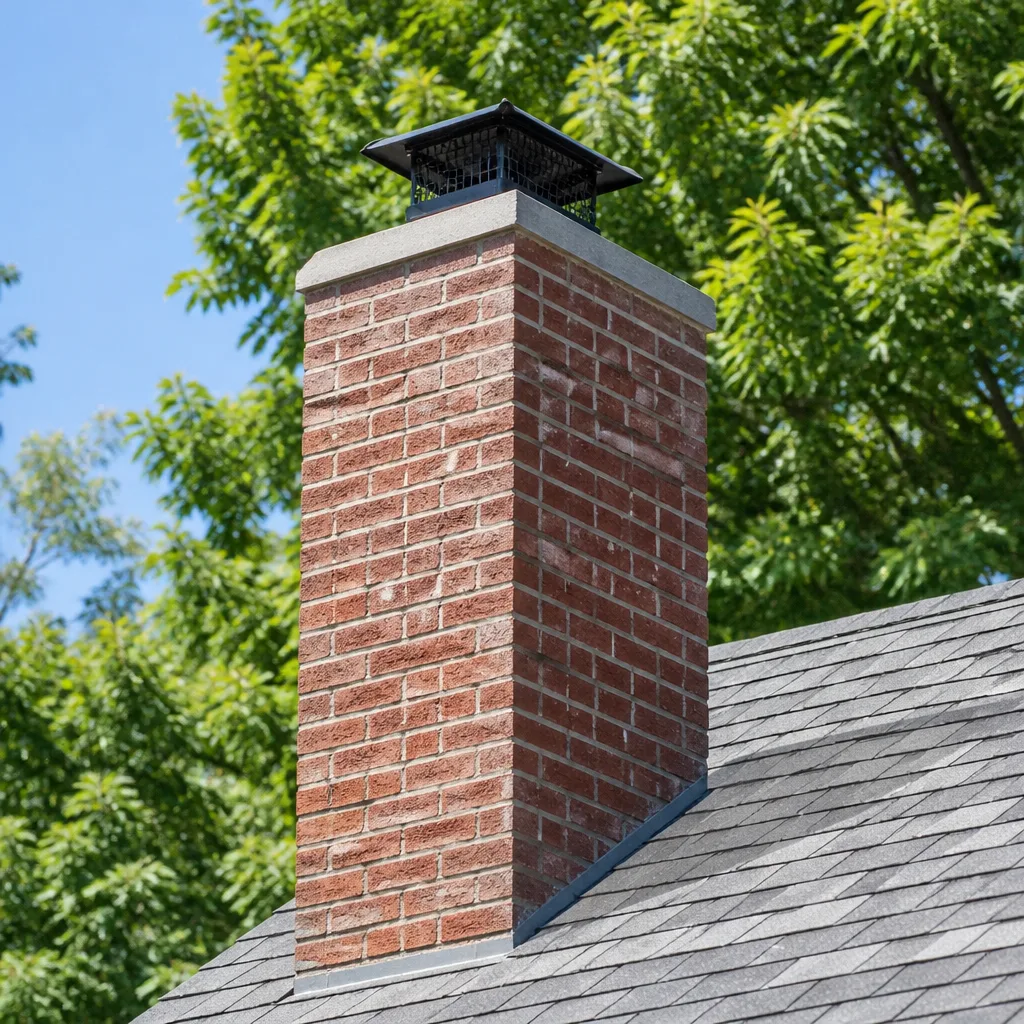 Masonry repair
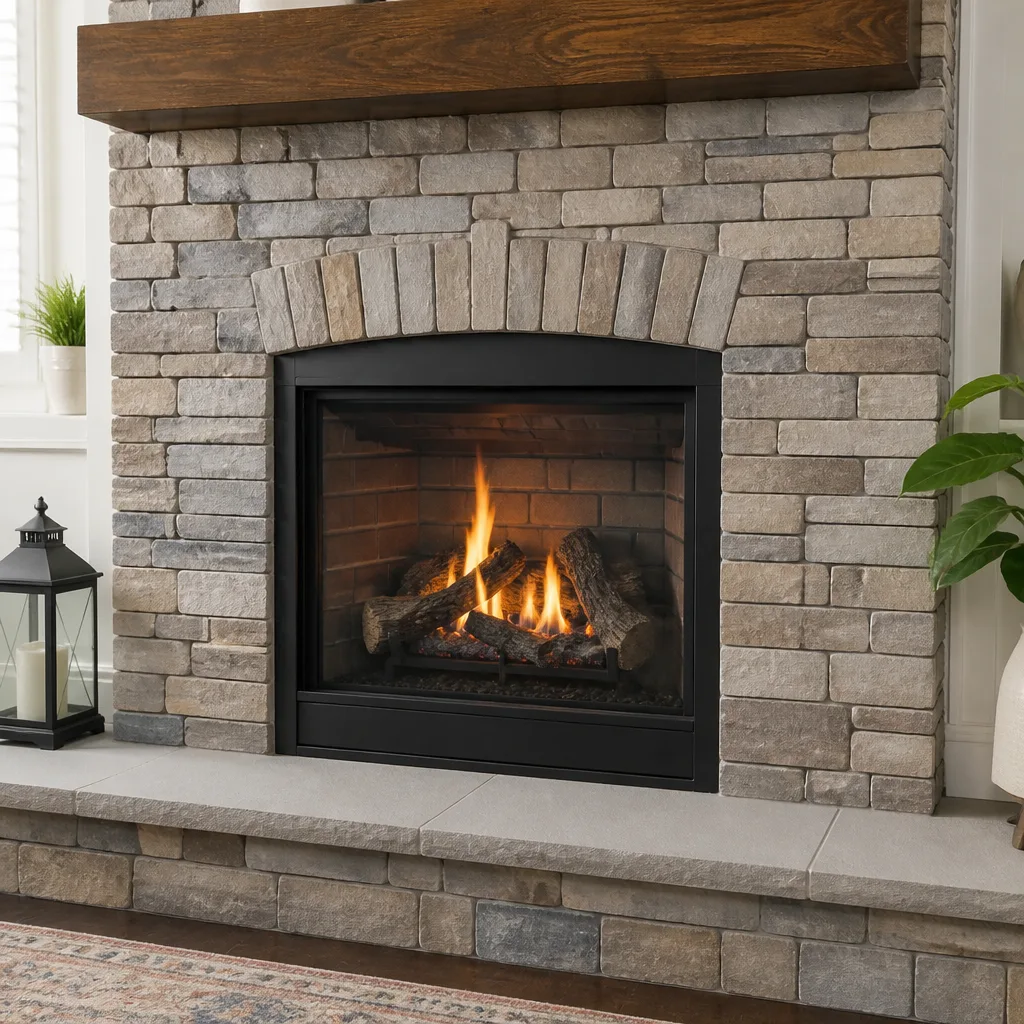 Gas fireplace service
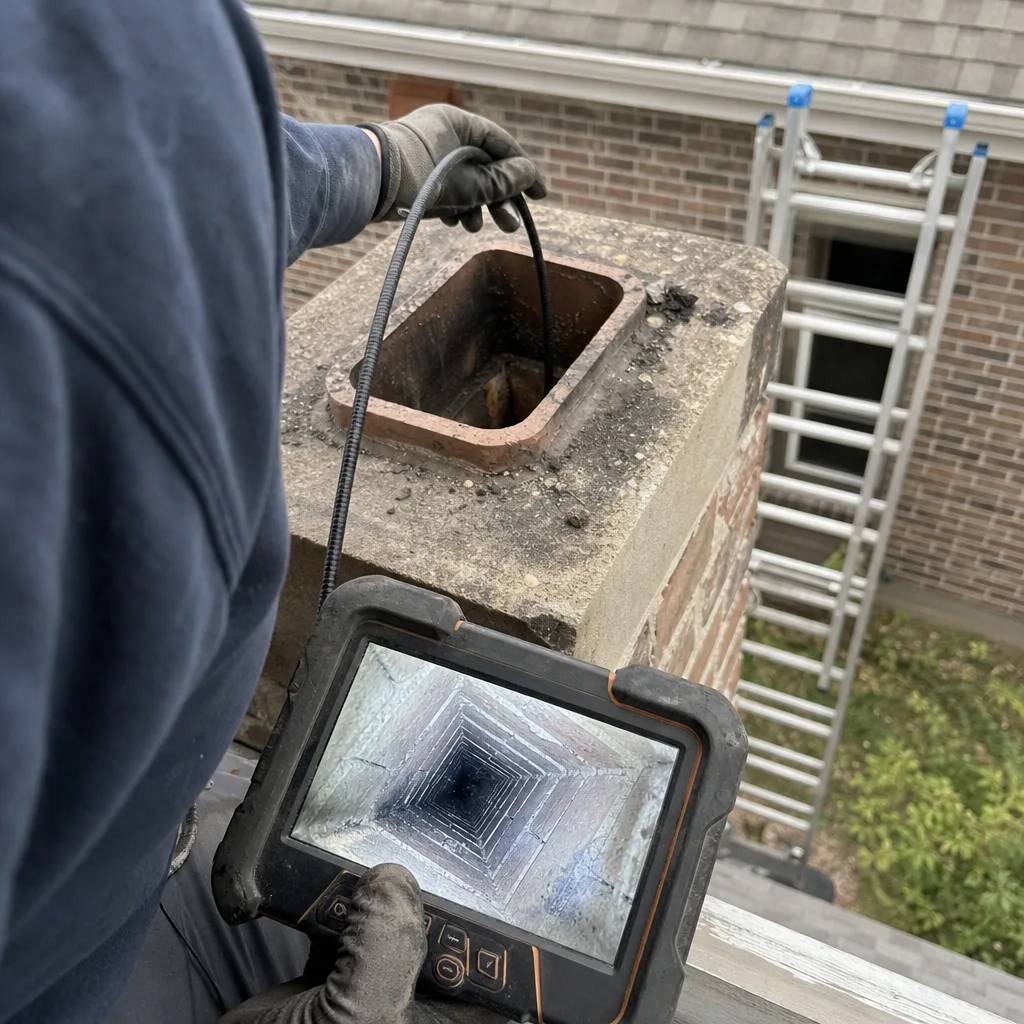
Level 1 sweep and inspection to the NFPA 211 annual standard - flue, crown, cap, and flashing checked and photographed
Chimney sweep logs do not sweep chimneys. They loosen some creosote - which then falls where a brush and vacuum still have to collect it.
Chimney Cleaning Emergency Preparedness Guide for Richardson Homes
A chimney fire can roar like a freight train and push flue temperatures toward 2,000°F, yet the first move most people picture is the wrong one. Most homeowners imagine calling 911 before anything else. In reality, the sequence that protects your home starts with cutting the fire’s air supply, then getting everyone out, then calling. This guide is built to be read before burn season, not searched for at 2 a.m. with smoke in the room. We’ll walk through the three-step chimney fire response, how to tell a carbon monoxide event from a fire event, what Richardson’s hail and high-wind storms do to caps and crowns, what to document for an insurance claim, and why a fire means the chimney stays cold until a proper inspection clears it.
Quick Answer
The right response to a chimney emergency depends on which emergency it is: for a chimney fire, close the damper and all air inlets to starve the fire, get everyone outside, then call 911; for suspected carbon monoxide, leave the house immediately and call 911 from outside, then have the chimney and appliance inspected before lighting again. Either way, stop using the chimney until a certified sweep completes a Level 2 inspection and gives you written clearance. Rehearsing these steps now, in Richardson, is the whole point of preparation.
Styles & brands we work with
- Sweep & inspection
- Caps & crowns
- Flue relining
- Masonry repair
- Gas fireplace service
Table of Contents
- The Three-Step Chimney Fire Response Sequence
- Carbon Monoxide vs. Chimney Fire: Distinguishing the Emergency
- Storm Preparedness for Richardson Chimneys
- Post-Storm Ground-Level Assessment
- What to Document After a Chimney Emergency
- Why the Chimney Stays Cold Until a Level 2 Inspection
- What “Cleared for Use” Documentation Looks Like
- Pre-Season Preparation Checklist
The Three-Step Chimney Fire Response Sequence
Every household member old enough to act should be able to recite this sequence without thinking. It’s short on purpose. The three steps are: starve the fire of air, evacuate, then call. In our experience, the confusion in the first thirty seconds costs more than anything else during a chimney fire.
Here’s the order and the reasoning behind each step:
- Close the damper and all air inlets. A chimney fire feeds on oxygen. Shutting the damper, closing glass doors, and closing any nearby vents reduces the air the fire can pull up the flue. This does not put the fire out. It limits how fast it grows while you get out.
- Get everyone out of the house. Chimney fires can spread to the roof structure and attic through cracks and failed joints. Don’t stop to gather belongings. Get out, close the door behind you, and move to your agreed meeting spot.
- Call 911 from outside. Tell the dispatcher it’s a chimney fire and give your Richardson address. Stay on the line. Don’t re-enter the home until the fire department says it’s safe.
After the fire department clears the scene, the chimney is still not usable. More on that in the Level 2 inspection section. While you’re rebuilding the habit, rehearse the sequence with everyone in the household once a season. It takes two minutes and it’s the highest-value chimney preparation you can do.
Carbon Monoxide vs. Chimney Fire: Distinguishing the Emergency
Carbon monoxide and chimney fires are different emergencies that require different first responses. Recognizing which one you’re facing is critical. Confusing the two wastes time.
A chimney fire usually announces itself: the roar like a freight train, popping or crackling, dense smoke from the top of the chimney, visible flames or sparks at the crown, and a strong burning smell inside the house. A slow-burning chimney fire can be quieter but still shows thick smoke, and the flue can glow hot enough to discolor a metal flue cap. A carbon monoxide event, by contrast, is silent. It gives no visual signal at all. Its warning is a CO alarm, or physical symptoms in the people inside the house: headache, dizziness, nausea, confusion, fatigue.
The first response differs because the threat differs:
- Chimney fire: close the damper and air inlets, evacuate, call 911 from outside, and don’t open the firebox to check.
- Carbon monoxide: don’t close any dampers (you may be shutting off what little draft exists), get everyone outside immediately, call 911 from outside, and don’t re-enter until the fire department clears the home. Then call a professional to inspect the chimney and any fuel-burning appliance before it’s lit again.
For any chimney-related emergency in Richardson, the safe path is to get out first and sort out the diagnosis after. We can’t tell you which emergency you’re facing from a phone call, but a certified sweep can find the cause once the home is safe and the fire department has released it.
Storm Preparedness for Richardson Chimneys
Richardson’s severe spring and summer storms bring hail and high winds capable of damaging the top of a chimney. Chimney caps, crowns, and flashing take the brunt, and the damage is often invisible from inside the house.
Here’s what each storm type typically does:
- Hail: dents and pierces metal chimney caps, cracks clay chimney pots, and pits the concrete crown. A lid that looks fine from the driveway may be split or loosened on top.
- High wind: lifts and turns loose caps, tears fasteners out of the flue tile, and drives water under flashing where the chimney meets the roof. Water that gets under flashing can work into the roof deck and attic.
- Flying debris: branches and shingles can land on the crown, crack the flue tile at the top, and knock a cap askew. That misalignment changes how the chimney drafts.
Good materials matter after a storm. When we replace caps and flashing, we use Gelco and Famco components built specifically for chimney weatherproofing, not general-purpose substitutes. A cheap cap that’s fast on the install but warped by a hail event costs more than it saved. If a storm just came through your part of Richardson, that’s the moment to schedule an inspection, not the moment to light a fire and hope.
Post-Storm Ground-Level Assessment
You can check a lot of the chimney’s condition without climbing anything. Do this from the ground, with binoculars if you have them, within a day or two after a storm in Richardson. It takes five minutes and gives you a clear baseline for whether to call a professional.
Here’s the sequence:
- Look at the crown. Are there fresh cracks, missing chunks of concrete, or a visible lean? A cracked crown lets water in.
- Check the cap. Is it sitting level, or has wind lifted one side? Is the mesh or metal bent?
- Examine the flashing. At the base of the chimney where it meets the roof, is there a visible gap or rusted metal? Look for missing tar or lifted edges.
- Look at the flue tile. With binoculars you can often see the top of the clay tile. Is it cracked or missing pieces? Is it clogged with debris?
- Do an interior water check. Look at the ceiling near the chimney and in the attic for new water stains after a storm.
- Smell and listen. Step outside and smell for smoke after a storm, and after lighting a fire, listen for odd drafts or whistling that weren’t there before.
If two or more of these checks come back wrong, call us. If a single item looks concerning, it’s still worth a look. A quick pre-burn-season inspection catches most of what a bad storm leaves behind in Richardson.
What to Document After a Chimney Emergency
Insurance claims for chimney events go smoother when the documentation is thorough and done within the first 24 hours. In our experience, most claims stall on missing photos or vague paperwork, not on whether the damage is real. Here’s what to capture before cleanup begins.
Photograph and note the following:
- The exterior of the chimney from several angles, including the roof above and around it, and the ground below where debris fell.
- Any visible fire, smoke, or scorching damage inside or outside the home, including the firebox, hearth, mantel, and ceiling above the fireplace.
- The fire department’s report, including the incident number, dispatcher time, and responding department details.
- The 911 call time and any alarm activations, such as a carbon monoxide alarm’s chirp log.
- Damage estimates from a certified sweep or contractor in writing, when you have them.
- Receipts and records for any prior maintenance, sweeps, or repairs. Improper maintenance can be a claim issue, and so can an unrepaired defect.
In Collin County, claims for chimney fires are handled like other fire claims. Save everything, photograph the scene before you clean, and hold off on permanent repairs until the insurer has seen the damage. Ridgeway Chimney Sweep can provide written documentation for your claim. If the inspection reveals deeper damage, our chimney repair team can help with the permanent fix after the claim is processed.
Why the Chimney Stays Cold Until a Level 2 Inspection
After a chimney fire, the chimney should not be used until a Level 2 inspection is complete. This is not a sales tactic. A fire that roared at 2,000°F can hide cracked flue tiles, warped metal liners, and gaps at the clay joints that no longer vent smoke and carbon monoxide to the outside. Lighting a fire before the inspection is complete is the single most dangerous thing a homeowner can do after a chimney fire.
What a Level 2 inspection actually covers:
- The full flue, inside and out, using a camera to see around bends and into the lining.
- The firebox, damper, throat, and smoke chamber, including visible cracks or gaps.
- Clearances to combustibles, which determine whether nearby framing is safe after the fire.
- The exterior: crown, flashing, cap, and any storm damage that may have contributed.
- Any connected appliance, if you have a wood stove, insert, or connected furnace.
The result should be a written report with photos of what the camera saw. If the report recommends a repair, ask to see the evidence for it. We recommend nothing without camera evidence you can look at yourself. A real inspection tells you what your chimney needs, and it doesn’t need to involve a panic upsell. If the report says the chimney can safely wait for repair, wait. If it says the chimney needs a new liner before the next fire, listen.
What “Cleared for Use” Documentation Looks Like
After a chimney fire or a major storm, the paperwork matters as much as the repair. “Cleared for use” documentation should be a written report from a certified sweep identifying the chimney address, the inspection level, and a clear statement about whether the chimney is safe to light. A verbal “yeah, you’re good” is not documentation.
Look for these elements in the report:
- Property address and date of inspection, so you can match it to your home and insurance records.
- Inspection level performed, which should be Level 2 after any fire event.
- Findings for each chimney component, including the firebox, flue, crown, flashing, and cap.
- Photo documentation from the camera inspection, especially for anything the report flags.
- A clear clearance statement: safe to use, safe to use with conditions named, or do not use until specified repairs are completed.
- Recommended repairs in writing, with the reason for each. This is your verification against any upsell.
- Date and signed review by the inspecting company, which is what you’ll attach to an insurance claim.
Keep the report where you can find it. If you sell the home within a few years, a cleared chimney is one less question from a buyer’s inspector. If you file an insurance claim, the report is the piece that turns a vague “something went wrong” into a documented sequence of events. Ridgeway Chimney Sweep provides this level of documentation with every inspection performed for a Richardson home.
Pre-Season Preparation Checklist
Preparation is done in the mild weeks before burn season, not in the middle of it. Richardson winters are mild and the burn season is real, so the weeks before you light the first fire are the right window to do the following.
Run this list once a year:
- Schedule a chimney sweep before the season starts. A yearly chimney sweep removes creosote and lets a pro see the condition of the flue. If you’re overdue, don’t wait.
- Book an inspection if it’s been more than a year since the last one, or if you’ve had a fire or storm since. Level 1 is the baseline, Level 2 for anything event-related.
- Test every smoke detector and carbon monoxide alarm, and replace batteries.
- Rehearse the three-step response sequence with everyone in the house, then select an outside meeting spot.
- Check the cap and crown visually, or ask for a professional look, especially after a storm.
- Clear the firebox of old ash and confirm the damper opens and closes fully.
- Review your fireplace tools and screen and make sure you have a grate that holds logs securely.
If your chimney needs work before burn season, we can do it. If the chimney needs nothing, we’ll tell you that too. That’s the whole point of the preparation window: you’re choosing the timing, not reacting to it.
Common Mistakes to Avoid
- Calling 911 before closing the damper and air inlets. In a chimney fire, starving the fire of air in the first thirty seconds matters more than the call, which comes right after evacuation.
- Treating a carbon monoxide alarm like a chimney fire alarm. If a CO alarm sounds, leave the house and call from outside; don’t assume closing dampers helps. It doesn’t.
- Getting back in the house to “check on the fire” after the fire department responds. Chimney fires can re-ignite and the structure may not be safe. Wait for clearance.
- Relighting the fireplace after a fire because “it looks OK.” A cracked flue tile doesn’t look like anything from inside the room, but a Level 2 inspection will find it.
- Skipping the post-storm ground-level check because nothing looks wrong from the driveway. Caps and crowns are the highest points and take the most damage, and they’re the hardest to see without getting out the binoculars.
- Accepting a major repair recommendation without a camera photo. The camera is the evidence, and asking for it is how you protect yourself from unnecessary upsells.
- Not documenting the event for the insurance company before cleaning up. Photos taken before cleanup are the difference between a claim that moves and one that stalls.
See the difference
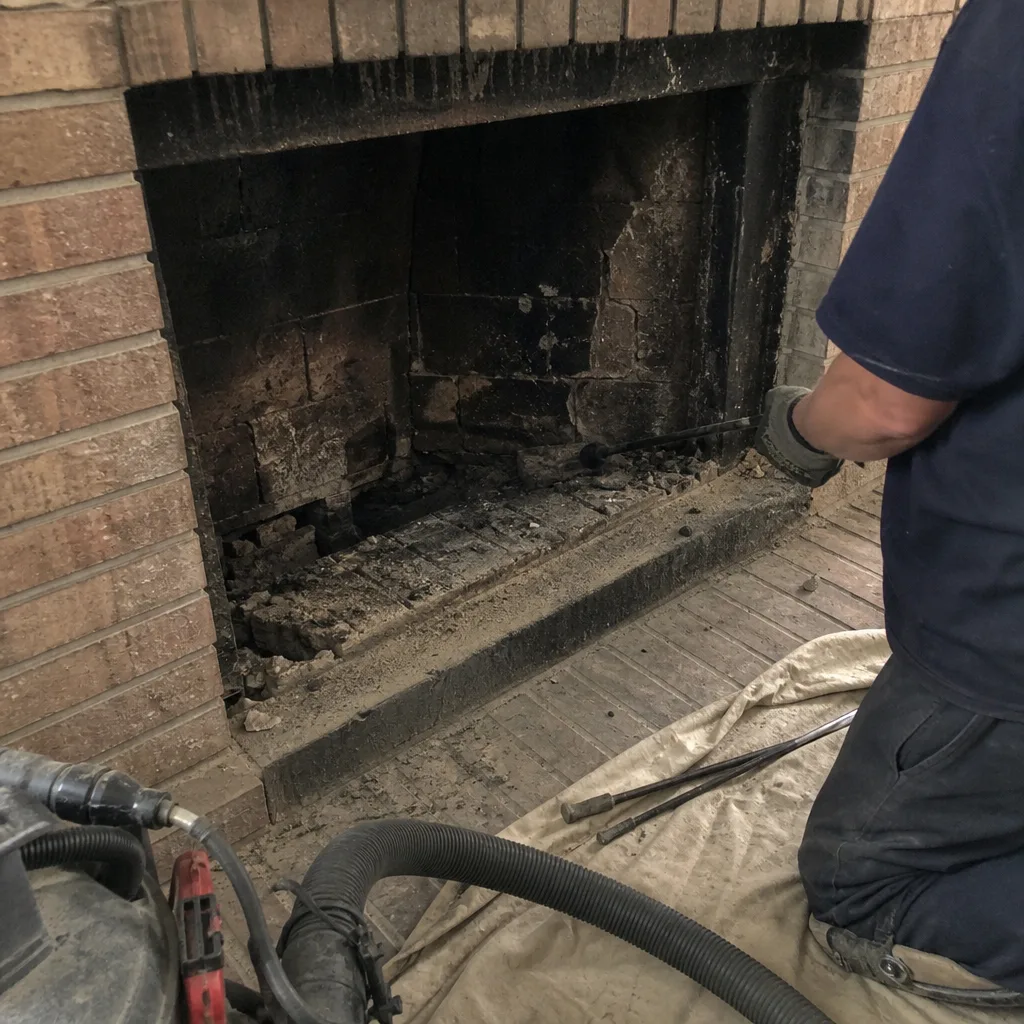 Before
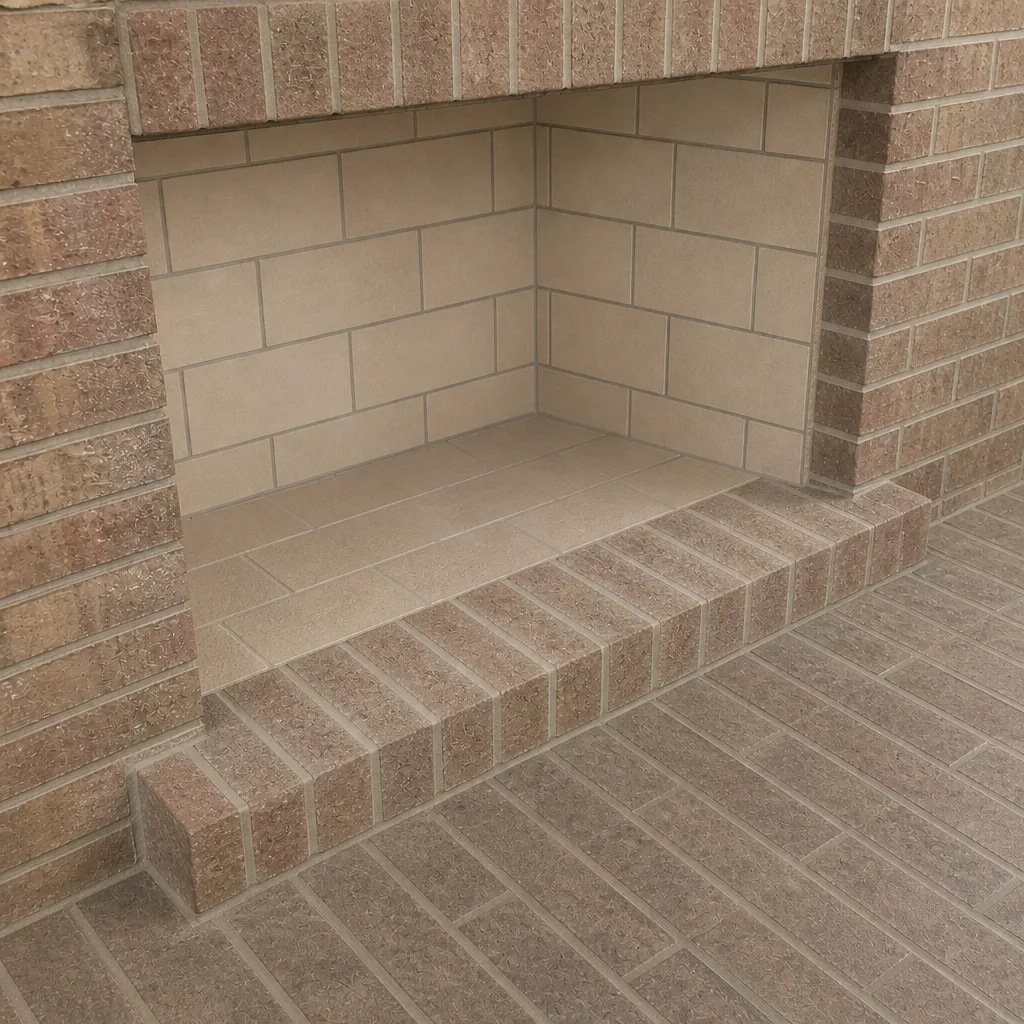 After
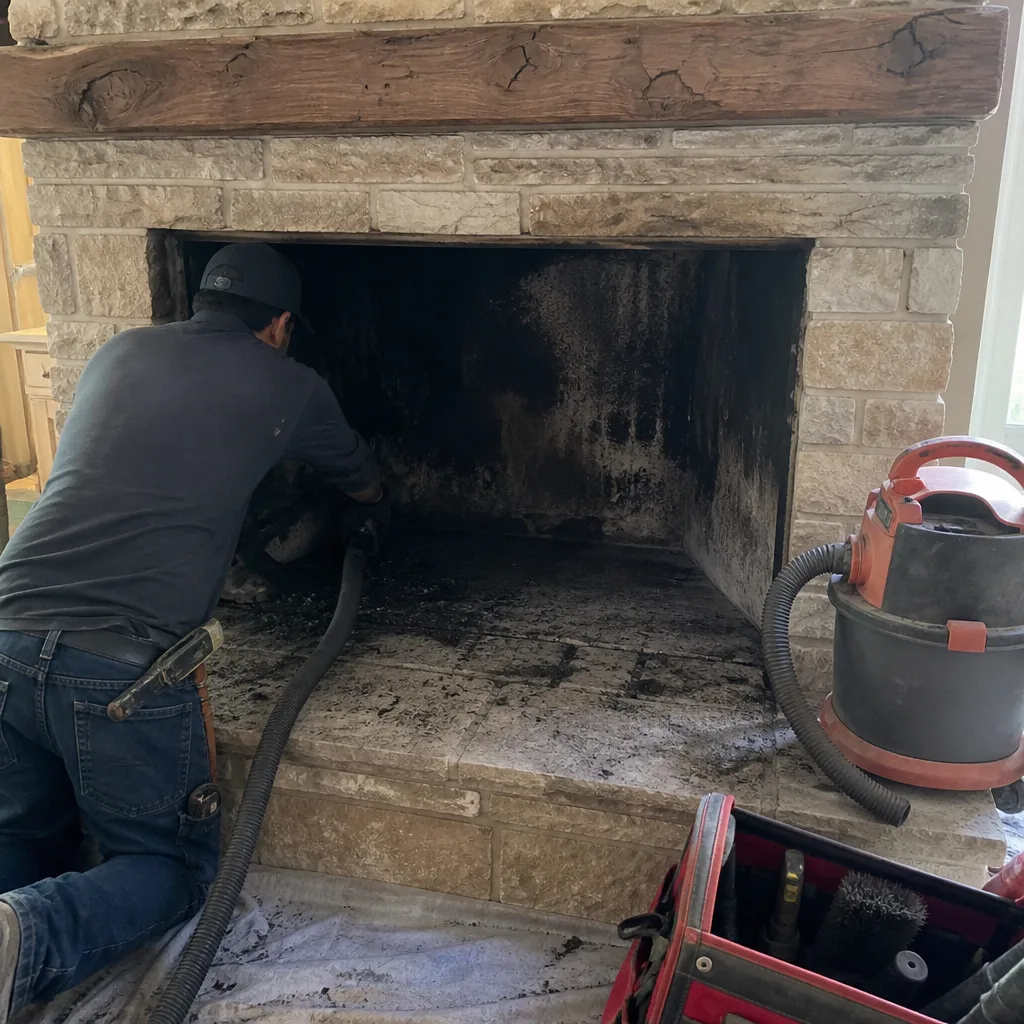 Before
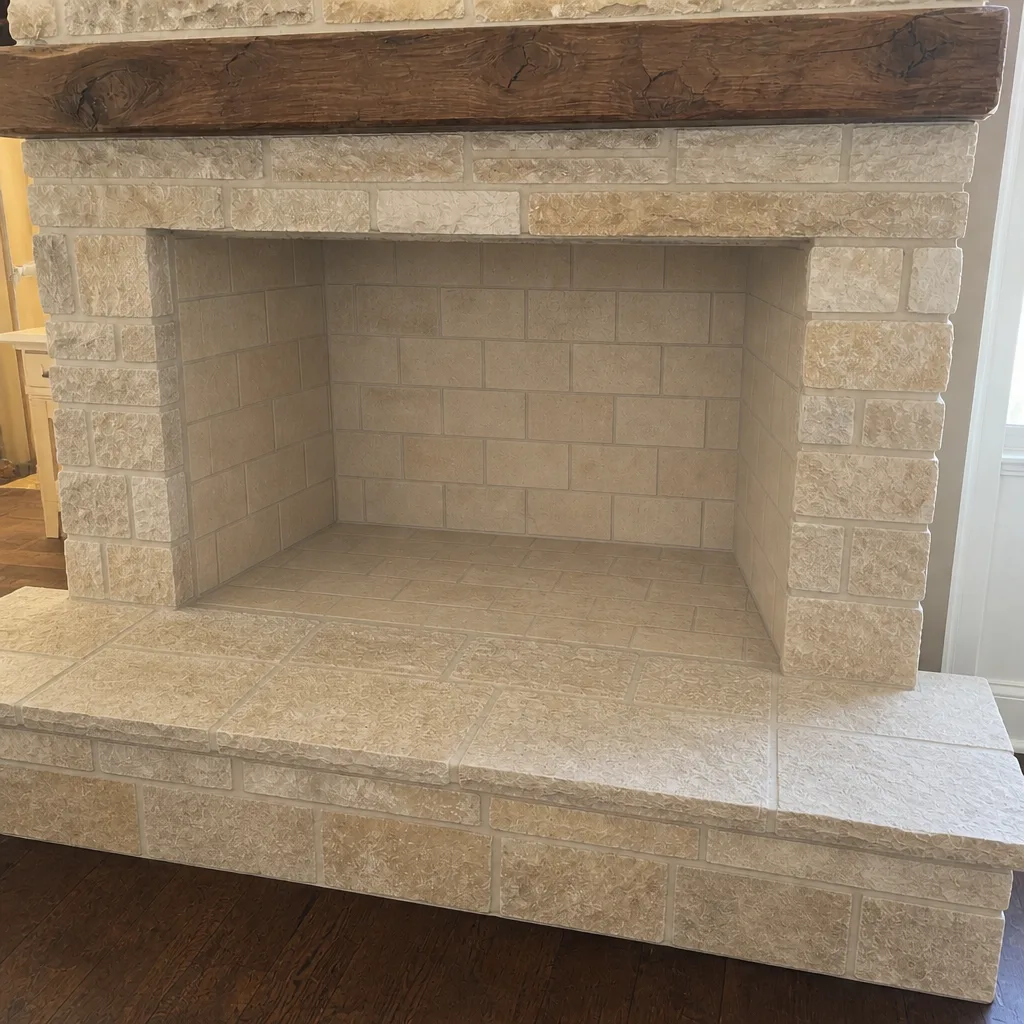 After
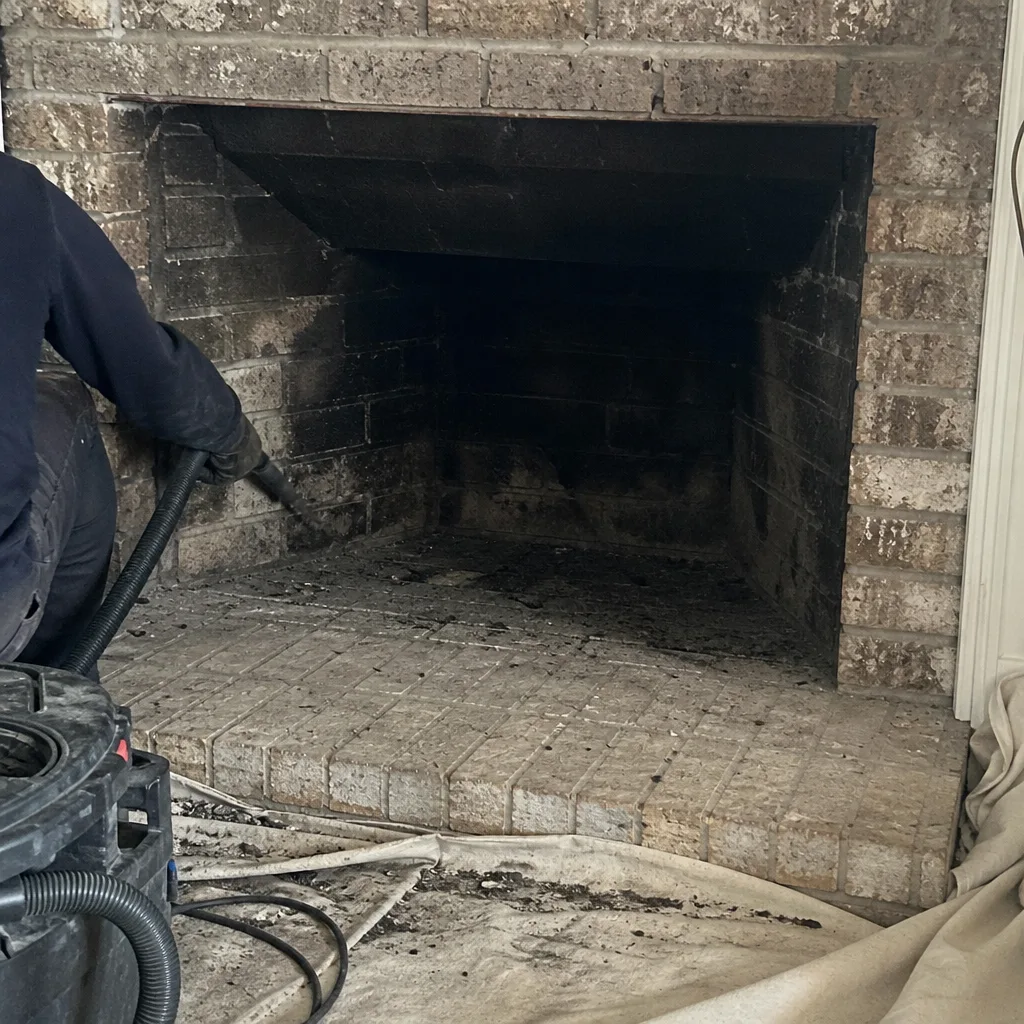 Before
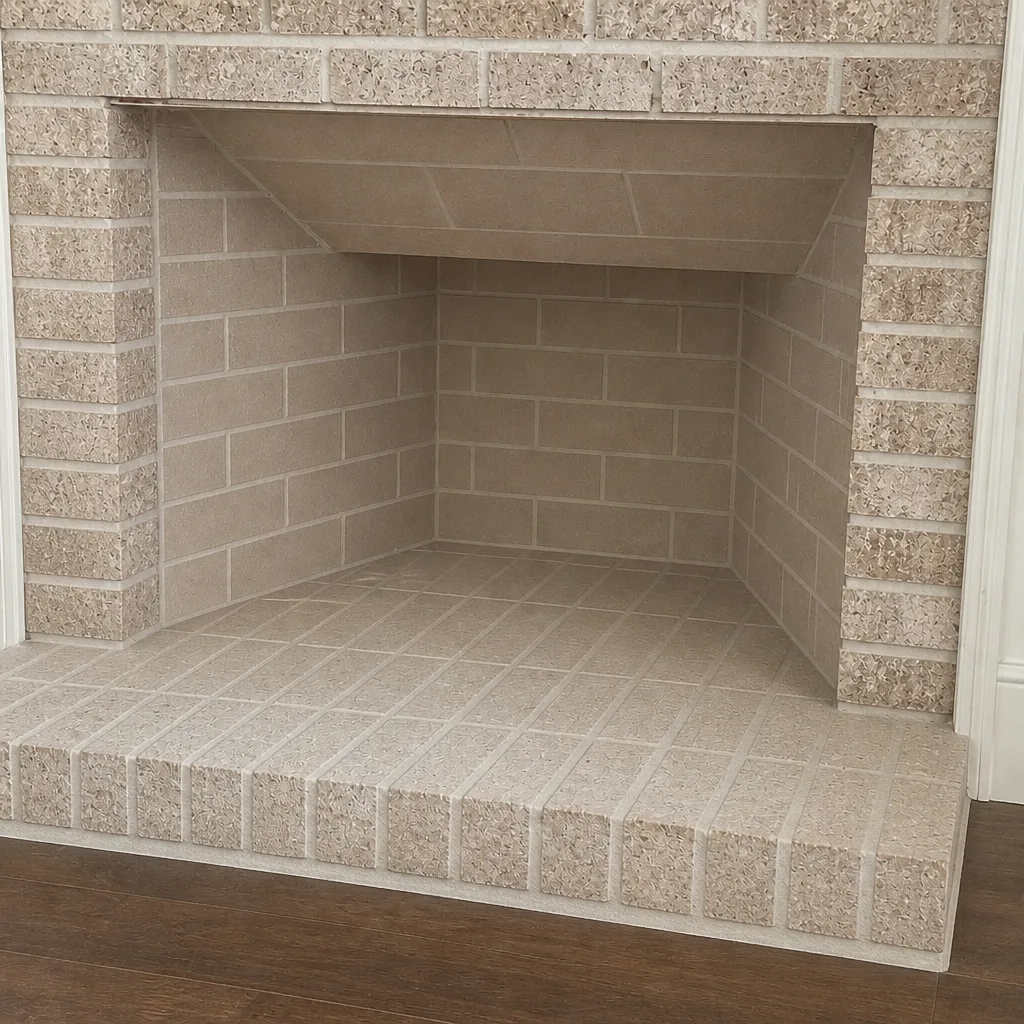 After
When to Call a Professional
Call a chimney professional if the fire department has cleared the scene after any chimney fire and you need a Level 2 inspection. Call if a CO alarm has activated and the fire department has cleared the home, before anyone relights the fireplace. Call if a storm has visibly damaged your cap, crown, or flashing, or if an interior water stain appears after rain. Call if smoke backs into the room on the first fire of the season, if you smell smoke when the fireplace isn’t lit, or if you’re overdue for a sweep. Call if you haven’t had the chimney looked at in more than a year and want a baseline report before burn season in Richardson. Ridgeway Chimney Sweep offers free estimates in Richardson. Call (888) 873-4715. We answer 24/7. Fast dispatch from 7am to 7pm, Sunday through Friday. A call outside dispatch hours is booked into the next opening. Our technicians have up to 15 years of experience and work with DuraFlex liners, HeatShield resurfacing, and other industry-trusted brands.
Frequently Asked Questions
Close the damper and all air inlets first, then get everyone out of the house, then call 911 from outside. Starving the fire of oxygen slows it while you evacuate. Do not open the firebox to check.
A chimney fire usually makes noise (a roar, popping, or crackling), produces thick smoke from the top of the chimney, and smells strong. A carbon monoxide event is silent and is signaled by a CO alarm or symptoms like headache and dizziness. Either way, get out of the house and call 911 from outside, then have the chimney inspected before relighting. Call (888) 873-4715 for an inspection after you’re cleared to return.
No. A chimney should not be lit again until a Level 2 inspection is complete, even if the flue looks intact from inside the room. Fires can crack flue tiles and warp liners in ways you can’t see without a camera. Call Ridgeway Chimney Sweep at (888) 873-4715 to book the inspection.
Photograph the exterior of the chimney from several angles, the firebox, hearth, mantel, and ceiling above the fireplace, and any visible fire, smoke, or scorching damage. Save the fire department’s report and any alarm records, and hold off on cleanup until you’ve captured the scene. Call (888) 873-4715 for written documentation to accompany a claim.
Check the cap, crown, and flashing first, since hail and high wind hit those the hardest. Look for a cap that’s lifted or bent, a crown with fresh cracks, and flashing that’s pulling away from the roof. Check inside for water stains after the next rain. Call (888) 873-4715 for a professional look if anything seems off.
Most wood-burning fireplaces in Richardson benefit from an annual sweep before the burn season. If you burn frequently or burn unseasoned wood, don’t stretch the interval. Call (888) 873-4715 to schedule a sweep and inspection together, and we’ll tell you what your chimney actually needs based on what the camera shows.
The Bottom Line
Chimney emergencies in Richardson are survivable without panic when the sequence is already in your head. Close the damper and starve a chimney fire of air, evacuate, then call from outside. For a CO alarm, leave first and call from outside. After any chimney fire, a storm, or a CO event, the chimney stays cold until a Level 2 inspection is complete and you have a written clearance report in hand. Document the event before cleanup, keep the cleared-for-use report, and rehearse the response once a season. Ridgeway Chimney Sweep handles the sweep, inspection, and repair in Richardson so the sequence is practiced and the inspection is documented.
Contact
Call (888) 873-4715 for a free estimate. We answer 24/7. Fast dispatch from 7am to 7pm, Sunday through Friday. A call outside dispatch hours is booked into the next opening. Ridgeway Chimney Sweep is the specification-grade choice for chimney care in Richardson: sweep, inspect, and repair under one company, using industry-trusted brands like DuraFlex, HeatShield, Gelco, Olympia Chimney, Famco, and Copperfield. If it’s been a while since your last inspection, or if a storm just came through, call and let’s get your chimney checked before burn season.
Written by the team at Ridgeway Chimney Sweep.