
Last updated November 16, 2026
 Sweep & inspection
 Caps & crowns
 Flue relining
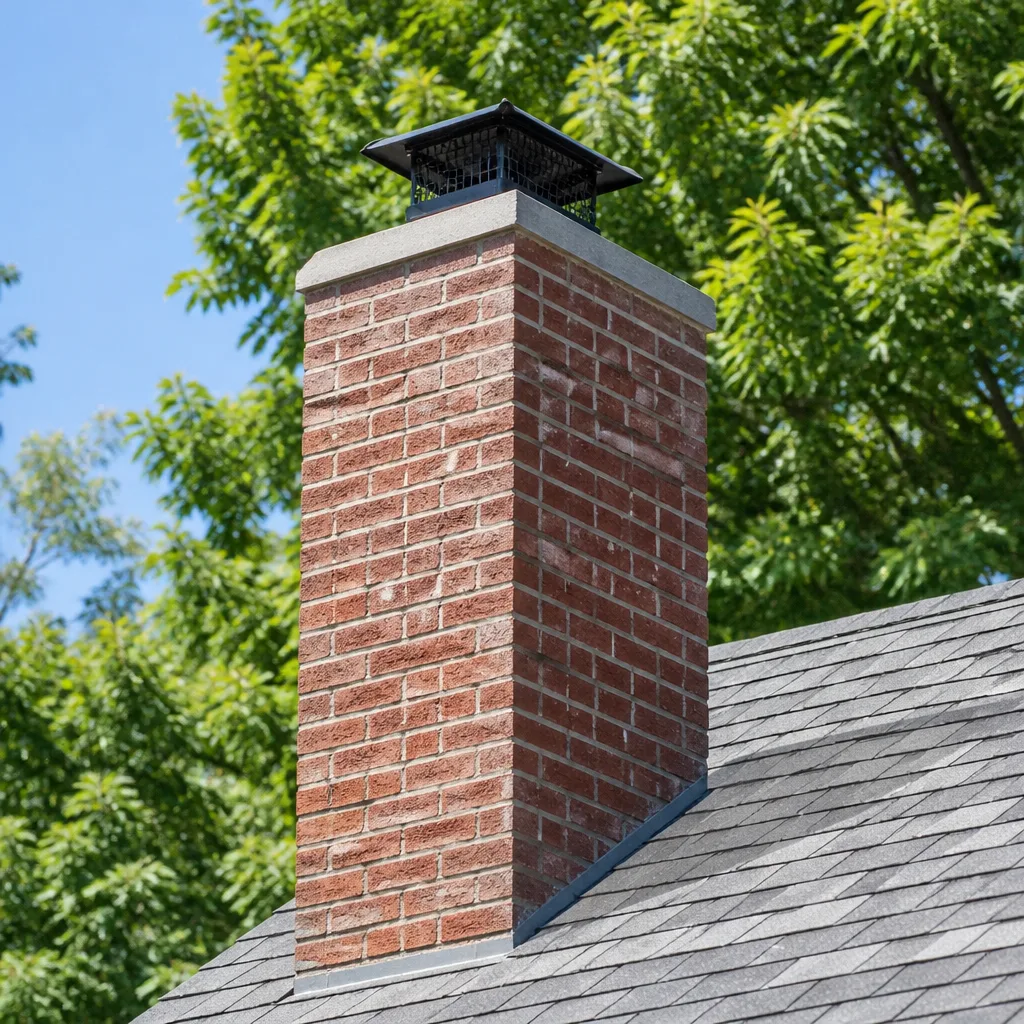 Masonry repair
 Gas fireplace service
Level 1 sweep and inspection to the NFPA 211 annual standard - flue, crown, cap, and flashing checked and photographed
Chimney sweep logs do not sweep chimneys. They loosen some creosote - which then falls where a brush and vacuum still have to collect it.
Chimney Sweep Maintenance Checklist for Richardson Homeowners
Most homeowners treat a chimney sweep as a once-a-year errand, something to cross off before the first fire of the season. That framing misses what a chimney actually is: a system of components that wear at different rates, and one that a home inspector or insurance adjuster will look at far more carefully than you might expect. In Richardson, we see plenty of houses where the flue was swept faithfully but the crown had been cracking for years, or where no one could produce a single record of service when it mattered. This guide walks through the checklist the way we actually use it, component by component, with what a pass looks like, what you can check yourself, and how to log it all so future you – and future buyers – have something to point to.
Quick Answer
A chimney maintenance checklist for a Richardson home covers seven things: the cap, the crown, the flashing, the flue liner, the smoke chamber, the damper, and the firebox. A proper annual visit combines a sweep and an inspection, and every visit should be documented with a written report you can file and produce later for an inspector or insurer. Homeowners can monitor a few of these items themselves, but the liner, smoke chamber, and internal flue condition require a professional assessment.
Styles & brands we work with
- Sweep & inspection
- Caps & crowns
- Flue relining
- Masonry repair
- Gas fireplace service
Table of Contents
- Why a Checklist Beats a Reminder
- Component-by-Component: What a Pass Looks Like
- What You Can Check Yourself vs. What Needs a Pro
- How to Log Service Visits the Right Way
- Richardson Timing: Why Late September Matters
- Tracking Liner Repair Warranties Alongside Cleaning Records
- What Triggers a Repair Call Instead of a Sweep
- Common Mistakes to Avoid
Why a Checklist Beats a Reminder
A reminder tells you to book a sweep. A checklist tells you what should come out of that appointment, and gives you a way to tell whether it did. Those are different things, and in our experience the difference shows up years later – at the inspection table, or in a conversation with an insurance adjuster after a claim.
Here’s the part that surprises people. A chimney is not one object. It’s a stack of separate parts that fail on their own schedules. The firebox takes the direct heat. The damper works every time you light a fire and wears at the pivot. The smoke chamber sits above the damper and collects creosote in a way the flue above it often doesn’t. The crown at the very top takes rain and sun year after year. The flashing where the chimney meets the roof is a roofing component as much as a chimney one, and it leaks in ways that don’t look like chimney problems. If your annual service only addresses the flue, you’re checking one part of a seven-part system.
For Richardson homeowners, this matters for a second reason. Chimneys here are not fighting a brutal freeze, but they do live through long stretches of summer heat that expand and contract masonry and the sealants around it. A checklist that gets looked at once a year, at the same time each year, is how you catch that slow movement before it turns into water in the attic.
This guide is written so you can use it two ways. Read it once to understand what your chimney is made of, then keep it as a reference when you book service, when you get a report back, and when you’re deciding whether a recommendation is reasonable. If you want the short version of what we do on a standard visit, our chimney sweep page covers the cleaning side, and the repair side lives on the chimney repair page.
Component-by-Component: What a Pass Looks Like
This is the core of the checklist. For each component, we describe what “pass” looks like during an inspection, and what a fail usually means. None of this replaces an actual assessment of your chimney, but knowing the language makes you a much harder customer to confuse.
Crown
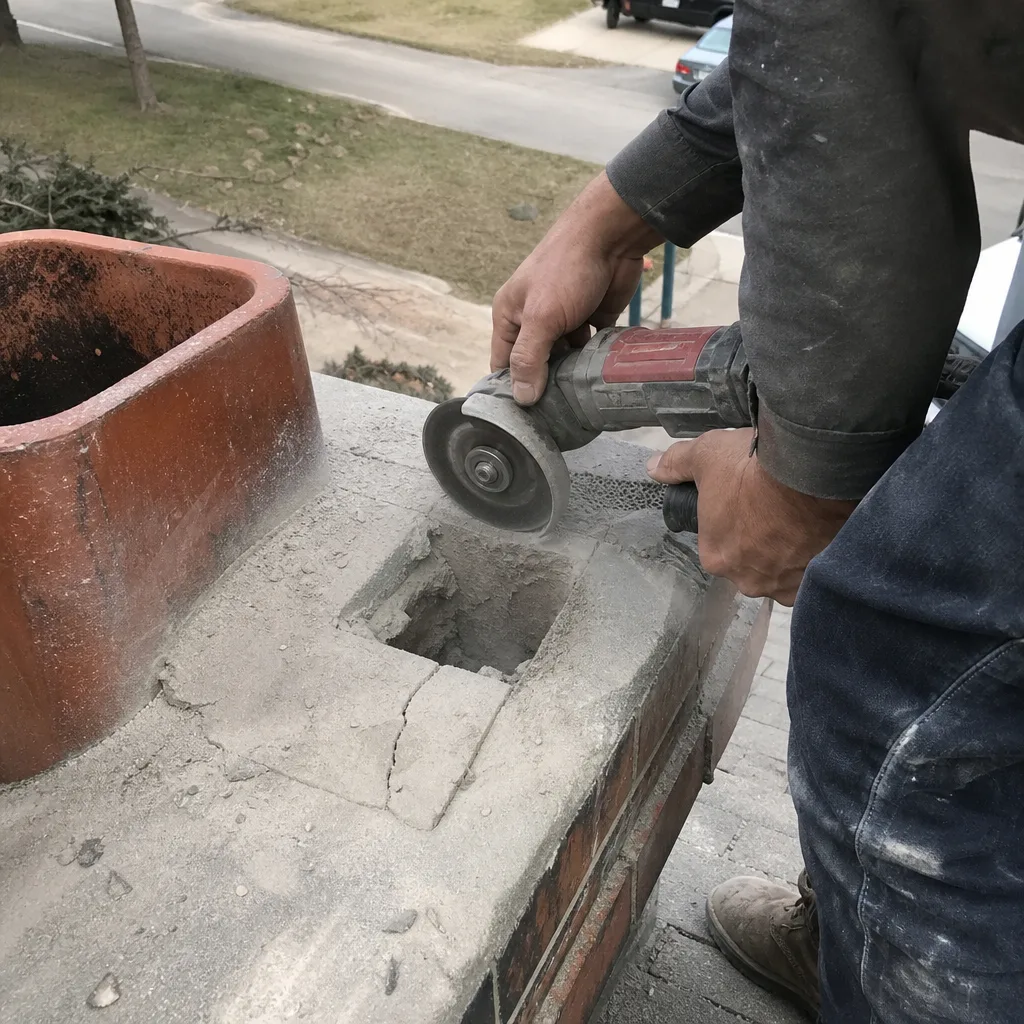
The crown is the concrete or masonry cap at the very top of the chimney that sheds water away from the flue. A pass looks like this: an intact surface, a visible slope away from the flue, and no cracks wide enough to catch a fingernail. Hairline surface crazing is common and often harmless. A crack that runs from the flue to the edge is not, because that’s the path water takes into the chimney structure. A failed crown is one of the most common things we find on older Richardson homes, and it’s also one of the most fixable.
Chimney Cap
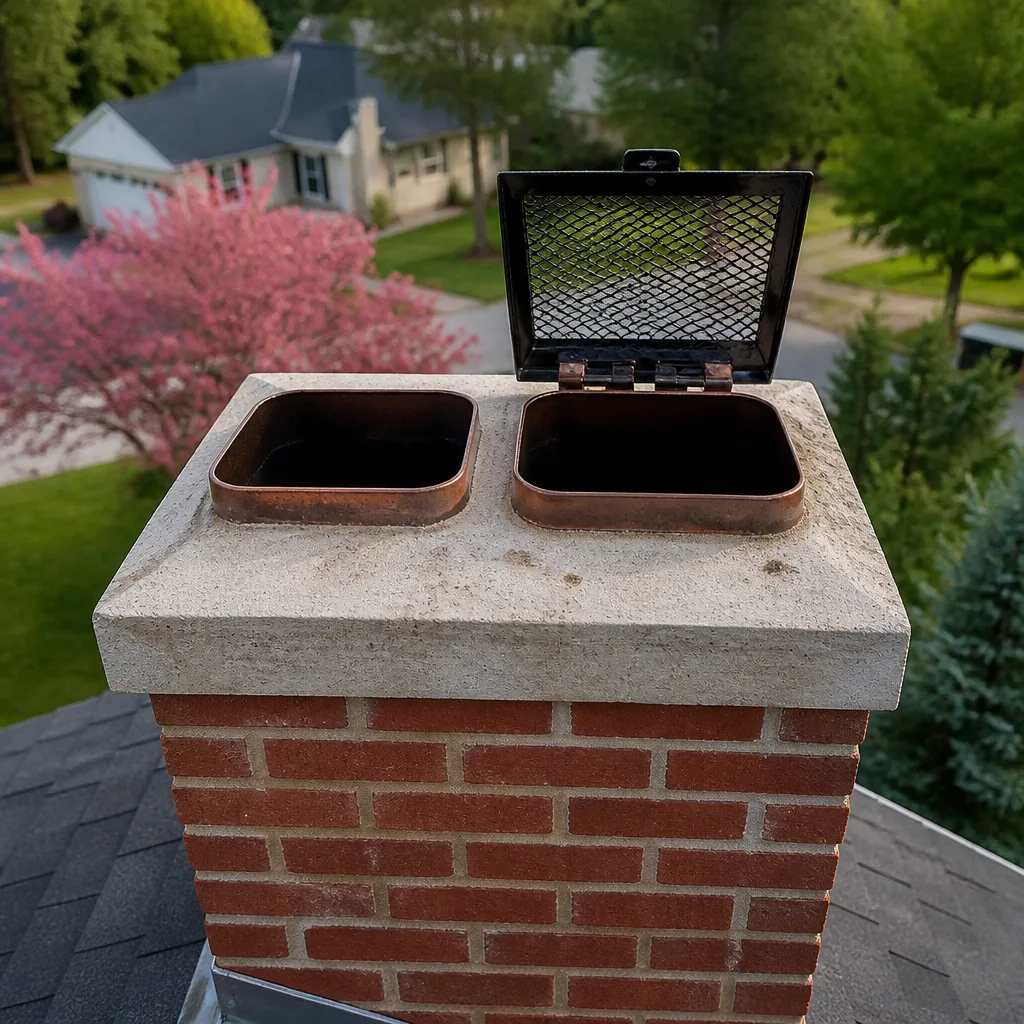
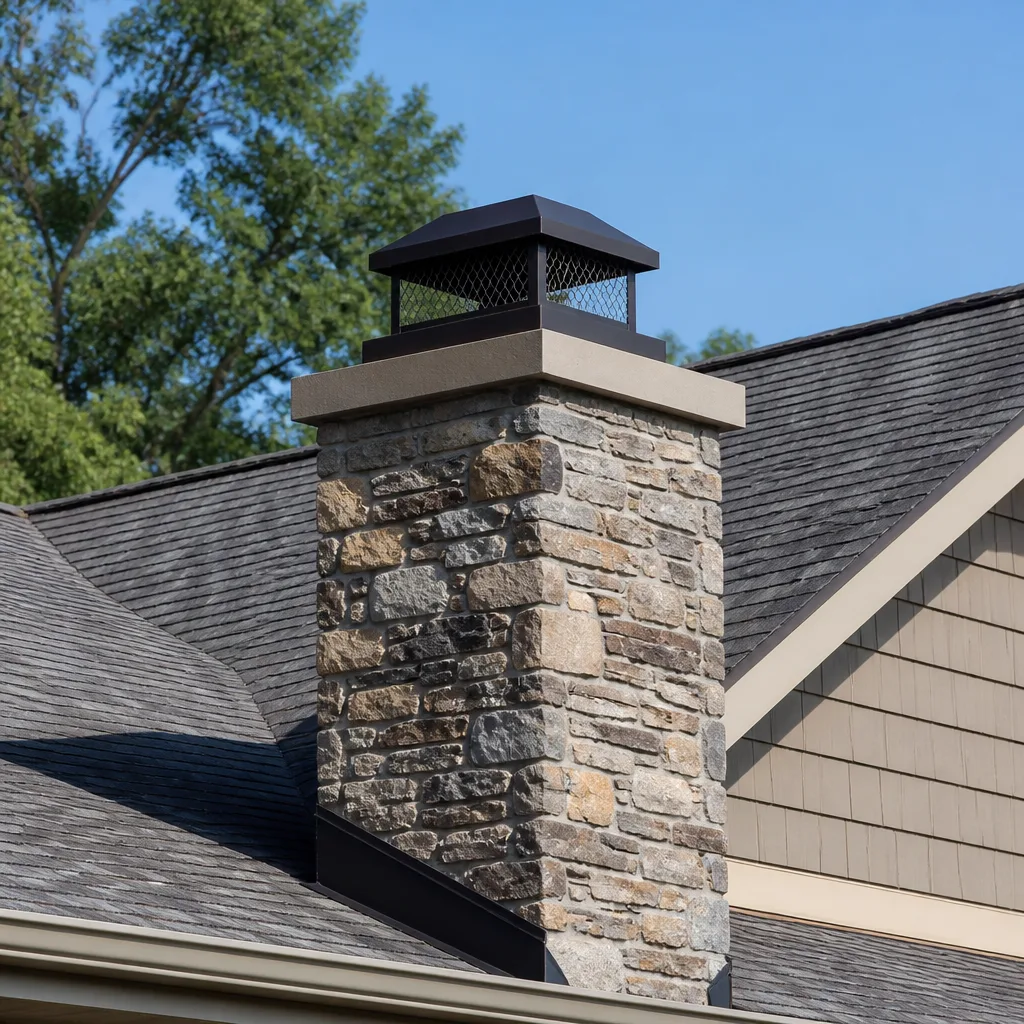
The cap is the cover over the top of the flue, and it does two jobs: it keeps rain and animals out, and it acts as a spark arrestor. A pass means the cap is firmly attached, the mesh is intact, and there’s no rust-through on a metal cap or cracked panels on a masonry one. A missing or damaged cap is a direct route for water, birds, and squirrels into your flue. Caps from brands like Gelco and Olympia Chimney are built specifically for this job, which is why we source them from those lines rather than generic hardware.
Flashing
Flashing is the metal that seals the joint between the chimney and the roof. A pass means the metal is tight against both surfaces, the sealant is intact, and there’s no lifting or rust-through. When flashing fails, water shows up inside the house in places that don’t look like chimney problems – a ceiling stain in a hallway, a wet spot in the attic. Famco makes flashing and venting components built for code-compliant weatherproofing, and we install from that line because the fit matters.
Flue Liner
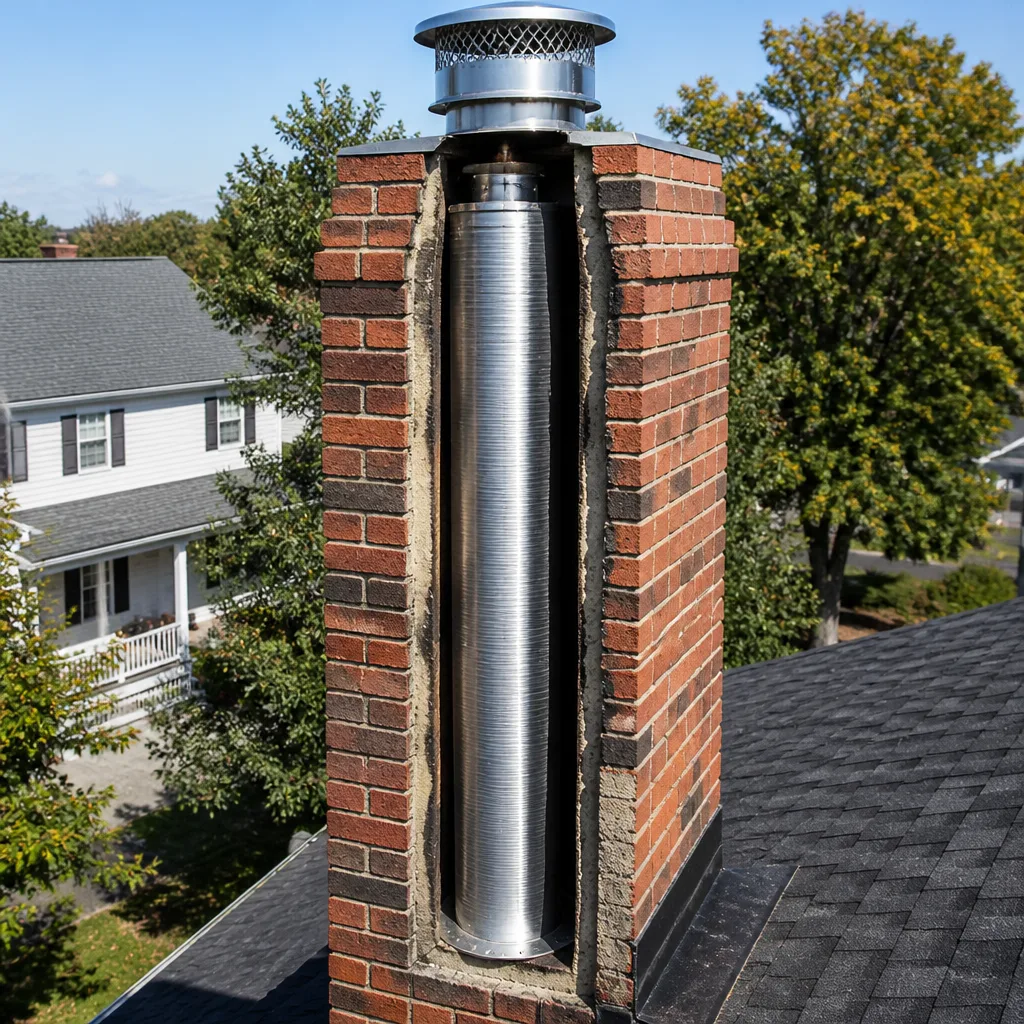
The liner is the inner wall of the flue. It carries combustion gases up and out, and it’s the component most directly tied to fire safety. A pass means the liner is continuous with no cracks, gaps, or spalling, and that it’s the correct size and material for the appliance connected to it. This is not a component homeowners can meaningfully assess from below. A camera inspection is how it gets checked, and the evidence should be shown to you. If a liner has failed, options include relining with a flexible system like DuraFlex or resurfacing with HeatShield, depending on what the camera shows.
Smoke Chamber
The smoke chamber is the sloped area just above the damper that funnels smoke into the flue. A pass means the surface is smooth and parged, with no gaps or rough corbelling where creosote can collect. Rough smoke chamber walls are a common fire risk and a common cause of poor draft. This is another area where repair products like HeatShield are used to resurface the chamber back to a smooth, sealed state – work that most general handymen cannot access or install correctly.
Damper
The damper is the metal door that opens and closes the flue. A pass means it opens fully, closes flat, and seats without a visible gap. It should move without excessive force. A damper that won’t close all the way is an energy leak in winter and a draft problem year-round. A damper that won’t open fully is a smoke problem waiting to happen.
Firebox
The firebox is the chamber where the fire actually burns. A pass means the firebrick is intact, the mortar joints are sound, and there’s no cracking or spalling that exposes the masonry behind it. Firebox repairs are common and, done correctly, straightforward.
What You Can Check Yourself vs. What Needs a Pro
Some of this checklist you can monitor yourself between visits. It’s worth doing, because you’ll know when something has changed and can call before it gets worse. The rest genuinely requires a trained eye, a camera, and the tools to do something about what gets found.
What a homeowner can reasonably observe:
- Cap condition from the ground. Binoculars work. Look for a missing cap, a rusted or bent one, or a mesh screen that’s torn.
- Efflorescence on the chimney exterior. That white, chalky staining on brick is a sign of moisture moving through the masonry. It doesn’t tell you where the water is coming from, but it tells you water is getting in.
- Odor. A strong creosote smell in warm weather, especially on humid days, usually means creosote has built up and is off-gassing. It’s worth a call.
- Draft and smoke behavior. If smoke rolls into the room when you light a fire, or the fire is harder to start than it used to be, something has changed.
- Visible firebox cracks. Look for cracks in the firebrick or missing mortar at the joints.
- Water staining indoors. Any new stain on a ceiling or wall near the chimney chase is worth investigating.
What requires a professional:
- Flue liner condition – needs a camera inspection.
- Smoke chamber surface – needs a look from above, with the right access.
- Flashing integrity – the seal at the roof is easy to miss from inside or from the ground.
- Crown cracks – close inspection from the roof is the only reliable way.
- Creosote levels inside the flue – measurable only with the right tools.
For anything in the second list, a Ridgeway Chimney Sweep inspection with camera evidence gives you something to actually look at, not just a verbal report. Our technicians have up to 15 years of experience, and we tell you what your chimney actually needs – including when the answer is “nothing yet.”
How to Log Service Visits the Right Way
Here’s the section most guides skip, and it’s the one that pays off the most. A chimney service record is not a receipt for a cleaning. It’s a document that answers specific questions a future home inspector, buyer, or insurance adjuster will ask. Logging it well takes about five minutes and pays off years later.
What a home inspector looks for in a service record, in our experience:
- Date of each visit. Not just the year – the actual date. A stack of undated receipts proves nothing.
- Name of the company and the technician who performed the work. This confirms the work was actually done by a trade professional.
- What was done. “Swept and inspected” is vague. “Flue swept, camera inspection performed, cap inspected, crown noted with hairline crack” is documentation.
- Findings and recommendations. What was found, and what if anything was recommended. Recommendations that were declined are worth noting too – it shows the homeowner was informed.
- Photographs. A camera inspection report should include images. This is the single most valuable piece of the record.
- Any repairs performed, with materials used. If a liner was relined with DuraFlex or resurfaced with HeatShield, that should appear on the record with the date.
The practical version: keep a dedicated folder – physical or digital – with one file per year. Every report goes in. If a repair is done, the repair paperwork goes in alongside the cleaning record, not in a separate drawer. When you sell the house, hand the whole folder to the buyer’s agent. In a market like Collin County, where home inspections are thorough and buyers negotiate hard, a clean service folder is a concrete negotiating asset. A missing one invites the buyer to assume the worst.
We include a camera inspection and photo report with every visit because that’s what a service record actually needs to be useful. If your current provider isn’t giving you one, ask for it.
Richardson Timing: Why Late September Matters
The best time to book a sweep in Richardson is late September. Not because anything magical happens on October 1st, but because two things line up at the same time of year.
The first is obvious: burn season is coming. You want a clean flue and a working damper before the first fire, not after. Getting the appointment done before the seasonal rush also means the schedule is more flexible, which matters if a repair gets found and needs to be scheduled.
The second reason is less obvious. Summer in this part of Texas is long and hot, and masonry, sealants, and metal flashing all expand and contract through that heat. By late September, the season’s effect on the chimney has already happened. A crown that cracked in July, a flashing seal that lifted in August, a cap that loosened under repeated thermal movement – those problems are now visible. Sweeping in March catches the previous year’s damage; sweeping in late September catches this year’s, before it goes through a wet fall and winter. In our experience, that timing difference matters for catching small problems before they become big ones.
If you’ve never had a service record for the chimney, don’t wait for September. Book an inspection and get the baseline set. From that point forward, the annual rhythm is easy to keep. If you’re in Richardson and want to know what a baseline inspection covers, that page has the details.
Tracking Liner Repair Warranties Alongside Cleaning Records
If your chimney has had a liner repair – a HeatShield resurfacing or a DuraFlex relining – that repair belongs in the same folder as your cleaning records, and for a simple reason: warranty terms on liner work are usually conditioned on continued maintenance. A warranty is not a free pass. It typically expects the liner to be inspected and maintained going forward.
What to keep for any liner repair:
- The written specification of what was installed. Which product line, which dimensions, and where in the flue it was applied.
- The date of installation. Warranty periods run from this date, and future inspectors will want to know the liner’s age.
- The warranty document itself. Filed with the service record, not in a drawer somewhere.
- Every subsequent inspection report. Each one is proof the liner has been maintained.
This is one reason we’re particular about which products we use. HeatShield is a repair-grade resurfacing system that most general contractors cannot access or install correctly, and DuraFlex flexible liner systems are specified by chimney professionals nationwide. Both come with real documentation, and both hold up when a future inspector asks what’s inside the flue. When you know what’s in the flue, you can answer those questions with a piece of paper instead of a shrug.
What Triggers a Repair Call Instead of a Sweep
A sweep is routine. A repair call is triggered by something specific. Knowing the difference helps you decide when to call and what to expect – and it protects you from being told you need thousands of dollars of work that isn’t actually justified.
Trigger a repair conversation when you see or hear:
- Camera evidence of a cracked, gaping, or spalling liner. This is the clearest trigger. The evidence should be shown to you, not just described.
- A smoke chamber with rough, corbelled, or unparged walls. This is a fire risk and a draft problem, and it can be repaired without rebuilding the chimney.
- A crown with a crack running from the flue to the edge. Water path into the chimney.
- Flashing that has pulled loose or rusted through. Water path into the attic.
- A cap that’s missing, damaged, or has lost its mesh. Weather and animal path into the flue.
- A damper that won’t open or close fully. Smoke or energy problem.
- Firebox cracks or missing mortar at the joints. Structural problem.
- A strong creosote smell in warm months. Sign of buildup that needs a professional look.
A good rule: nothing gets recommended without camera evidence you can see. If a recommendation comes with a photo, a name for the product, and a written estimate, it’s worth looking at. If it comes without any of those, ask for them. Our written estimate sets the final price, and we tell you plainly when work can safely wait.
Common Mistakes to Avoid
- Treating the annual sweep as the whole job. A clean flue with a failing crown is still a failing chimney. Ask for the full component checklist, not just a cleaning receipt.
- Letting service records scatter. Receipts in a junk drawer don’t help at inspection time. One folder, one file per year, in the same place every year.
- Skipping the inspection because the fire “seems fine.” Most liner and smoke chamber problems don’t produce symptoms the homeowner notices. That’s exactly why the camera exists.
- Hiring whoever is cheapest. In this trade, the materials and the workmanship are the product. A liner repair is only as good as the specification behind it, and cheap materials are not a saving.
- Not asking what’s actually in the flue. If a liner was ever replaced, you should know whether it was relined with DuraFlex or resurfaced with HeatShield, and you should have the paperwork. “It was repaired at some point” is not documentation.
- Waiting until the first cold snap. Booking in late September gets you ahead of the seasonal crunch and catches the summer’s thermal damage. Booking the week of the first cold front gets you a longer wait.
- Ignoring efflorescence. That white staining on brick is the masonry telling you water is moving through it. It doesn’t fix itself.
See the difference
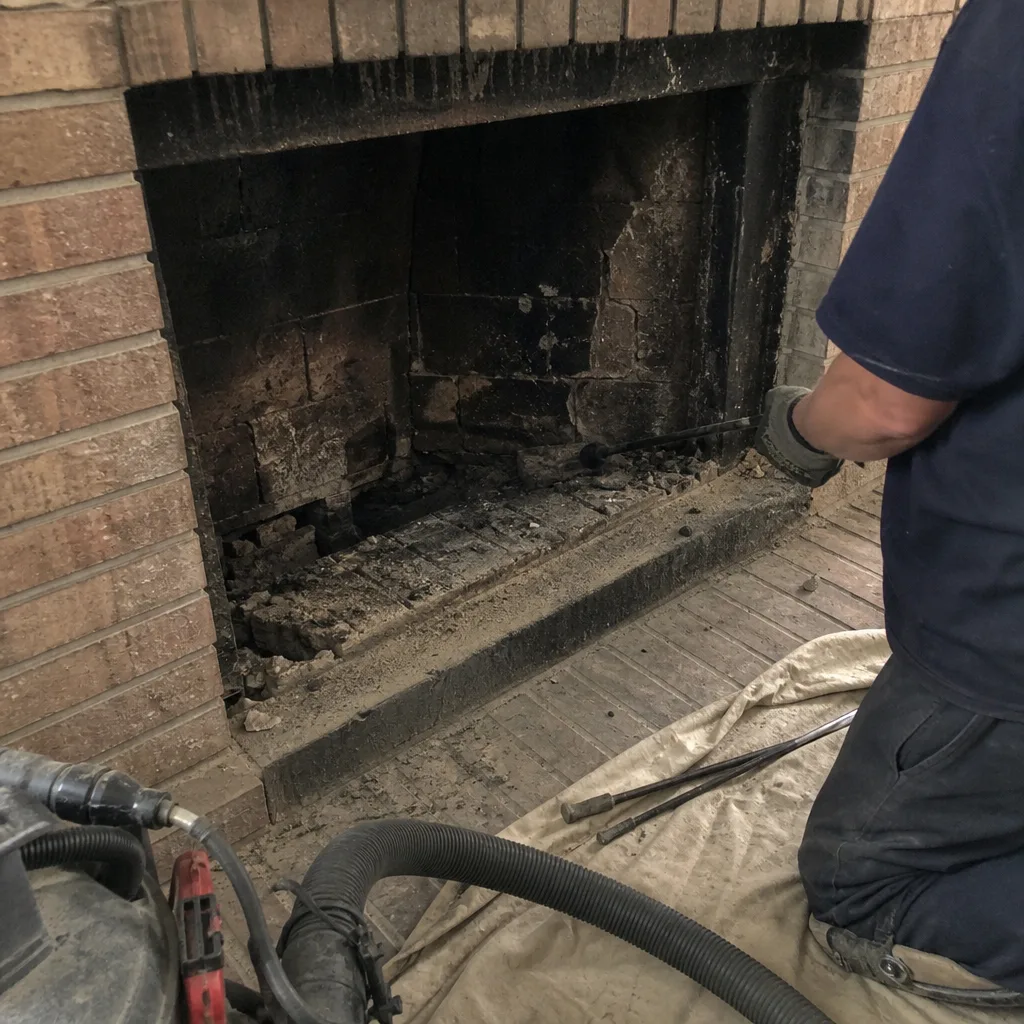 Before
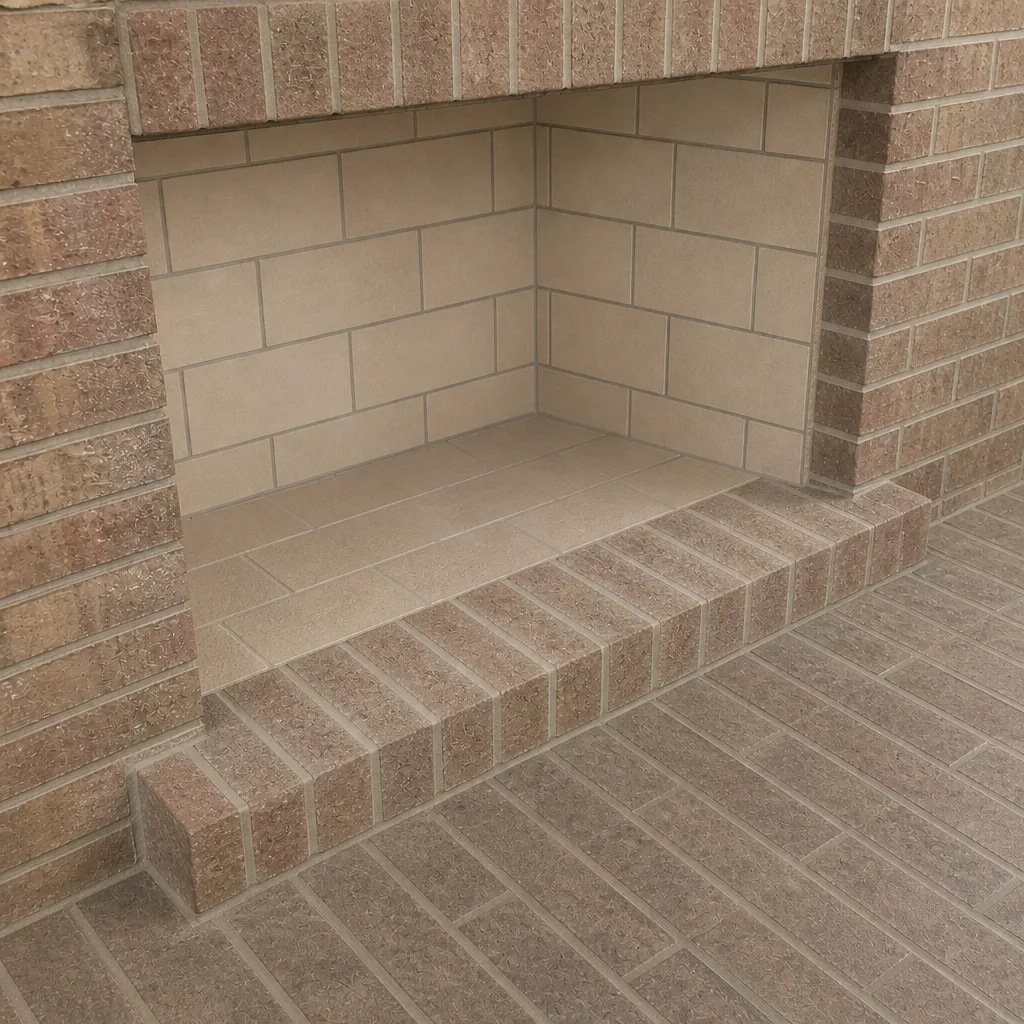 After
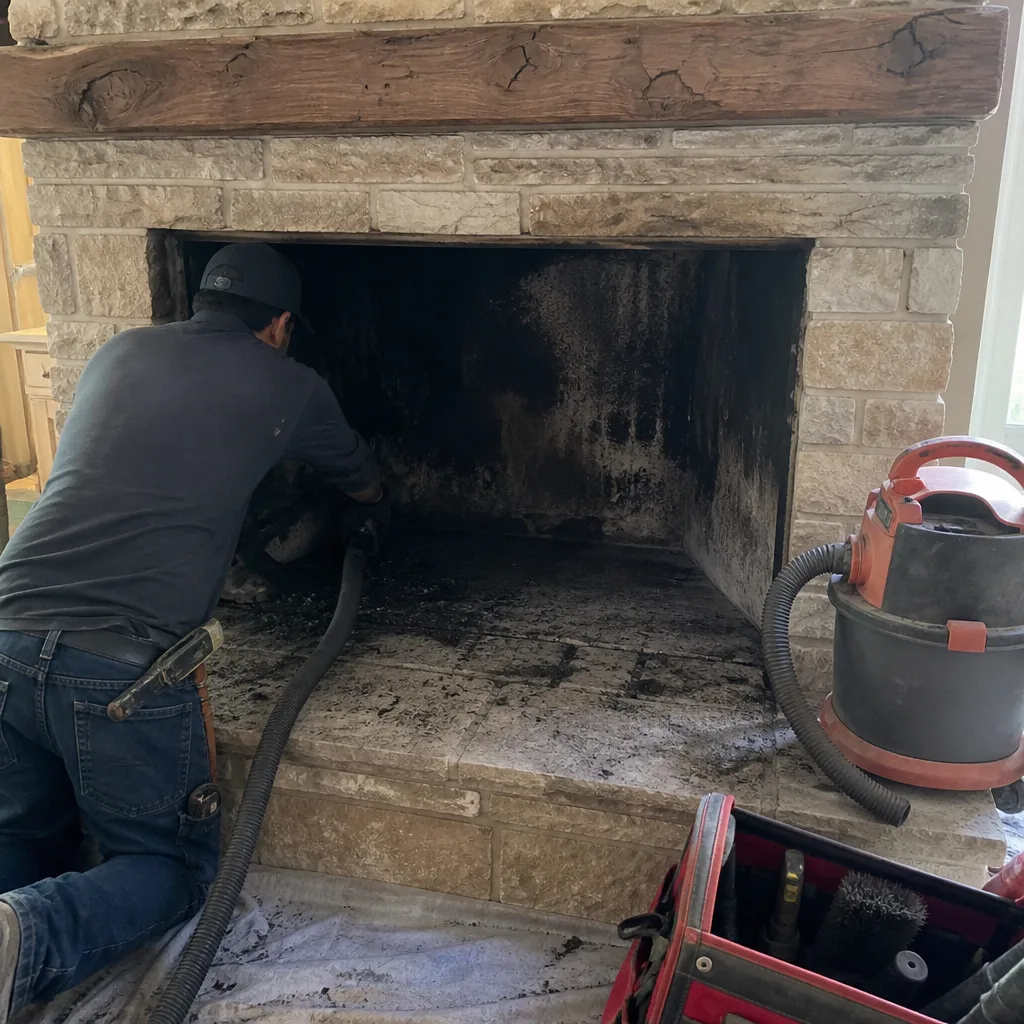 Before
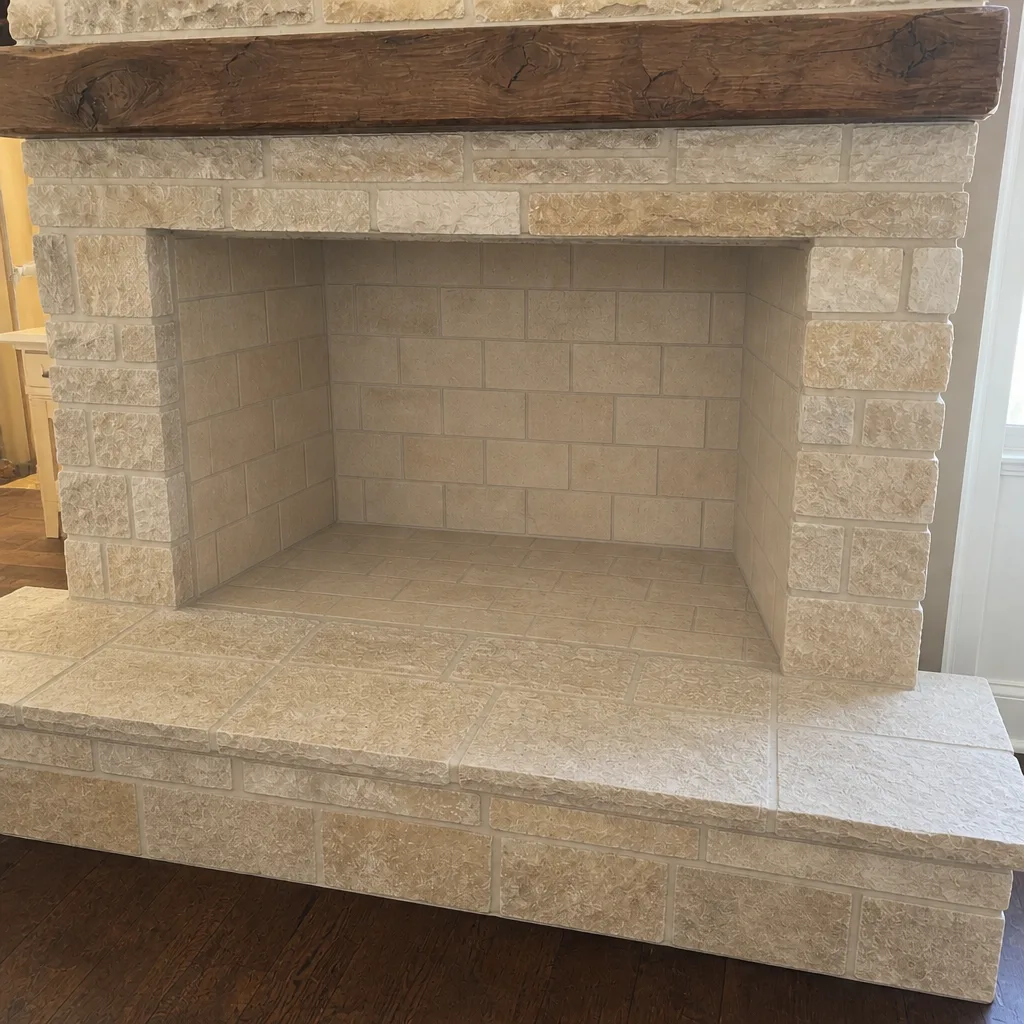 After
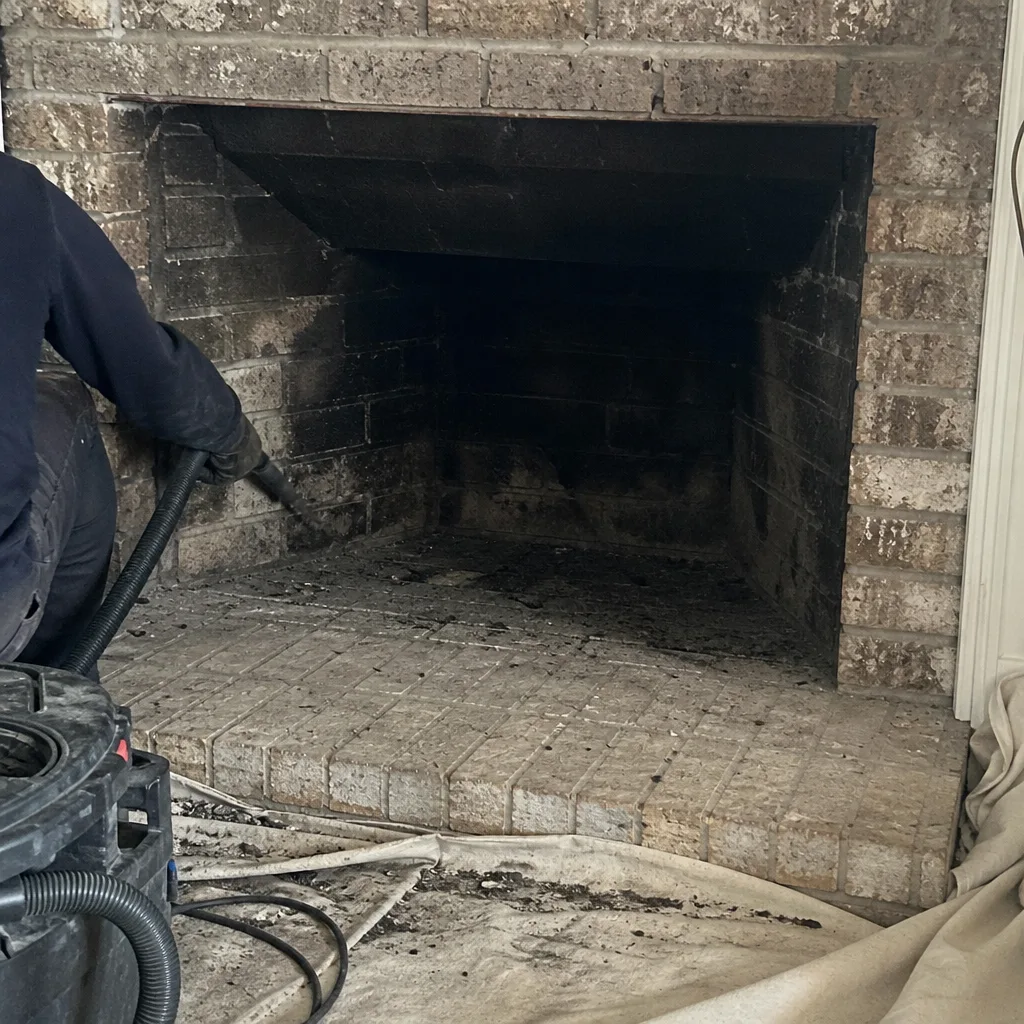 Before
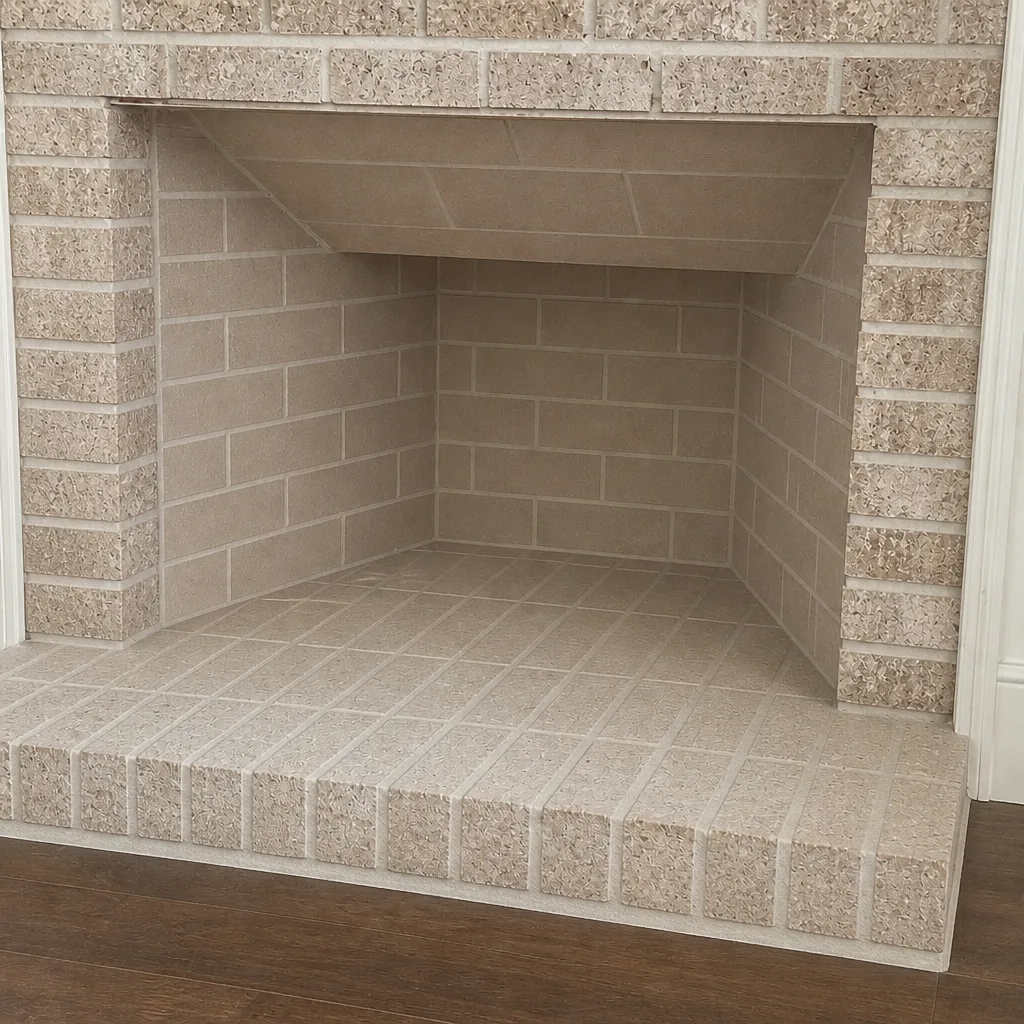 After
When to Call a Professional
Call a professional if you see any item on the repair-trigger list above. Call if you can’t produce a service record and don’t know the condition of the liner or smoke chamber. Call if the fire smokes, the draft is weak, or the firebox has visible cracks. Call before you sell, so the record exists before someone else asks for it. And call if you’ve never had an inspection and want the baseline set once and correctly.
Ridgeway Chimney Sweep offers free estimates in Richardson. We work in all three core disciplines – sweep, inspect, repair – which means when the assessment turns up a needed repair, you’re not coordinating between multiple contractors. Our technicians have up to 15 years of experience, and we use industry-trusted product lines like DuraFlex, HeatShield, Gelco, Olympia Chimney, Famco, and Copperfield. Call (888) 873-4715 to book. Estimates are free and the written estimate sets the final price.
Frequently Asked Questions
A standard chimney sweep in the Richardson area is priced per job by written estimate, and the estimate is free. The cost depends on the appliance, the flue configuration, and whether the visit includes a camera inspection. Call (888) 873-4715 for an exact quote – estimates are free, and the written estimate sets the final price.
Once a year for most wood-burning fireplaces, in late September before burn season. A home with heavy, frequent fires, or one burning unseasoned wood, may need more frequent sweeps. A chimney that has never been inspected should be inspected first, regardless of whether it needs a full sweep yet.
Only when the camera shows a real problem – cracks, gaps, or spalling that compromise the flue. A recommendation for a new liner should come with camera evidence you can see. If a liner is genuinely failing, relining with a DuraFlex flexible liner system or resurfacing with HeatShield are the usual paths, and the right one depends on what the inspection shows.
To make sure every component gets checked each year – not just the flue – and that the visit gets documented in a form an inspector or insurer can use. A checklist also gives you a baseline: when something changes, you’ll know because it was written down last year.
The date, the company name, the technician’s name, what was done, what was found, any recommendations, photographs, and any repair paperwork including the material used. Keep all of it in one folder, in the same place, year after year.
Yes – the cap condition from the ground with binoculars, efflorescence on the brick, odor in warm weather, smoke behavior, and visible firebox cracks. The liner, smoke chamber, and flashing require a professional assessment. If any of the homeowner checks show a change, that’s when to call.
The Bottom Line
A chimney maintenance checklist is a documentation habit more than a reminder. Check seven components each year – cap, crown, flashing, liner, smoke chamber, damper, firebox – and record every visit in a form a home inspector can read and an insurance adjuster will accept. Richardson homeowners have a specific timing advantage: late September catches the summer’s thermal effects on masonry and gets the flue ready before burn season. Know which items you can observe yourself and which need a camera. Keep your liner records, including any HeatShield or DuraFlex warranty paperwork, in the same place as your cleaning records. And treat any recommendation without evidence as a question, not an answer. If you’re ready to put this into practice, Ridgeway Chimney Sweep can set your baseline.
Call Ridgeway Chimney Sweep at (888) 873-4715 for a free estimate. We answer 24/7. Fast dispatch from 7am to 7pm, Sunday through Friday. Our technicians have up to 15 years of experience, and we tell you what your chimney actually needs.
Written by the team at Ridgeway Chimney Sweep.